
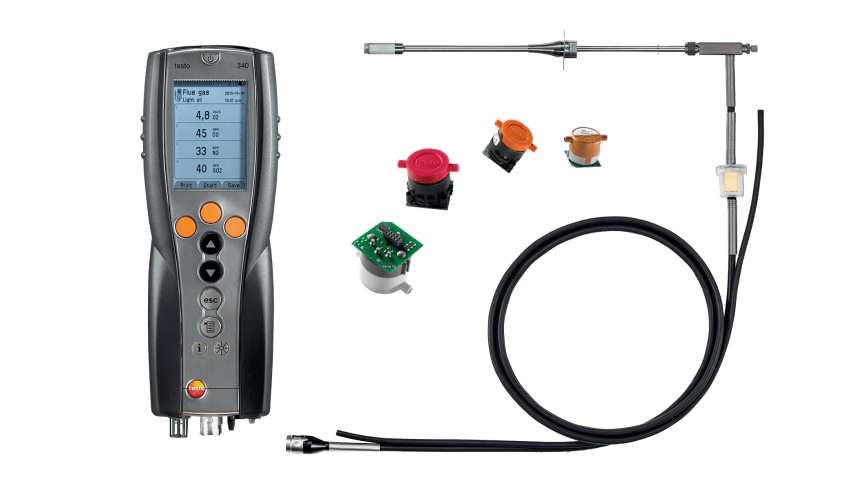
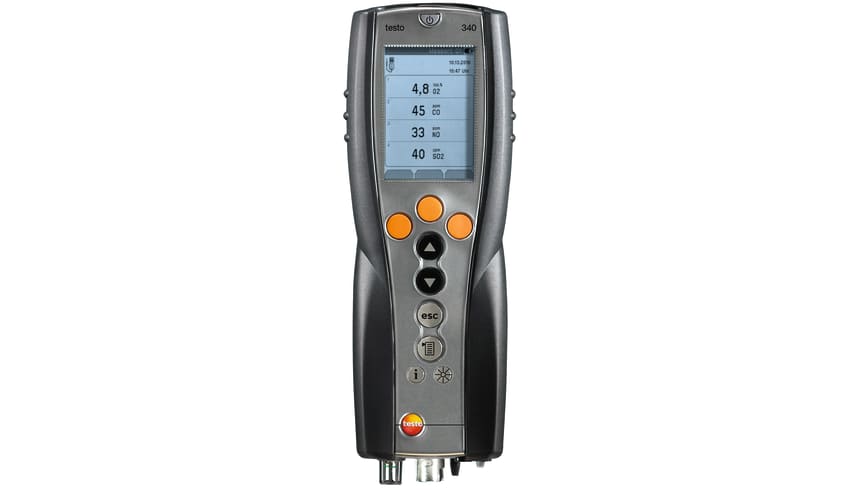
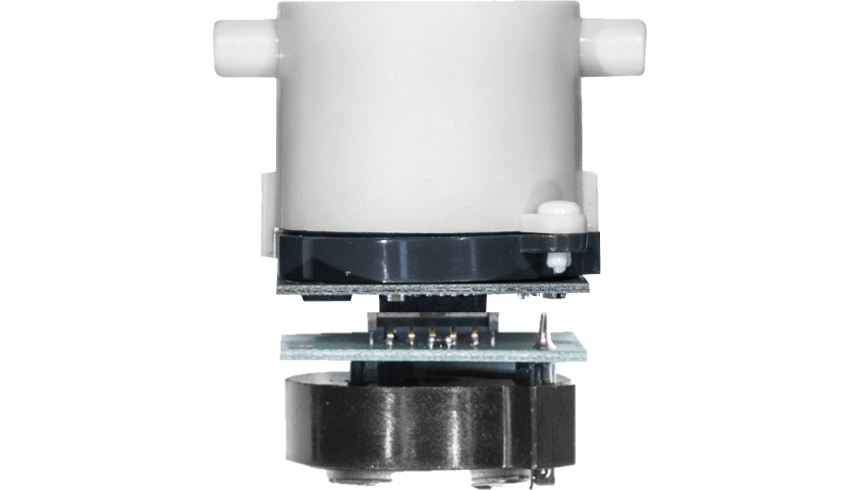
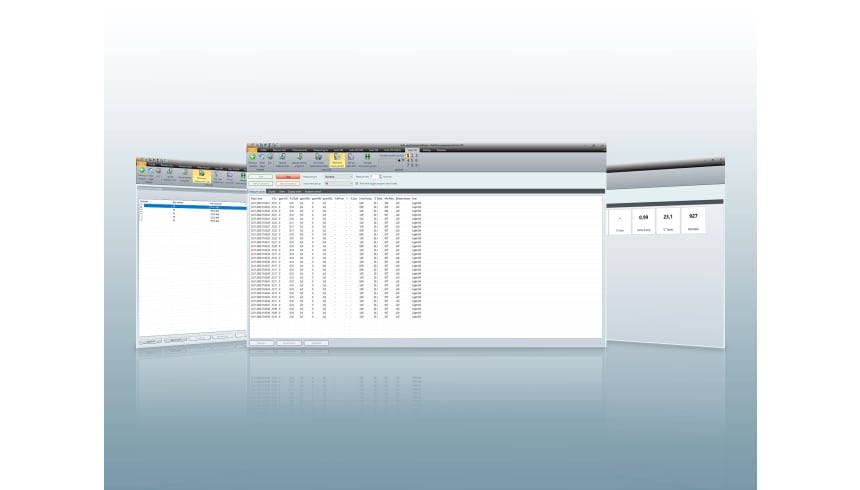
This order proposal covers all requirements for professionals working with industrial engine systems. You will receive the universal testo 340 control unit with application-specific and intuitive measurement menus with pre-configured gas sensors specifically designed for industrial engine systems, the appropriate mains unit, the practical transport case and the corresponding easyEmission PC software. To select the appropriate probe for your specific measuring site requirements, please contact our team of experts for industrial engine systems.
Application
Service measurement on industrial engines
Flue gas analyzers are one of the pieces of equipment that are used on a daily basis by service engineers to achieve optimum tuning of engines. Flue gas measurement is used on industrial engines when they are commissioned, at regular maintenance intervals or for troubleshooting when they are running in an unstable way. The purpose of measuring the flue gas is to tune the engine to its optimal operating parameters while ensuring compliance with the applicable emission limits. Regularly performed maintenance work is an important factor in preventing downtime over the long term, ensuring the quality of the system and thus a high level of efficiency, and having a major impact on emission levels.
Advantages of the testo 340 for measurements on industrial engine systems
Separate NO and NO2 measurement
The real NOx value is measured using the NO and NO2 sensor combination. In gas engines, the NO2 component of the NOx value can fluctuate significantly, so the separate measurement of both gases is necessary to attain correct NOx values.
Measurements even at high CO concentrations
At unexpectedly high concentrations (up to 50,000 ppm), the automatic dilution of the sensor with fresh air allows measurements even when the engine conditions are not defined, without negatively affecting the service life of the sensor.
Special flue gas probes for industrial engines, available as accessories
These probes are highly heat-resistant and specially designed to compensate for different pressure conditions, e. g. for measurements before and after the catalytic converter.
Engine-specific parameters
The key parameters for industrial engines, such as O2, CO, NO, NO2, NOx and lambda, can be displayed simultaneously.