Thermal Imaging Cameras
Combine high-resolution imaging and smart features for diagnostics you can trust.

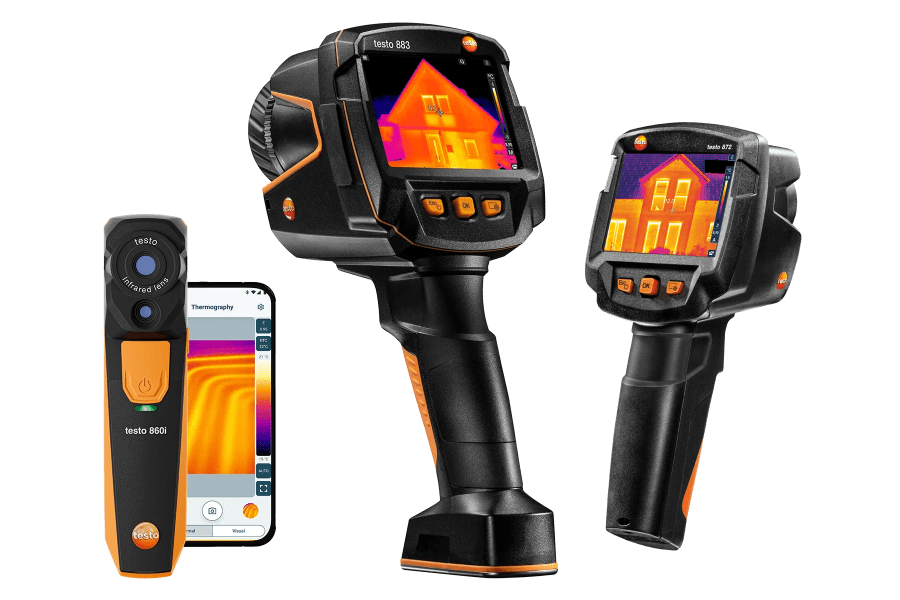
Thermal images reveal hidden risks and capture every critical detail. With smart features and exceptional image quality, complex inspections become clear, actionable insights. Reliable, precise, and easy to use, our thermal cameras empower professionals across the globe.
Outstanding image quality for reliable results
Smart features to streamline your workflow
Free software and app for seamless reporting
Discover our new pocket-sized thermal imagers
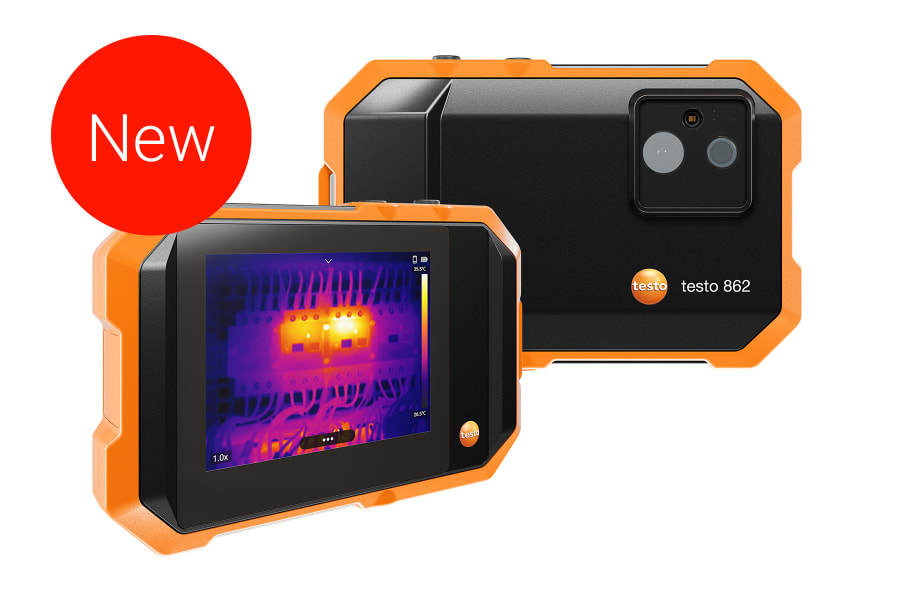
The new testo 862 brings a new level of clarity to your inspections. Compact enough to fit in any pocket, it captures sharp thermal images in seconds, while smart features ensure you never miss a spot.
Choose between the entry model testo 862-1 with a resolution of 160 x 120 px or the advanced testo 862-2 with 256 x 192 px for an extra level of detail.
Brilliant image quality - High resolution and thermal sensitivity reveal detailed thermal images. Fusion mode adds visual context for even greater clarity.
Fast diagnostics - Built-in alarms, automatic Delta T calculation, hot/cold spot detection, and intelligent mold analysis speed up inspections and simplify your workflow.
Intuitive operation - A seamless, smartphone-like interface makes every task effortless.
Rugged design - IP54-rated and 1.5 m drop-tested for reliable everyday use
Designed to make your job easier
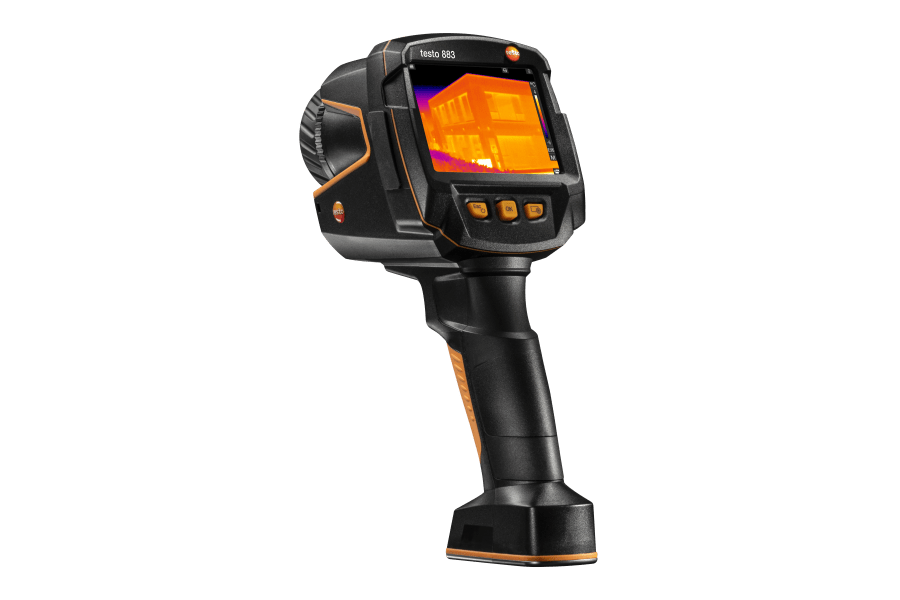
High-resolution imaging, exceptional thermal sensitivity and temperature accuracy work seamlessly with intuitive handling, intelligent features, and advanced analytics — ensuring reliable diagnostics, greater efficiency, and faster, more confident decision-making.
High image quality with 4× more thermal detail through SuperResolution
Powerful Software for more efficiency
Detect risk of mould with the Humidity Mode
Wireless connection to Smart Probes and App
Targeted guidance for the right distance with IFOV-Warner
Scale Assist for automatically optimized temperature scales
Not sure which camera suits your needs?
IFOV-Calculator
Check which camera you need for your object size and distance in terms of resolution and lens
Packed with features designed to make your job easier.
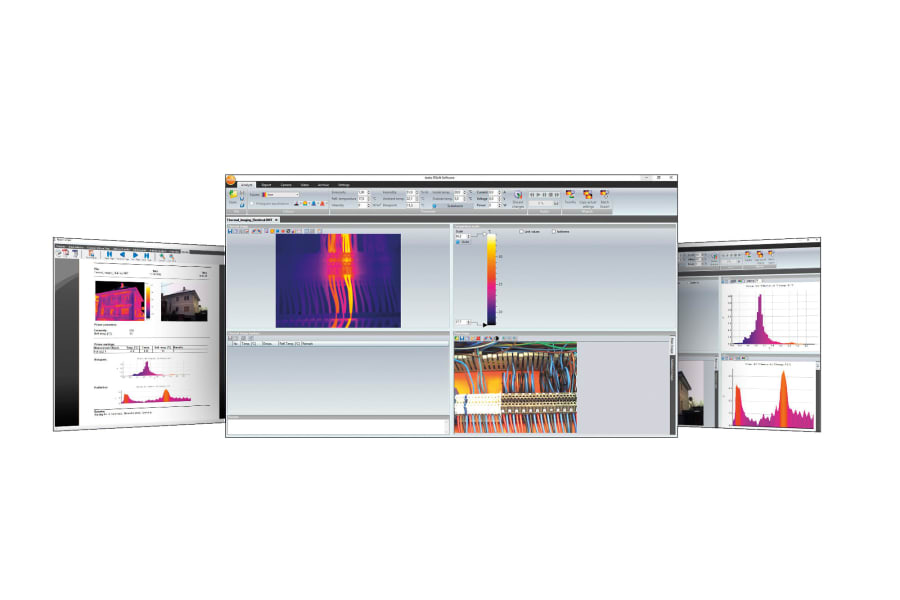
Powerful software for more efficiency
IR Soft
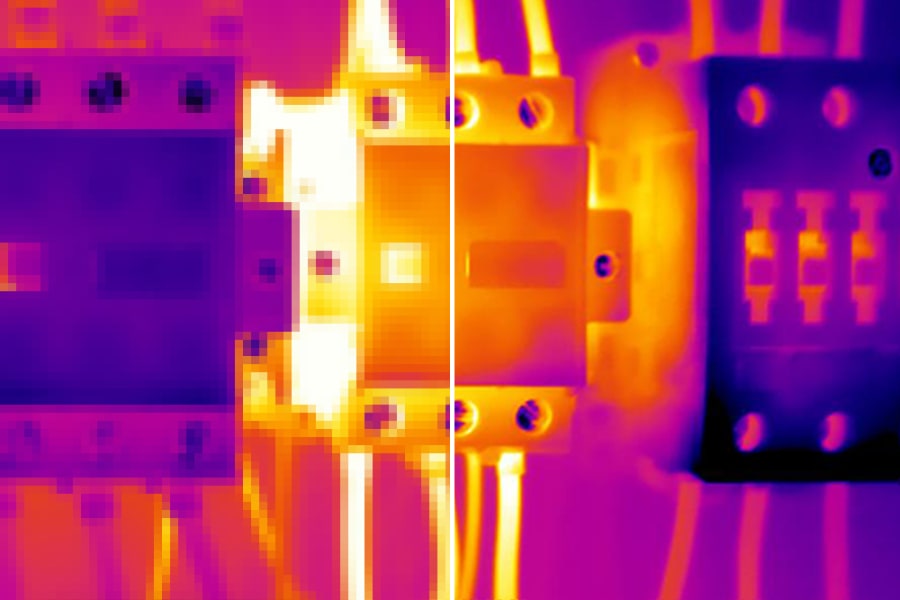
4× More Thermal Detail
SuperResolution
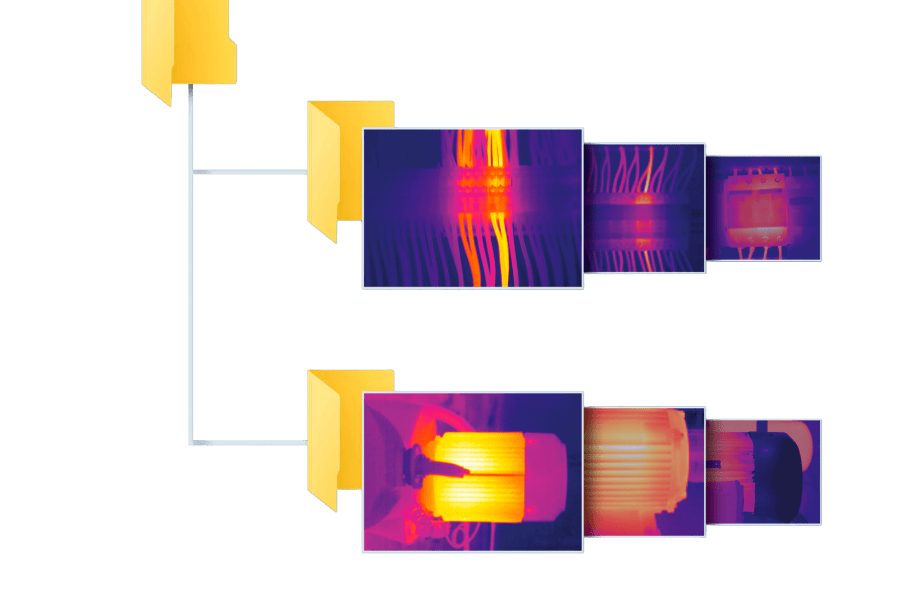
Intelligent image sorting
SiteRecognition
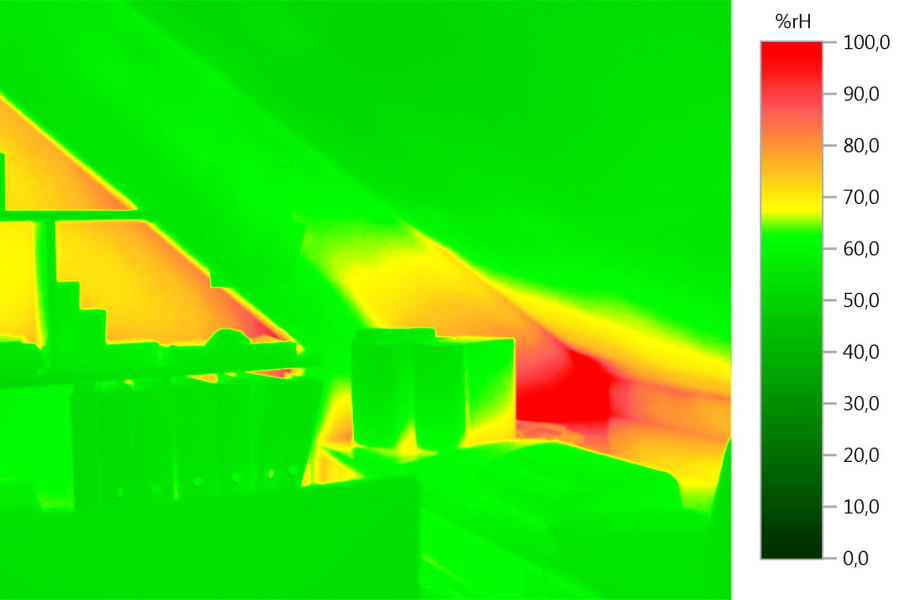
Visualise moisture and prevent mould
Humitiy Mode
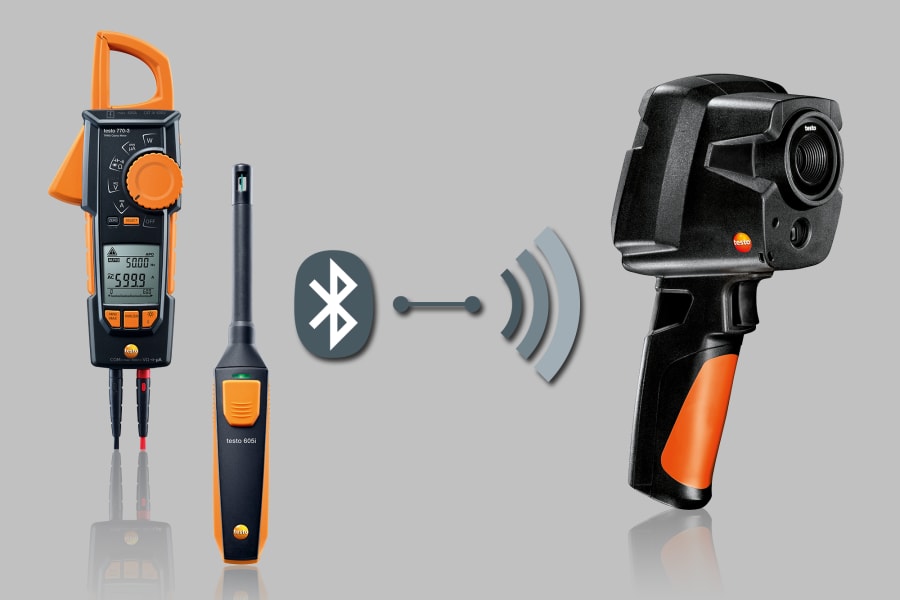
To the testo Smart Probes for comprehensive analysis
Wireless connectivity
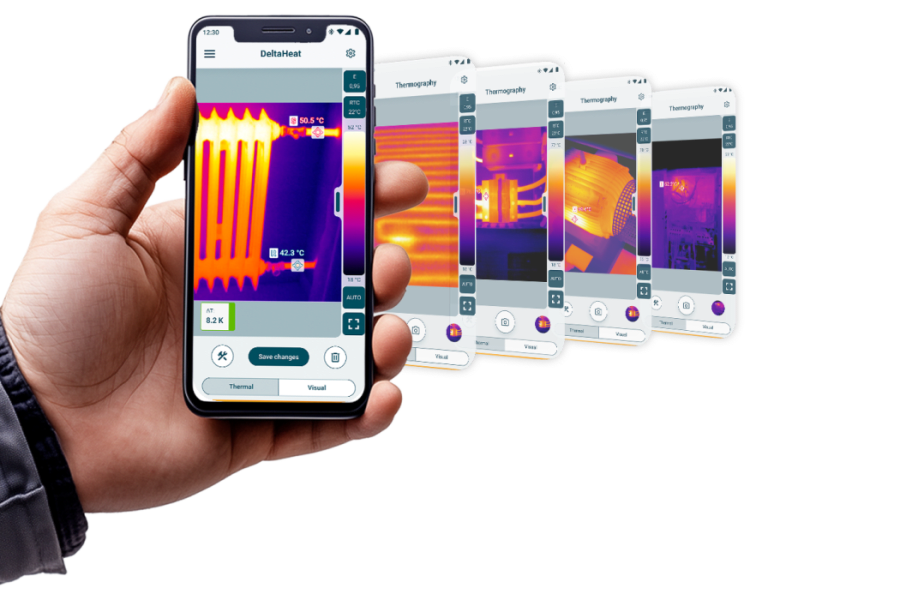
Thermography App for on-site reporting and data sharing
testo Thermography App
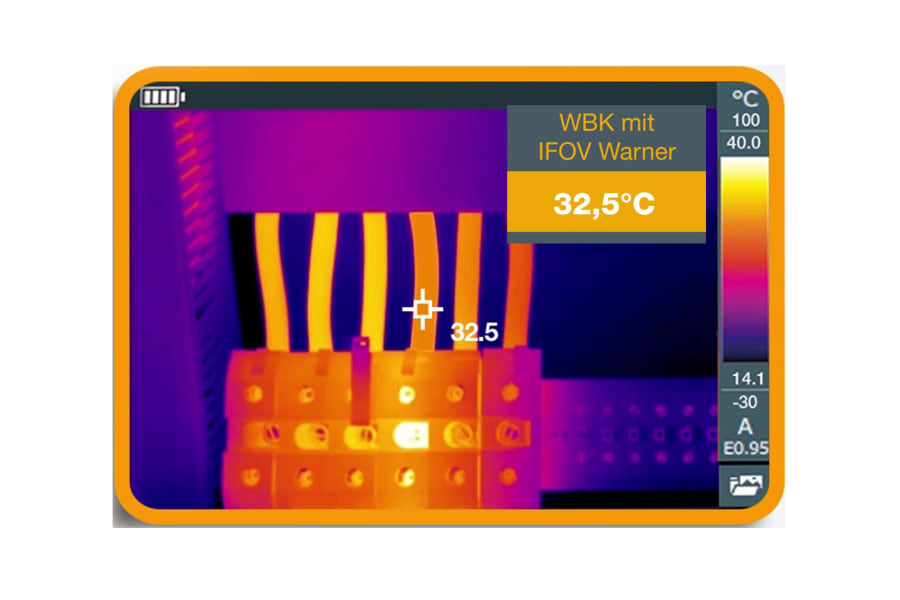
Targeted guidance for the right distance
IFOV-Warner
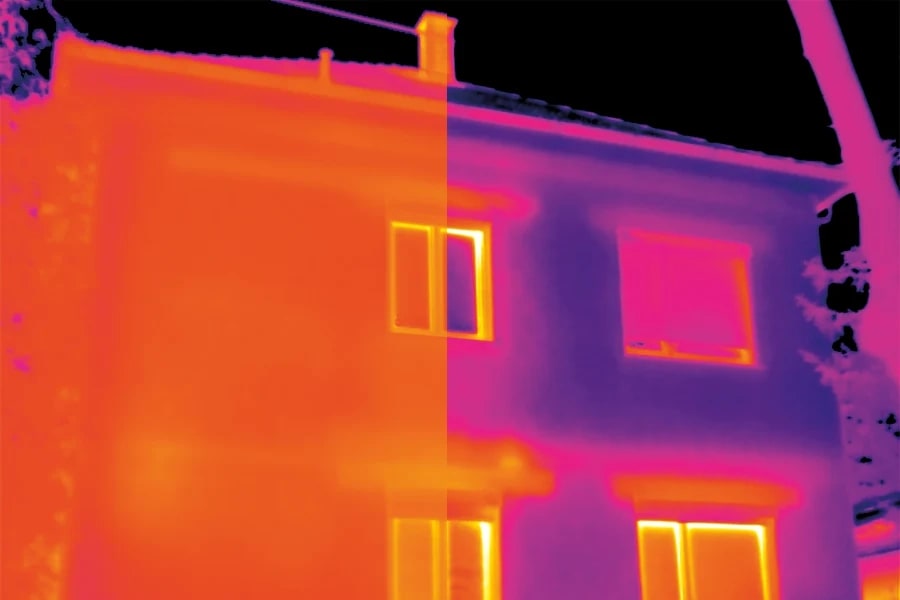
Automatically optimized temperature scales
Scale Assist
Customer Voices
testo 883 convinces Cerdia

"Since we started using testo SiteRecognition, we’re saving several hours of work on our just under 1,900 switching cabinets."
Udo Moser
Service and maintenance
Cerdia Produktions GmbH
This instrument really is an asset for me

"This instrument really is an asset for me as an architect. Using the testo 883 thermal imager as an extra pair of eyes on the job site helps me and my team tremendously."
Kevin Nechelput
architect / Managing Director
AEON architecten
testo 860i has been a game changer

"The testo 860i thermal camera has been a game changer for me in the refrigeration trade. It makes it easy to spot issues with motors or compressors before they fail, and I use it all the time to double-check valves are working properly."
@harry_hvac_irl
Senior Service Engineer
BMC Eirco Refrigeration & HVAC
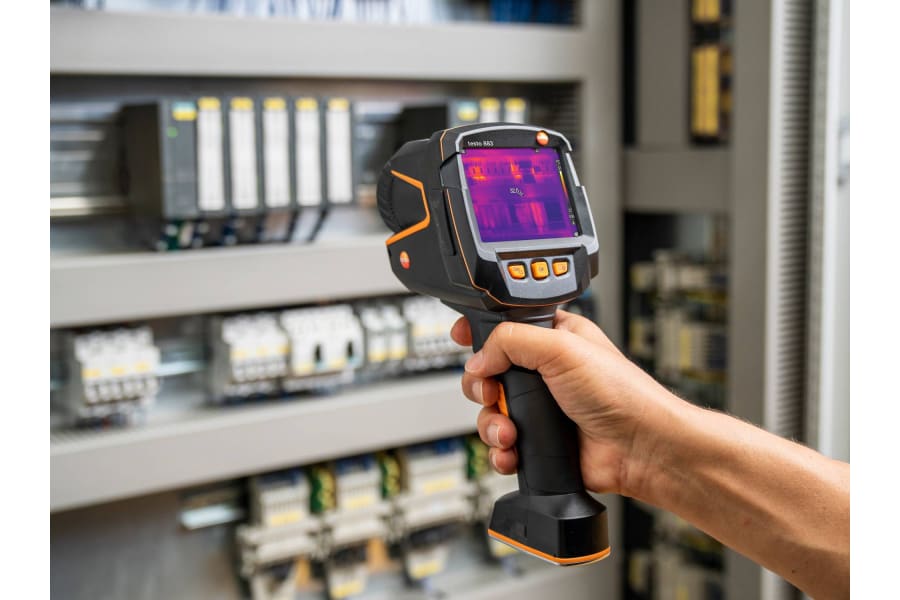

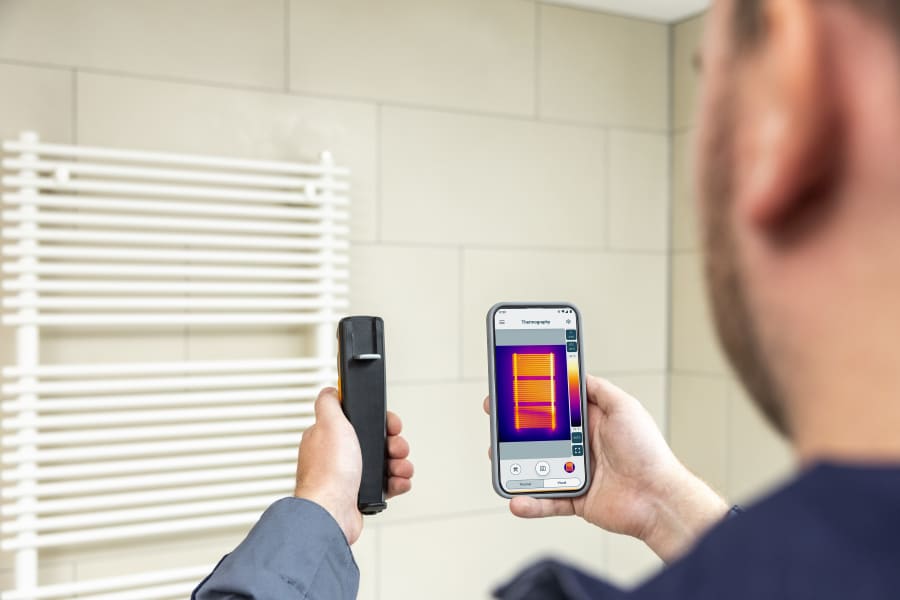
Practical guides for thermal imaging cameras
Precise thermal visualization with powerful features
Thermal imagers are measuring instruments that allow you to visualize temperatures without physically touching the object.
Thermal imagers, also known as thermographic cameras or thermal cameras, detect the infrared (IR) radiation emitted by an object and visualize it in real time as a thermogram. This radiation is a form of electromagnetic wave and is invisible to the human eye.
As a result, thermal imagers provide an efficient, non-contact method of visualizing and analyzing temperature distributions and varying levels of heat. The technical term for this process is thermography.
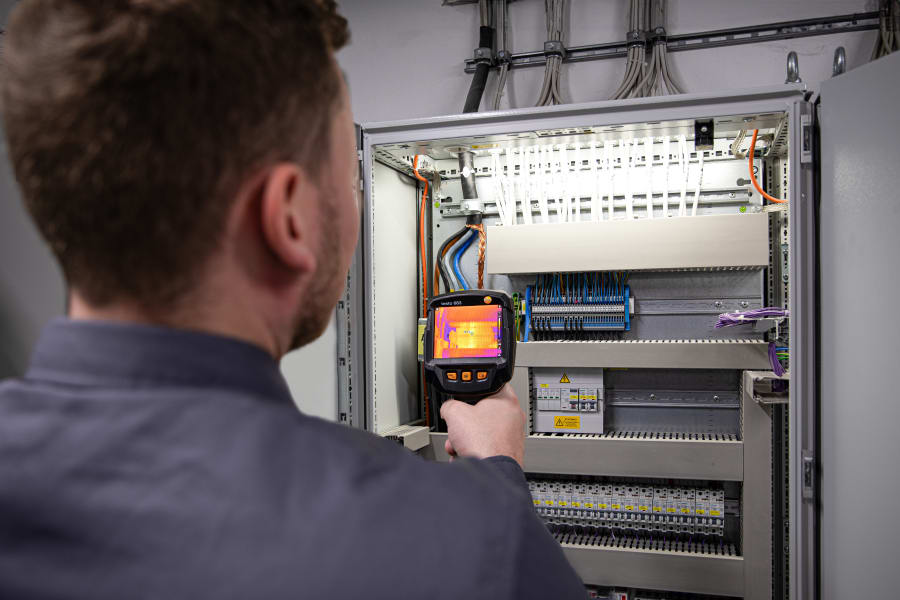
How do thermal imagers work?
Thermal imagers work by capturing the infrared radiation emitted by objects. Simply put, the thermal imager captures this radiation and converts it into an infrared thermal image, where the different temperatures are represented as colour variations.
How a thermal imager works in detail
The imager has a detector (usually a microbolometer) that responds to infrared radiation. Any object with a temperature above absolute zero (-273.15°C) emits infrared radiation. When this hits the detector, it is absorbed and heats the detector elements. This heating causes a change in the electrical resistance of the elements.
The change in resistance is converted into an electrical signal which is then processed by the camera's electronics. This signal is proportional to the amount of infrared radiation detected.
The electrical signals are processed by the camera's internal image processing software, which converts them into a visible image. Different colours are assigned to different temperatures. The resulting image is called a thermogram.
The thermogram is displayed on the thermal imager's screen. Warmer areas appear brighter, while cooler areas appear darker. Typically, thermal imagers use a colour scale from blue (low temperature) through green and yellow to red (high temperature) to visualize temperatures.
Purchasing criteria for thermal imagers
Are you thinking of buying a thermal imager? Here's what to look for:
Thermal sensitivity of less than 120 mK (makes temperature differences of 0.12 °C visible)
Also known as thermal resolution and measured in millikelvin (mK), this is the smallest temperature difference that the thermal imager can detect.
Manual focus
Check that the thermal imager offers manual focus. Manual focus allows more precise adjustment of the focus on the target, which is especially important at varying distances.
Interchangeable lenses
Interchangeable lenses greatly increase the versatility of your thermal imager. Wide-angle lenses are ideal for covering large areas from close range, while telephoto lenses are useful for detailed inspection of smaller areas from a greater distance. Make sure the imager offers compatible options for different lens types.
Interchangeable lenses
Interchangeable lenses greatly increase the versatility of your thermal imager. Wide-angle lenses are ideal for covering large areas from close range, while telephoto lenses are useful for detailed inspection of smaller areas from a greater distance. Make sure the imager offers compatible options for different lens types.
Software for analysis and professional reports
For professional documentation we recommend our special thermography software testo IRSoft. In addition to processing thermal images, it offers many other analysis functions. Find out more here.
Simple and intuitive operation
Our products have a simple, intuitive interface, making them easy to use. They are operated via a highly sensitive touchscreen or an ergonomic joystick, providing precise and convenient control.
Testo thermal imager features
Purchasing a thermal imager is a wise investment, especially when you choose a thermal imager from Testo. Our instruments are renowned for their exceptional image quality. With a wide range of features, the Testo thermal imager enables the efficient use of infrared thermography for a variety of applications. These versatile features not only improve the quality of the thermal image, but also maximize the ease of use and precision to meet your specific requirements.
Compare Testo thermal imagers
Compare the Testo thermal imagers side by side!
testo 872 thermal imager – A thermographic camera for all tasks
Smart thermography with the highest image quality – this is what the testo 872 model stands for:
Infrared resolution 320 x 240 pixels (with testo SuperResolution technology 640 x 480 pixels)
Integrated digital camera and laser marker
Wireless measurement data transfer from the testo 770-3 clamp meter and testo 605i humidity measuring instrument
With testo Thermography App
With the testo 872, there are no longer any thermal bridges, missing insulation or leaks in underfloor heating that remain undetected. Simply switch on, get going and know more.
One look with the testo 872 and you can see whether your system is running efficiently or which faulty modules need to be replaced. That means your investment pays for itself faster and your photovoltaic system produces electricity efficiently.
Instead of thermal imaging cameras:
More measuring instruments from Testo
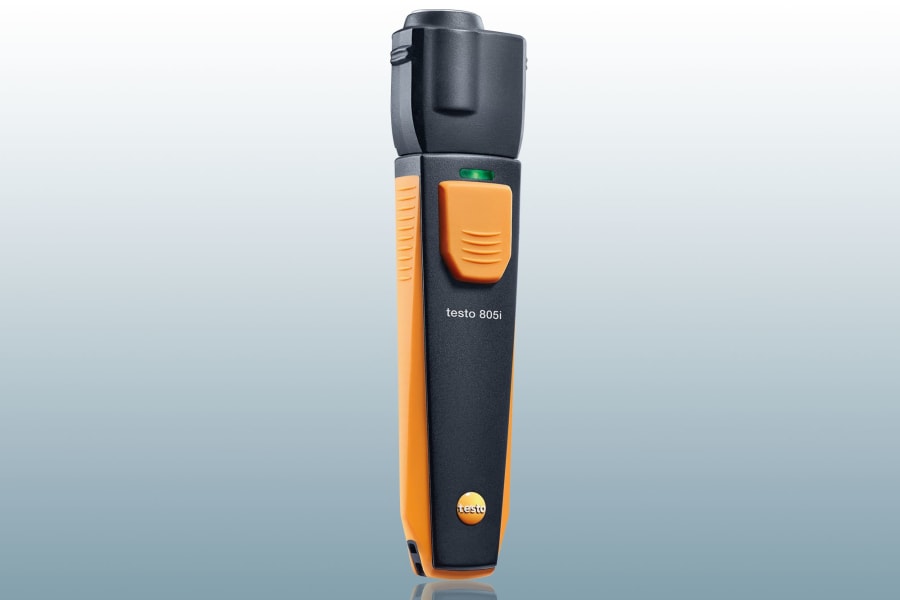
Highlight
Smart Probes
Bestseller
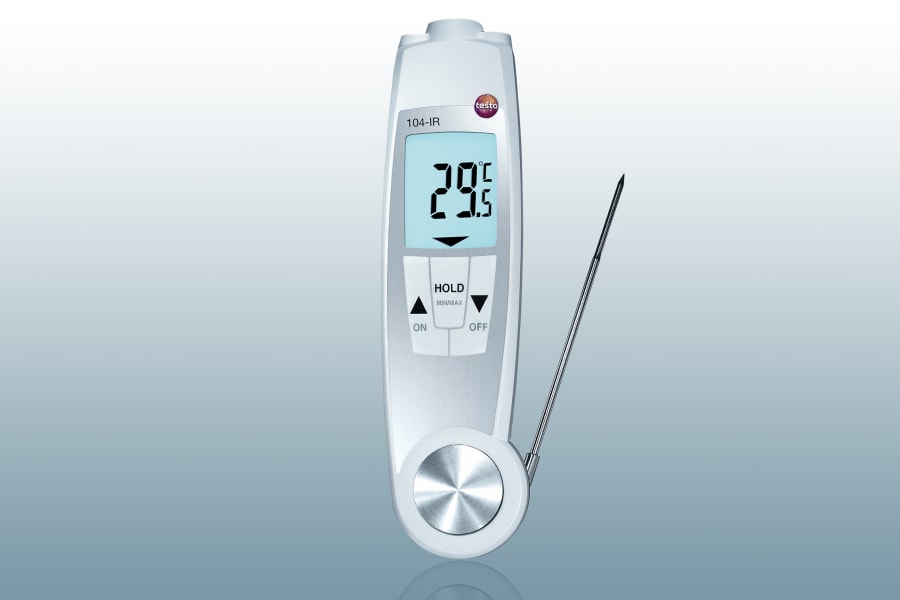
Penetration thermometers

Bestseller
Temperature data logger
New!
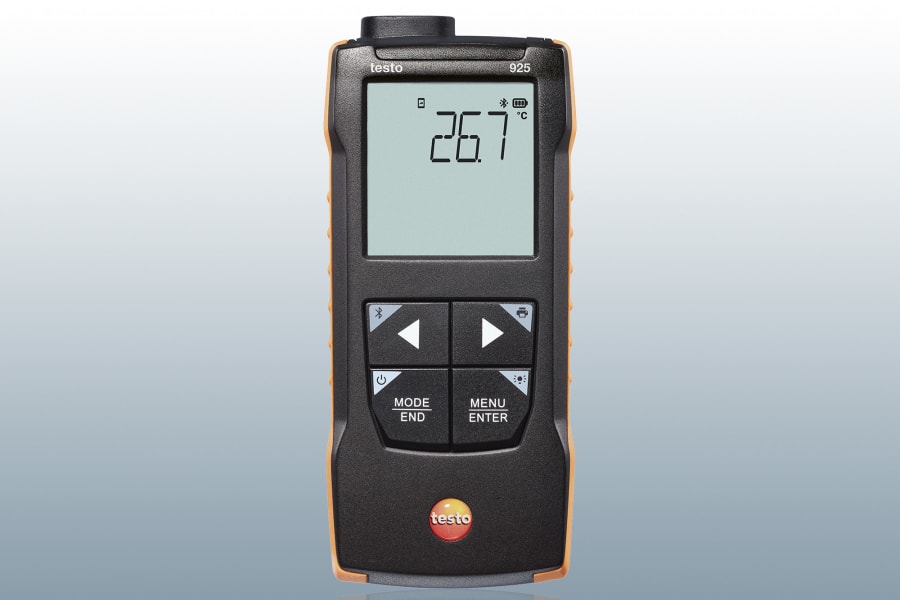
Surface temperature meter
Bestseller
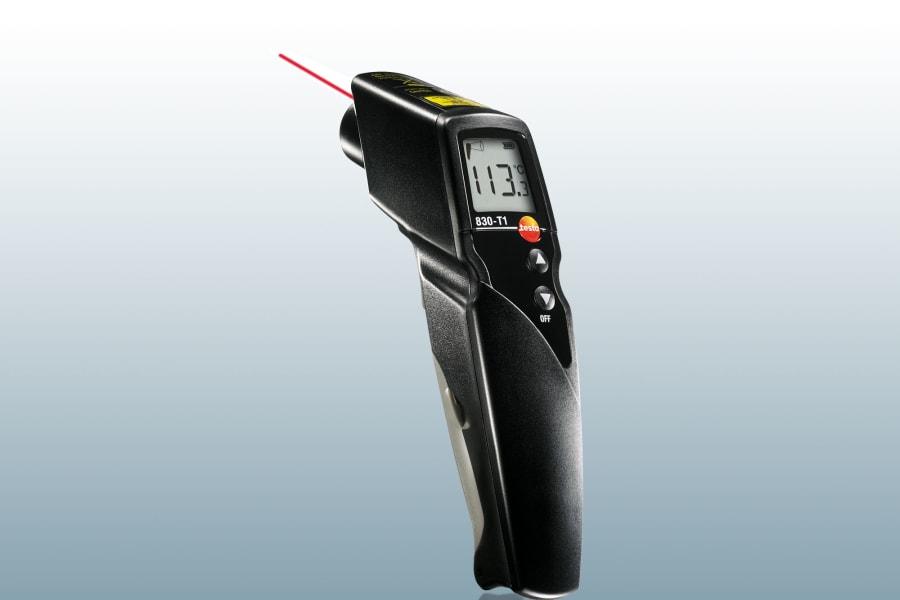
Infrared thermometer
Highlight
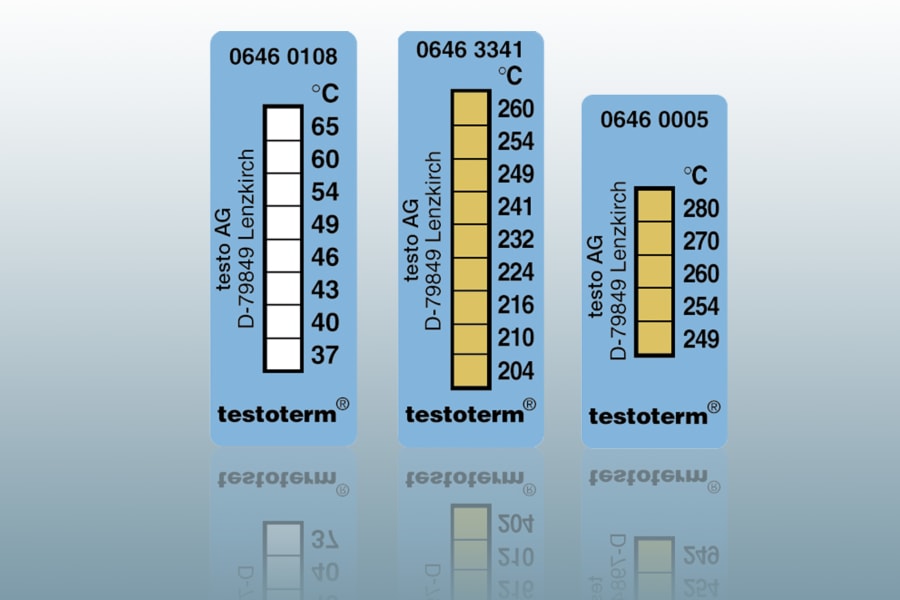
Temperature measuring strips
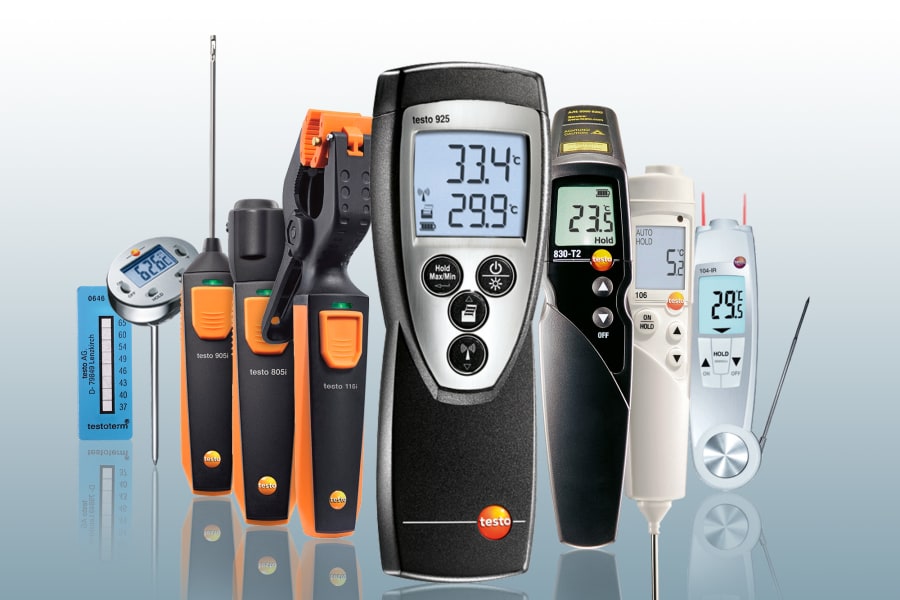
Depending on the application, you will still need more measuring instruments for efficient temperature measurement in addition to a thermal camera. We have put together a small selection of our bestsellers for you here.
Smart Probes are compact professional measuring instruments operated by smartphone. They are available for the most important measurement parameters and will make your day-to-day work somewhat more pleasant.
Temperature data loggers are used not only for measuring temperatures (and other measurement parameters), but also for monitoring and recording them over defined time periods.
Smart Probes are compact professional measuring instruments operated by smartphone. They are available for the most important measurement parameters and will make your day-to-day work somewhat more pleasant.
As the name makes clear, a surface temperature meter is used to measure the temperature on the surface of a measurement object. This category also includes infrared thermometers. Similar to an infrared thermal imaging camera, they measure the thermal radiation of an object. Temperature measuring strips, on the other hand, are used to quickly measure the surface temperature in a wide variety of applications.