Frying Oil Life Cycle
Food & Health
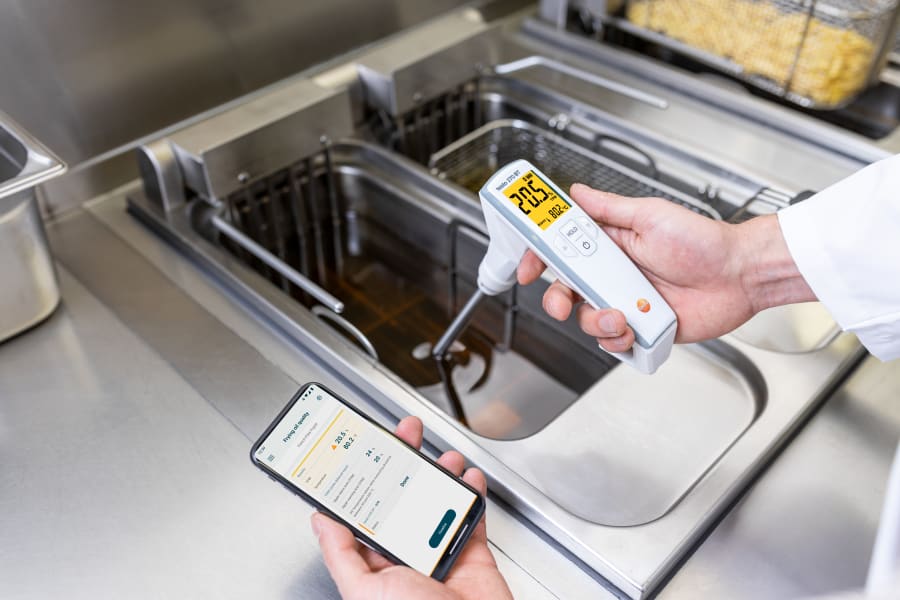
Currently, the price index of vegetable oils is 163.3 points
(as of August 2022). This represents a price increase of
around 25% over the previous year and more than a doubling of prices compared to 2020. Compared to the reference period 2014 – 2016, this represents the highest price increase in recent years.
This is due to a global supply crisis, which is based on several factors: While the new biodiesel regulation in the USA has been the main factor driving demand for soybean oil, the upward trend for palm oil is primarily due to rising global demand.
In 2022, this development has been further exacerbated by the war in Ukraine. For example, in 2021, Ukraine accounted for 31% of global sunflower oil production, and Russia accounted for another 27%, further intensifying the global supply crisis.
The sharp increase in the costs of edible oils and other
essential raw materials affects the food industry, which is
already facing a difficult situation.

Many restaurateurs are being forced to adjust their menus and portion sizes while simultaneously raising prices. In many areas of gastronomy, fried foods play a significant role. One lever to counteract the current price developments is therefore efficient oil management, which makes it possible to extend the frying oil life cycle while maintaining constant product quality and thus saving costs. To do this it is important to know the factors that promote or accelerate oil degradation.
In addition to the composition of the oil, external factors such as the exposure to oxygen during production,
storage and preparation as well as the frying time and temperature play a role here, changing the composition
and quality of the frying oil along the frying cycle (from filling with fresh fat to discarding the aged fat).
This can be described in five phases.
The best frying results in terms of taste can be achieved in the middle phase (c) – i.e. with lightly used frying oil (Fig. 1).
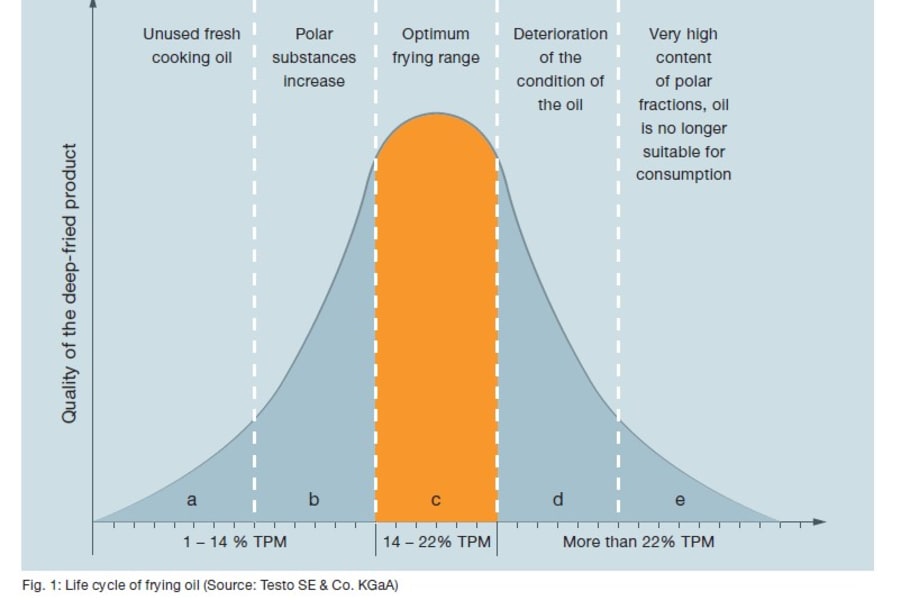
During frying, a number of complex thermal reactions take place that affect the frying result and lead to the formation of undesirable compounds. This produces many degradation products, including free fatty acids. These compounds have a higher polarity than the original triglycerides in the oil. Free fatty acids are usually volatile and can further break down and react
to form other components. The degradation products formed during the oxidative and thermal decomposition of fats are referred to by the collective term “Total
Polar Materials” (TPM). The content of these degradation
products increases as frying progresses, affecting the
quality of the oil. They increase oil viscosity, reduce heat
transfer, reduce the smoke point of the oil and increase oil absorption in fried foods. They also have a negative effect on the colour of the frying medium and the taste and nutritional value of the fried food. Generally speaking, it can be said that: The longer an oil is used for deep-frying, the more it degrades – and the quality of the cooking oil has a significant impact on the quality of the food fried in it. The aim of efficient oil management is therefore to control the oil cycle in such a way that the oil quality is kept in the optimum range for as long as possible. It is common practice to regularly replace part of the used oil with fresh oil, thereby reducing the concentration of chemical degradation products. Doing this maintains quality over a longer period of time. Companies which deem it particularly important for the food to have a standardized taste often work by refreshing the oil. After reaching the legal or an individually defined TPM or quality limit value, many companies replace the oil completely. In many countries, legal limits are set, above which food may no longer be offered for consumption.
In Europe, determining the TPM value has become the standard for assessing the quality of fats and oils in
deep-frying conditions.
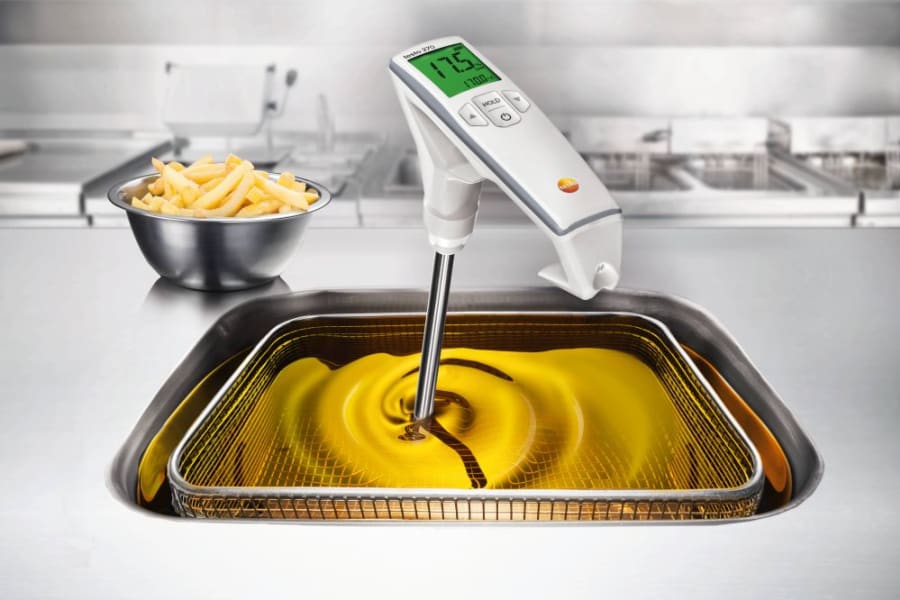
As a result, several European countries have set limits
of 24 – 27 % TPM for spoiled frying oils. In countries
such as the USA and Australia, where TPM is not a legal limit, the parameter is nevertheless used by many companies as an internal benchmark. In addition to the TPM value, many countries have legal guidelines on the free fatty acid content. To check the quality of the frying oil, an objective method is essential. For the evaluation of the frying oil it is therefore not sufficient to rely on subjective quality indicators such as the colour, smell and taste of the oil.
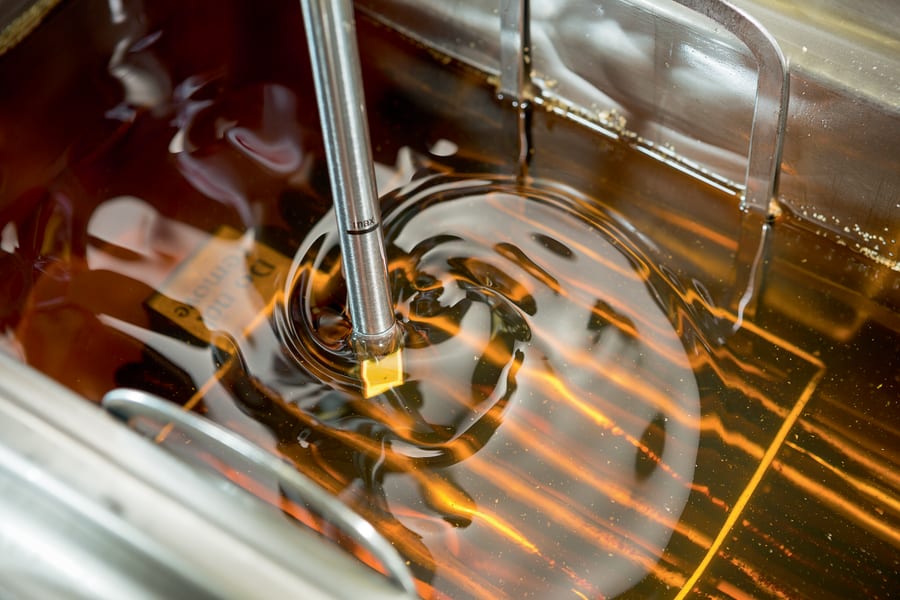
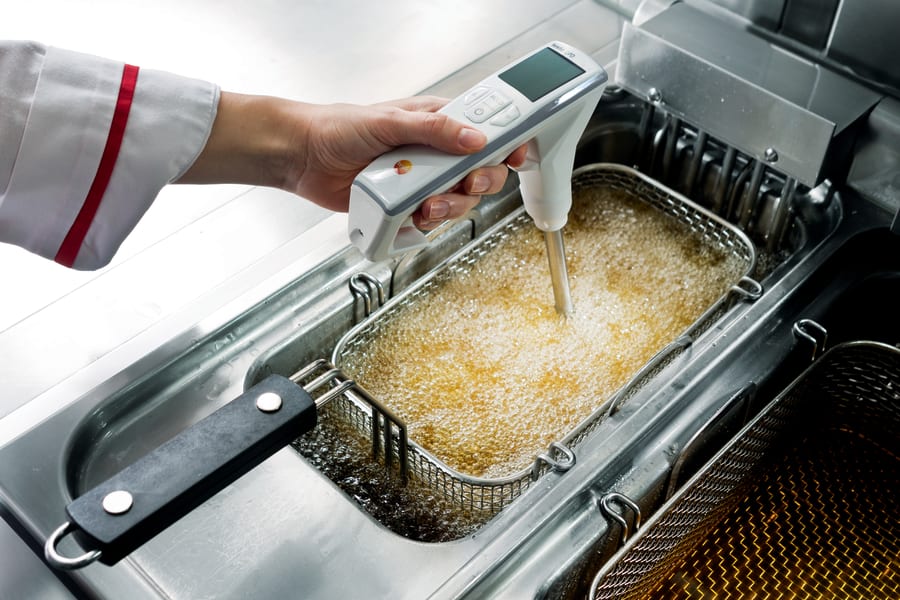
Carrying out the TPM measurement using a suitable testing device directly on site is one of the most widely recognized methods for evaluating the cumulative degradation of frying oils – in or other words: the quality of the frying oil. In addition to ensuring compliance with legal and individual limits, a key benefit of TPM measurement is to keep the frying oil in the optimal frying range for as long as possible, thus enabling the right combination of quality and cost efficiency.
Based on the individual factors of a food service operation, several options are available to optimize the frying oil life
cycle. These range from the choice of oil type, where taste differences and preferences should be taken into account,
to the addition of antioxidants, to the use of automated fryers and regular filtration of the frying oil. In this regard, the main focus should be on the described regular control of the TPM value and thus the verification of the objective oil quality, in order to realize an optimal management of the frying oil life cycle, since the TPM measurement allows an objective assessment of the frying oil quality.
This can be used independently or in addition to the previously described methods for optimizing the frying oil life
cycle and is a decisive control lever for using frying oil in the right balance between quality and cost efficiency. Testo
offers the robust testo 270 frying oil tester for fast and costeffective determination of frying oil quality especially for the food industry, as well as testo Saveris Food, a digital quality management solution with automatic measured value
transmission and documentation. This can be optimally integrated into the customer processes using the latest technology, also with regard to calibration of the sensor.
As a result, several European countries have set limits
of 24 – 27 % TPM for spoiled frying oils. In countries
such as the USA and Australia, where TPM is not a legal limit, the parameter is nevertheless used by many companies as an internal benchmark. In addition to the TPM value, many countries have legal guidelines on the free fatty acid content. To check the quality of the frying oil, an objective method is essential. For the evaluation of the frying oil it is therefore not sufficient to rely on subjective quality indicators such as the colour, smell and taste of the oil.
Carrying out the TPM measurement using a suitable testing device directly on site is one of the most widely recognized methods for evaluating the cumulative degradation of frying oils – in or other words: the quality of the frying oil. In addition to ensuring compliance with legal and individual limits, a key benefit of TPM measurement is to keep the frying oil in the optimal frying range for as long as possible, thus enabling the right combination of quality and cost efficiency.
Browse through more exciting articles
You'll find a wide range of exciting articles covering the latest innovations and solutions in the HVAC/R, industry, food and pharma sectors. Explore expert insights and practical tips to stay ahead in your industry.
Refrigeration systems
Discover the range
Heating systems
Find out more
Facility management
Building system measurement