Directly from the manufacturer
Free delivery Australia wide
Fast delivery
Secure payment
Directly from the manufacturer

- Home
- Know How
- Emission Measuring Instrument
- Emission measurement in industrial plants – industries & typical processes | Testo
Emission measurement in industrial plants – industries & typical processes
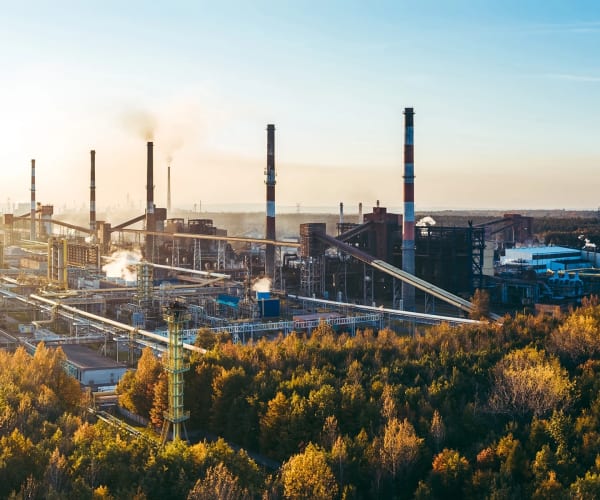
In industrial plants such as glass, cement or steel works, emission measuring instruments continuously or periodically record flue gas components such as O2, CO, CO2, NOx, SO2 and dust in mg/m3, in order to ensure compliance with emission limit values and to control processes efficiently. They are installed at defined measurement points and integrated into the operational and documentation workflows of the plant.
Typical emission sources in industrial plants
Industrial plants generate emissions primarily where fuels are burned or process gases are released. Typical emission sources are:
Main burners and furnace flames in glass or cement kilns,
boiler and heating systems for steam generation,
drying and treatment furnaces in the steel or metal industry,
flue gas streams from waste heat recovery systems or post-combustion stages.
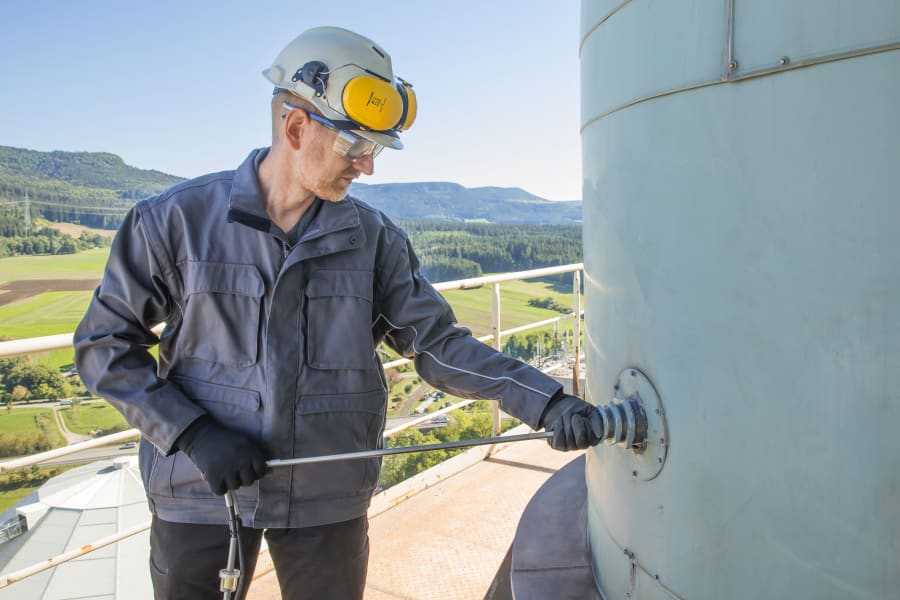
In many cases, these emission sources are connected to central flue gas ducts or chimneys. Emission measuring instruments are positioned so that they capture representative flue gas streams – often immediately before the chimney outlet or at defined flue gas collection points.

Measurement points, measured variables and boundary conditions
The selection of suitable measurement points is crucial for meaningful emission measurements. Important criteria are:
flow conditions in the flue gas (sufficient mixing, no dead-zone-like areas),
temperature and pressure conditions,
dust and moisture content,
accessibility for installation and maintenance.
Typical measured variables in industrial plants are O2, CO, CO2, NOx, SO2 and dust. Depending on the process, additional components may be added, such as HCl or HF in waste incineration plants. Emission measuring instruments must cover measurement ranges that can capture both the typical operating range and expected peaks. At the same time, high temperatures, dust and aggressive components pose challenges for sampling, gas conditioning and sensor technology.
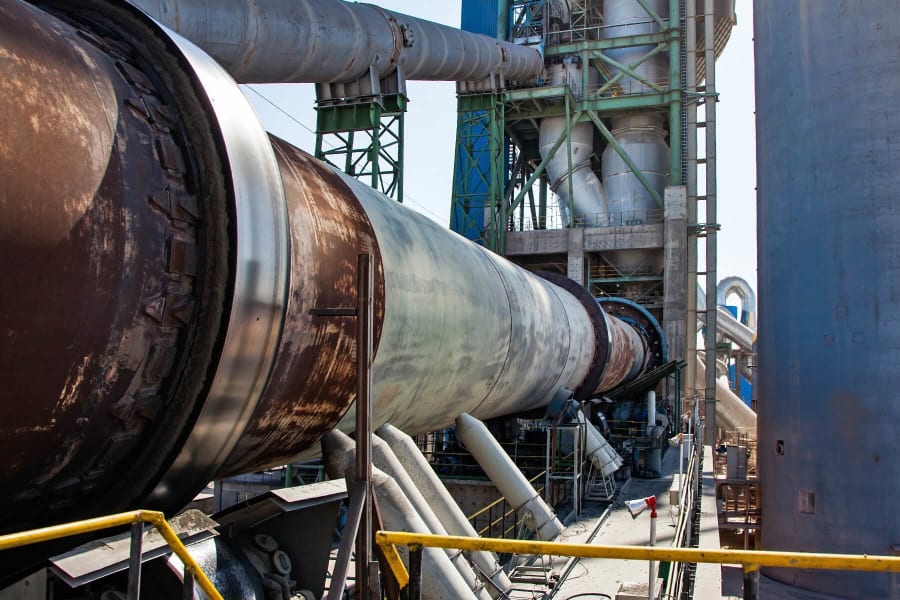
Practical example: in a cement plant, the flue gas temperature in the raw gas zone can reach several hundred degrees Celsius, while dust levels are in the g/m3 range. Sampling probes and gas conditioning modules must be designed accordingly to protect both measuring instruments and lines from wear and blockage.
Emission measurement in selected industries
Glass, cement and steel industry at a glance
In the glass industry, NOx and SO2 emissions are often the focus. Measurement points are typically set up in the flue gas stream of the melting furnaces. High process temperatures and long furnace operating times require particularly robust measurement systems with long-term stable NDIR measurement paths and reliable gas conditioning.
In the cement industry, in addition to NOx and SO2, dust emissions are particularly relevant. Measurements are carried out at several points: for example, at the kiln exhaust gas, at dedusting systems or at secondary firing systems. Emission measurement systems must be able to handle high dust loads and changing fuels here.
In the steel industry, emission measurements are carried out, among other things, at heat treatment furnaces, waste heat recovery systems and other process stages. Depending on the process, different gas components and dust fractions must be monitored. Emission measuring instruments are often integrated into existing process control systems to combine limit value monitoring and operational optimisation.
Integration of emission measuring instruments into plant concepts
Emission measuring instruments are not isolated units, but part of an overall plant concept comprising process technology, flue gas cleaning and monitoring systems. Typical integration aspects are:
integration of measured values into process control systems (e.g. for automatic limit value monitoring),
linking with flue gas cleaning systems (e.g. control of denitrification or desulphurisation stages),
connection to data archiving and reporting for audits and regulatory reports.
Interaction of mobile and stationary systems
In many industrial plants, stationary emission measurement systems and mobile devices complement each other. Stationary systems continuously record emissions at the main chimneys, while mobile emission measuring instruments are used for additional measurements at auxiliary plants, temporary processes or during commissioning. This allows both legal requirements and operational questions to be covered flexibly.
Do you have questions or would you like personal advice? Contact us!
We look forward to supporting you with our expertise and individual solutions.