
- Home
- Know How
- Thermal Imaging Camera
- Thermal imaging camera technology: resolution, NETD, focus & IFOV | Testo
Thermal imaging camera technology:
What image quality really means
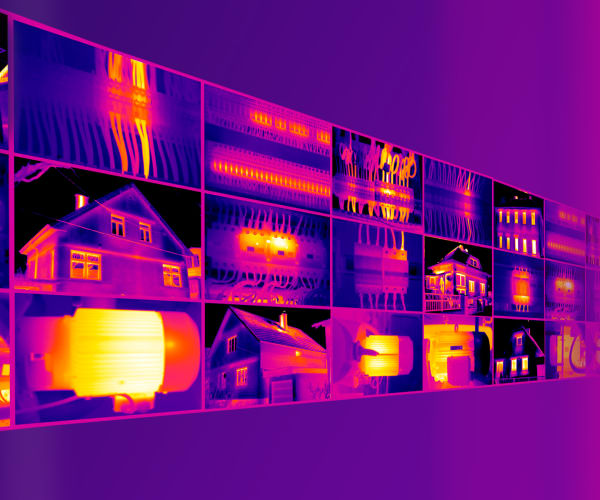

A thermal imaging camera is “good” when it reliably captures your measurement task: the target must appear sufficiently large and sharp in the thermal image at your typical distance (IFOV + focus), small temperature differences must be detectable (NETD), and results must be documented reproducibly (scale, measurement points, reporting). These technical factors can be checked systematically – and that is exactly what makes camera comparisons reliable.
Which technical specifications are decisive for thermography?
The most important specifications are detector resolution, field of view/FOV (and therefore IFOV, depending on lens and distance), thermal sensitivity (NETD) and focusability. For the field workflow, software/reporting and standardization functions come on top (e.g. consistent scale logic, image management, site-based workflows). Only their interplay determines whether small targets (e.g. terminals), low contrasts (e.g. building surfaces) or recurring inspections work efficiently and comparably.

Detector resolution & geometry: how many measurement points you really have
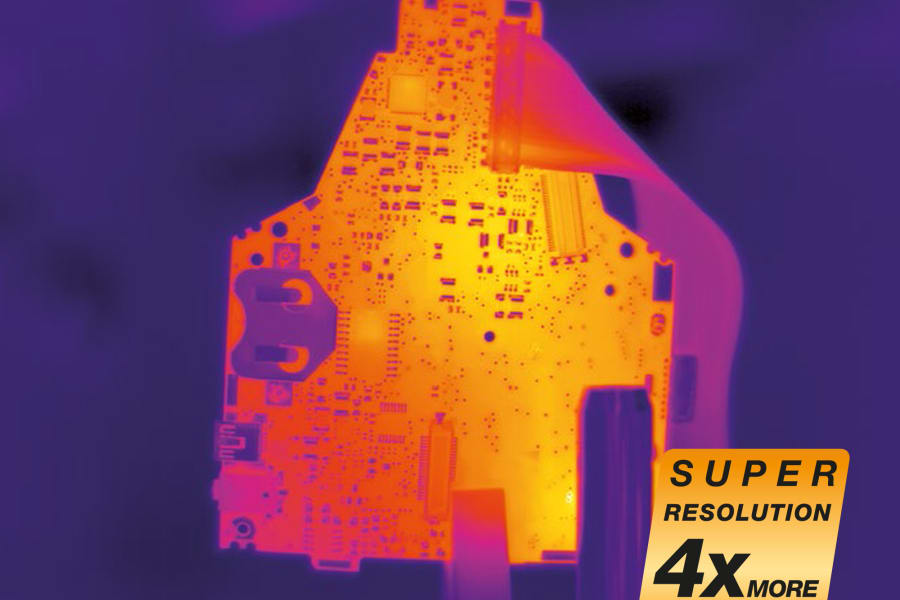
Detector resolution determines how many temperature measurement points are available per image. More pixels do not automatically mean a “better measurement”, but they always help when targets are small or the distance is large – because more measurement points then fall on the target object.
Always ask: how large is my target object – and how far away am I typically? A high pixel count is of little use if the lens is very wide-angle or the target occupies only a few pixels in the image. Conversely, a moderate resolution can be sufficient if you can get close enough and the focus is correct.
SuperResolution can improve the rendering of detail, but it does not change the physical geometry of your measurement setup. For assessing small targets, it remains decisive that object size, distance and optics match.
Thermal sensitivity (NETD): making small differences visible
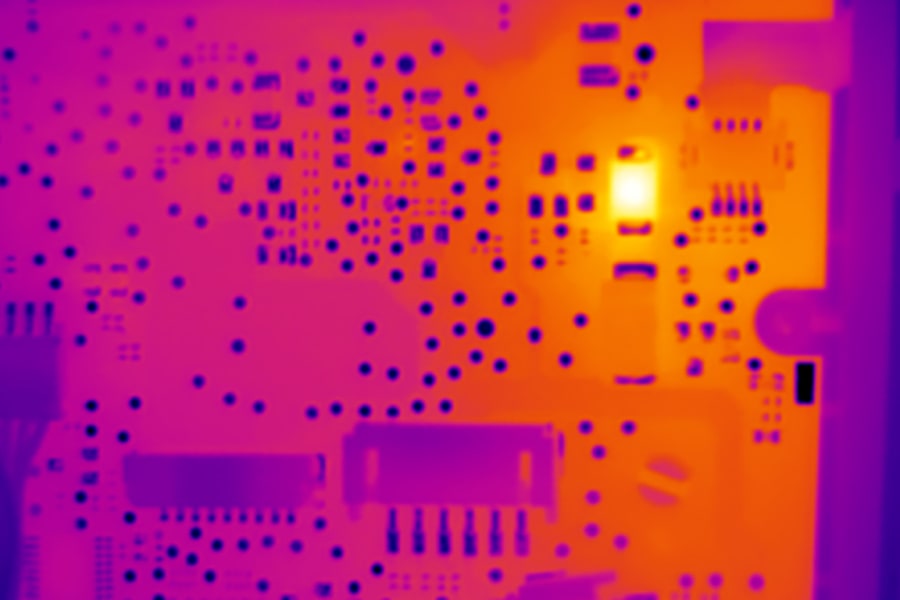
NETD in mK describes the smallest temperature difference the camera can display as contrast. The lower the value, the finer the visible differences.
When NETD is the limiting factor
NETD is particularly relevant when you want to detect very small temperature differences – e.g. on large building surfaces or early anomalies that do not yet form a strong hotspot. In such cases, NETD often decides whether a pattern “emerges” or is lost in the noise.
Optics, field of view (FOV) and IFOV: why lenses determine use
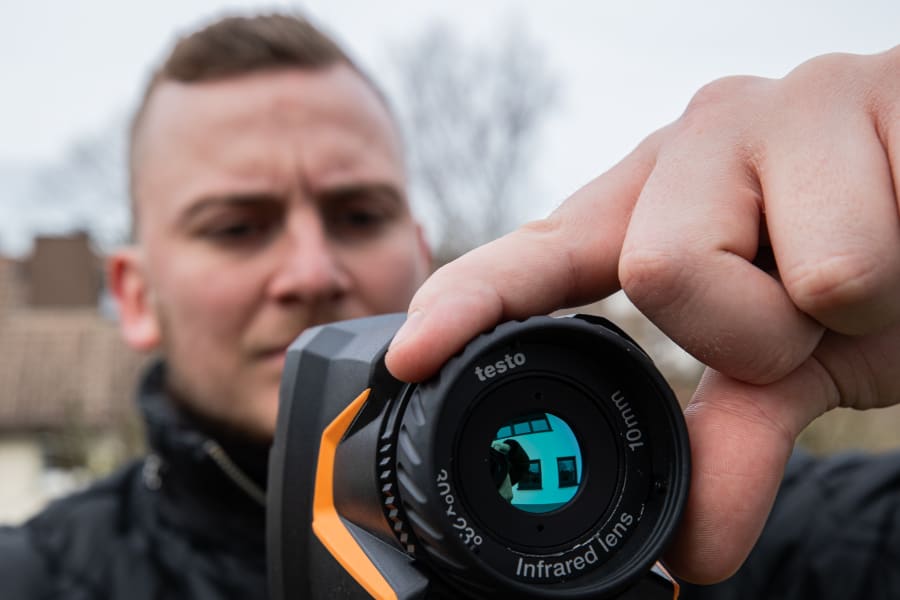
The optics determine how large the image section is and how large an object appears in the thermal image. This makes them a key lever for measurement capability with small targets and greater distances.
Wide-angle lenses are practical in tight spaces or for large areas (buildings, plant overviews). Telephoto lenses help to image small targets (terminals, connectors, individual cells/connections) larger from a greater distance.
IFOV is the key to the question “Can I measure this object meaningfully from this distance?”. If the object is only 1-2 pixels in size, a mixed pixel results – the measured value is inevitably not specific to the object.

Focus, image stability and measurement accuracy
Blurred images are not just an optical problem: blur smears temperature information across pixels – hotspots appear larger or smaller, boundary areas become unclear and measurement points become unstable.
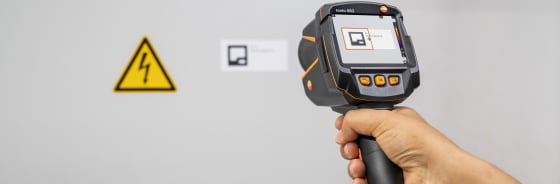
Manual focus is particularly helpful with changing distances and small target objects, because it focuses reproducibly “on the spot”. Automatic methods can reach their limits in scenes with little contrast or reflective surfaces. What matters is that the focus is actively checked.
If measurement points lie on blurred edges, the measured value can vary more. For comparative measurements (e.g. recurring electrical checks), focus should therefore be part of the standard workflow.
Analysis, software & standards in the field
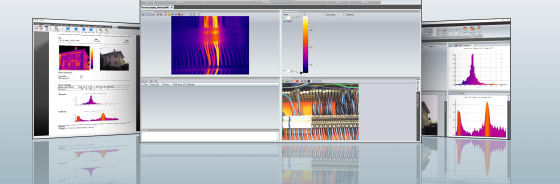
Technical image quality is only the beginning. In practice, evaluation is often what decides: how quickly can images be managed, measurement points set reproducibly and reports created in a standardized way?
For recurring inspections (electrical, maintenance, PV), standardized reports, clear measurement-point logic and image management are key efficiency drivers. They also help make results comparable across teams.
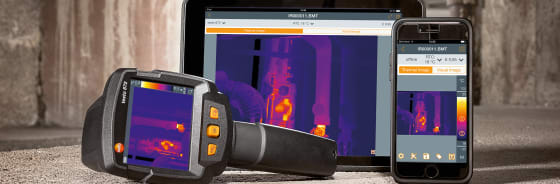
Apps support on-site documentation, data sharing and workflows (e.g. measurement location assignment). Connectivity functions reduce media breaks and speed up analysis.
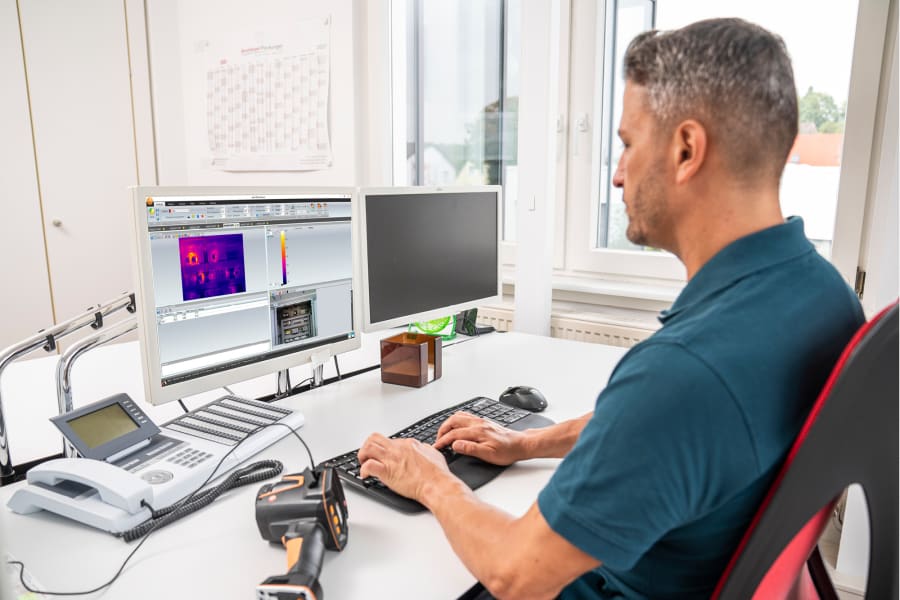
Overview of Testo thermal imaging camera features



Next steps: technology requirements, software and instrument comparison
After defining the application, deepen the fundamentals (ε/RTC/IFOV), define a reproducible documentation workflow, and choose a camera whose resolution and lens match object size and distance.
Do you have questions or would you like personal advice? Contact us!
We look forward to supporting you with our expertise and individual solutions.