
- Home
- Know How
- Emission Measuring Instrument
- Application examples, references & downloads | Testo
Emission measuring instruments in use –
Application examples & references
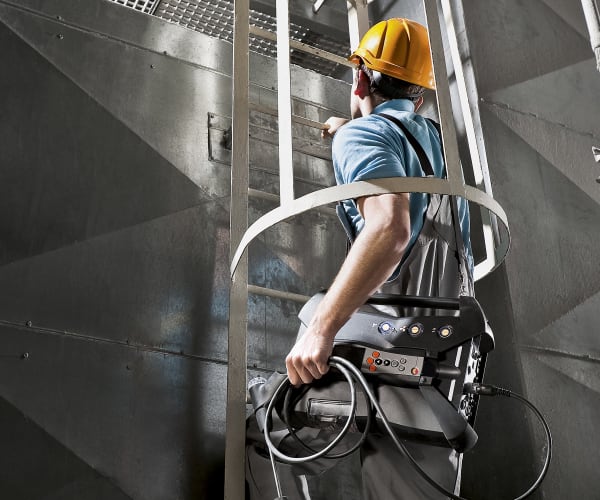
References from industry and energy generation
Practical reports and references show how emission measuring instruments perform under real-world conditions, what challenges arise and which solutions have proven effective. They supplement technical data sheets and standard specifications with concrete experience from industry, energy generation and everyday service work, helping operators plan their own emission measurement concepts more reliably.
In industrial and energy generation plants, emission measuring instruments are used daily to comply with limit values, identify efficiency potential and demonstrate compliance with regulatory requirements. Reference projects show how different industries deal with similar challenges – such as high dust loads in cement plants, varying fuels in CHP units or strict documentation requirements in waste incineration plants.
 AI-generated
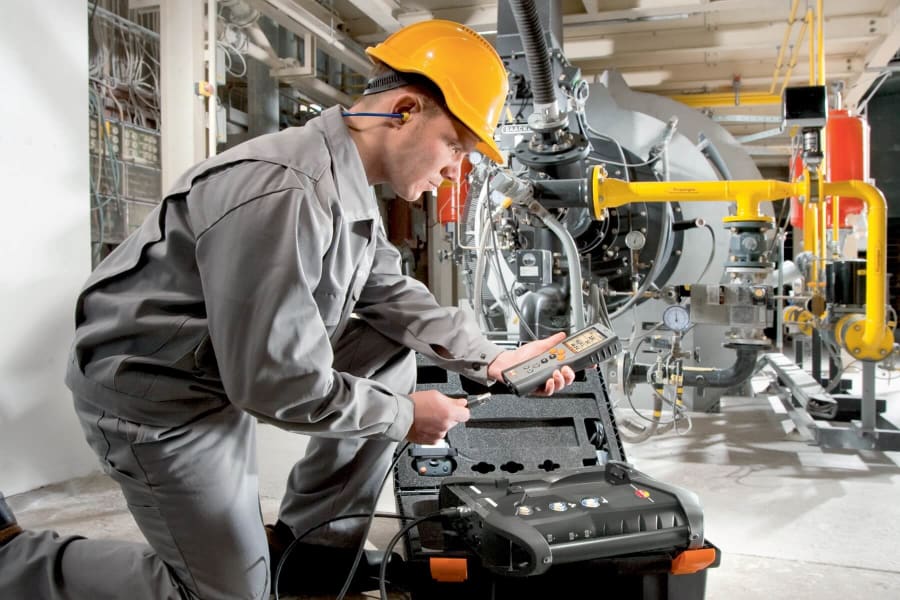
Emission measurement on combined heat and power plants
Combined heat and power plants place particular demands on emission measuring instruments: they frequently operate with varying loads and sometimes changing fuels (e.g. natural gas, biogas or special gases). Reference projects and application examples document how emission measurements are implemented in such plants – from the selection of suitable measuring instruments to integration into existing control and documentation systems through to recurring inspections.
These documents show which measurement strategies have proven effective for different CHP concepts, how inspection intervals can be structured and what role mobile emission measuring instruments play in combination with stationary solutions.
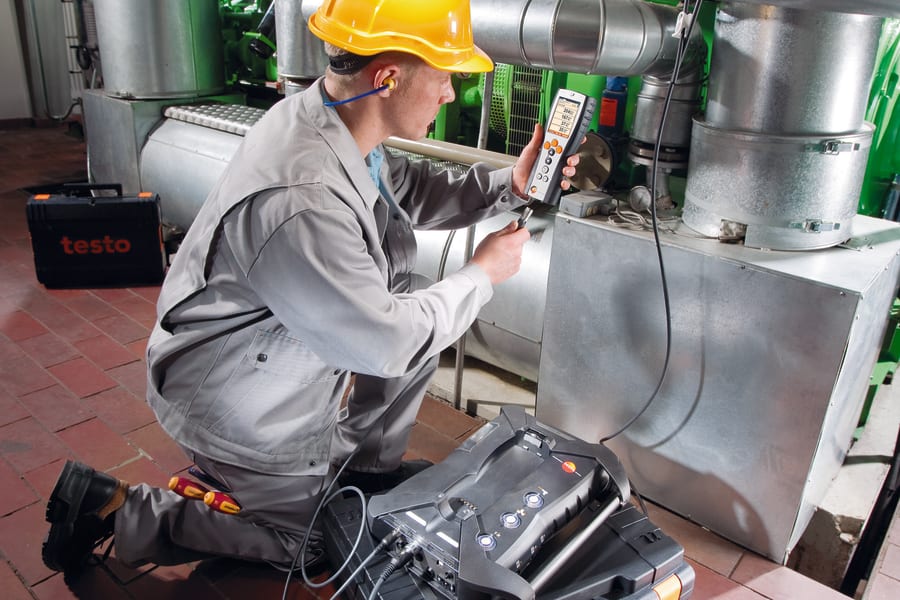
White papers & technical documents on emission measurement
In addition to classic reference projects, white papers and technical documents offer an in-depth examination of specific measurement tasks. They explain typical problem areas, compare measurement concepts and show how different measurement strategies can be implemented in practice – for example in emission measurement on turbines, in cement plants or in the process industry.
Benefits of references for planning, operation and service
References and white papers are more than marketing material – they serve as a knowledge base for planning, operation and service. Patterns can be identified from the evaluation of many projects:
Which measurement concepts work particularly reliably in certain industries?
Which combinations of mobile and stationary systems have proven effective?
What typical errors occur in the planning and operation of emission measurement systems, and how can they be avoided?
For planners, references provide concrete guidance on which system architectures have proven effective in comparable plants. Operators gain insights into typical maintenance and service concepts and can better assess effort and benefit. Service technicians benefit from practical descriptions of measurement procedures, fault patterns and optimisation steps.
Reference projects involving waste incineration plants show that carefully designed gas conditioning with heated lines, suitable filters and automatic monitoring is crucial for ensuring that NDIR and electrochemical measurement sections operate stably over the long term. These findings feed into the planning and service concepts for new plants and increase the availability of emission measurement systems.
Do you have questions or would you like personal advice? Contact us!
We look forward to supporting you with our expertise and individual solutions.