
Know where it gets hot — before it becomes a problem.
High ambient temperatures in summer push refrigeration systems to their limits. Hidden hot spots in your warehouse can compromise food safety, increase food waste, and put you at risk in audits an in front of your customers. Temperature Mapping reveals what your monitoring system can’t see — yet.

What is Temperature Mapping
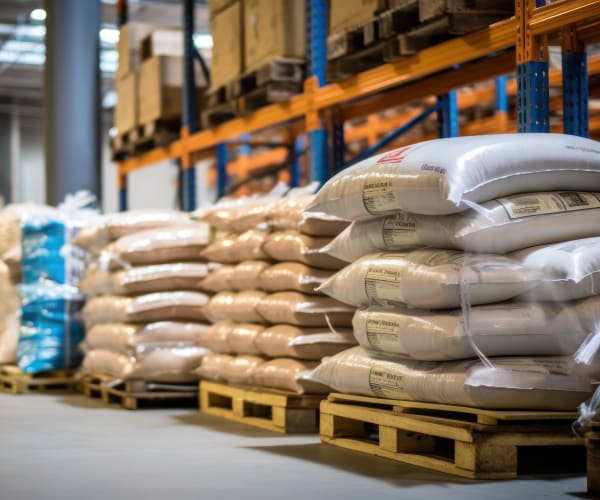
Temperature Mapping is the documented process of assessing and visualizing the temperature distribution within a storage area. Using data loggers placed at defined measuring points, it creates a comprehensive picture of the actual climate conditions — identifying hot spots, cold spots, and risk zones that would otherwise stay undetected. A mapping study is designed to simulate all conditions a storage facility may encounter — from daily operations to seasonal extremes — creating clarity and confidence for every situation.
Mapping is essential for any effective monitoring system. It shows you where to monitor — so you can be sure you’re watching the right places.
Where Temperature Mapping is applied
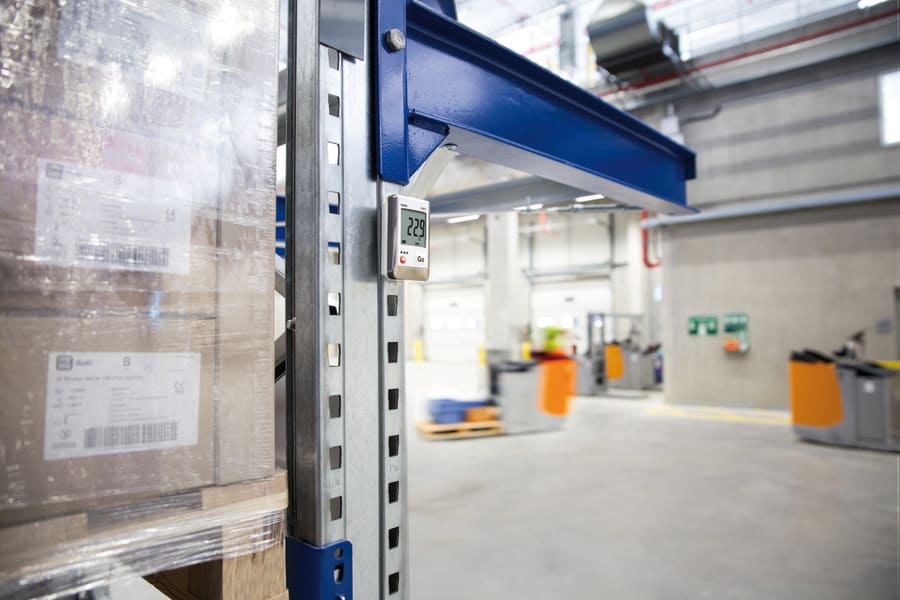
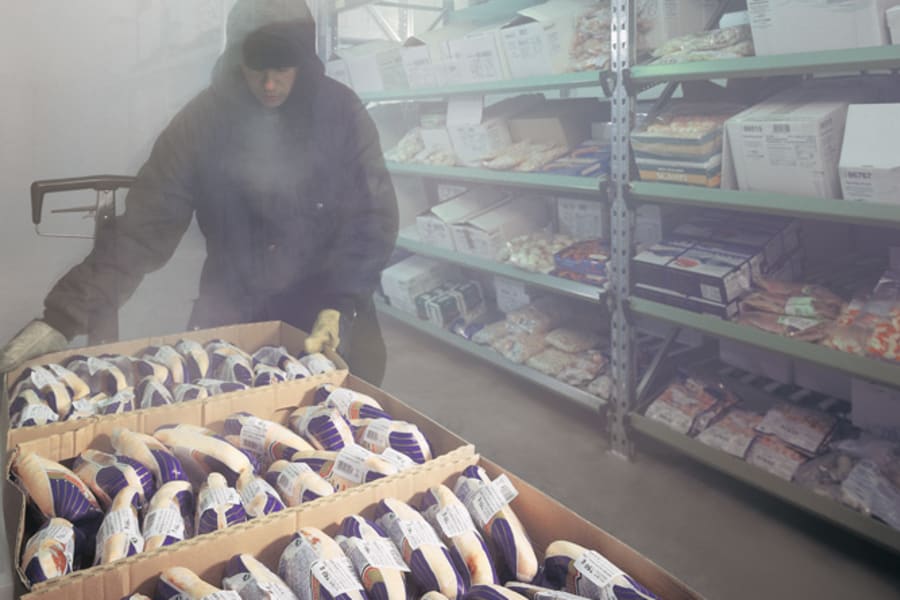
Cold rooms and freezer areas are particularly susceptible to uneven temperature distribution caused by air flows, door openings, and varying load levels. Mapping identifies hot and cold spots across all storage levels — ensuring your cooling system is performing where it matters most.
How a Temperature Mapping project works
A temperature mapping study typically follows these steps.
Risk analysis: Identify critical points such as doors, cooling units, exterior walls, and corners with poor air circulation.
Logger placement: Position data loggers in a 3D grid across all levels and risk zones.
Measurement: Duration ranges from 24 hours (refrigerator/freezer) up to 14 days (large warehouse), depending on size and type — with a typical measurement interval of 1 to 10 minutes.
Evaluation: Graphical and tabular analysis of the temperature distribution.
Documentation: Audit-ready report including calibration certificates, site plans, raw data and recommendations.
Transition to Monitoring: Define permanent sensor positions based on mapping results — ensuring you monitor exactly the right spots.
Do it yourself
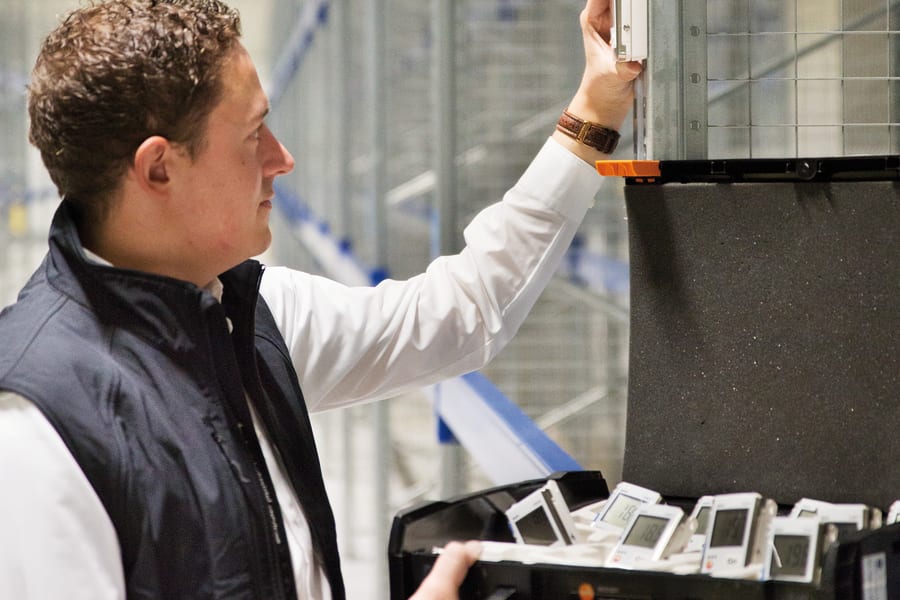
With the testo 175 T1 data logger, you have everything you need to conduct a professional mapping project independently. Compact, precise, and easy to use — even in demanding environments like freezer warehouses or high-humidity storage areas.
Full Service by Testo
Not enough internal resources or expertise? Testo Industrial Services takes care of the entire mapping process for you: from planning and logger placement to evaluation and audit-ready documentation.
The right tool for your Temperature Mapping project
The testo 175 T1 data logger is the ideal instrument for temperature mapping projects. With a measurement range of -35 to +55 °C and an accuracy of ±0.5 °C, it delivers precise results even in demanding environments like freezer warehouses or high-humidity storage areas.
Its large memory capacity supports long-term measurements — from 24 hours to 14 days. After mapping, the insights gained directly inform the placement of your permanent online monitoring sensors.
Need expert advice on your mapping project?
Whether you’re planning your first mapping study or looking to optimize an existing system — our experts are here to help. Get in touch and we’ll find the right solution for your storage environment.