
Infrared camera
Versatile, robust and cheaper than expected
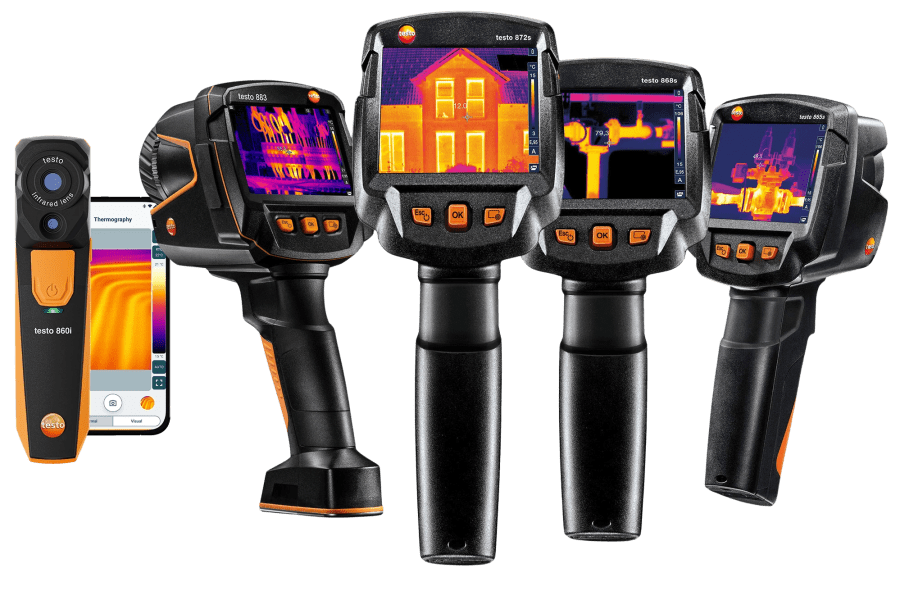
Your new infrared camera from Testo:
A infrared camera is a tool like no other. It makes the invisible visible and gives you completely new perspectives. And this in countless applications - infrared thermography is used successfully here:
Electrical and mechanical maintenance: Detect critical temperature changes during operation and avoid system failures
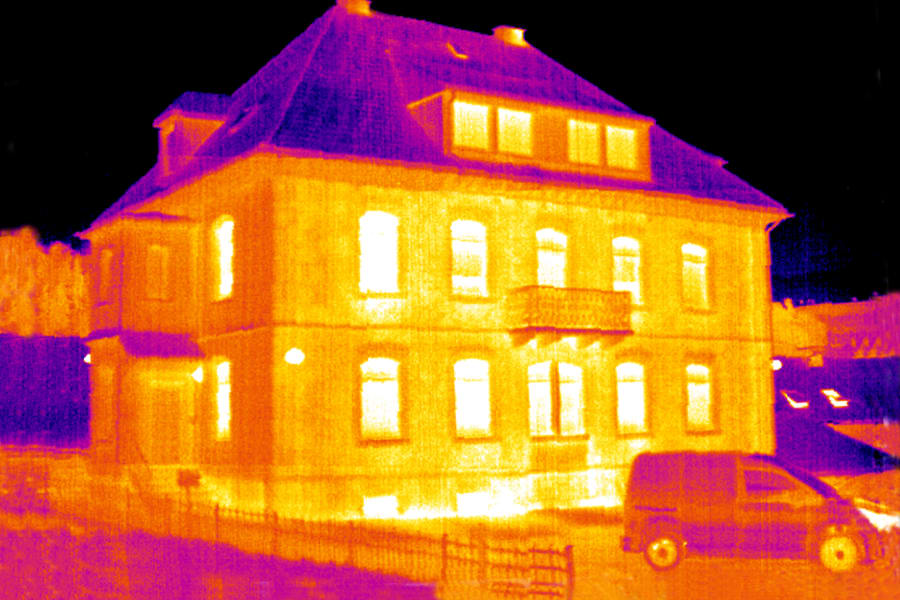
Energy consulting: Detect thermal weak points of a building (thermal bridges) in order to initiate targeted optimizations.
Heating installation: How bad is the slagging of a radiator and where is the underfloor heating leaking? Find out with a Testo infrared camera.
Research and development: Monitor and document temperature curves.
Infrared cameras for thermography
Our infrared cameras:
What infrared cameras from Testo offer you:
Brand quality Made in Germany
Developed together with our customers
Best price-performance ratio in its class
Buying an infrared camera - first tips
Infrared resolution: At least 160 x 120 pixels.
Thermal sensitivity: less than 120 mK, then you can detect temperature differences of 0.12 °C.
Software for report generation: For professional documentation
Operation: As uncomplicated and intuitive as possible
Applications of infrared thermography
Infrared thermography - it's the resolution that counts
Not all thermal images are the same. When you use a thermal imaging camera to search for leaks, thermal bridges, mold or overheated components, it's the details that count. However, these only become visible from a resolution of 160 x 120 pixels. This is because each pixel is a measuring point: the higher the resolution, the more accurately you can measure. And if you measure more accurately, you can detect irregularities earlier to avoid major damage for your customers.
For proper thermography, the distance to the measurement object is crucial. However, it is not always possible to get very close to the object to be measured. Thermal imaging cameras with a lower resolution either provide too little detail at a comfortable distance from the object to be measured or falsify the measured value by including adjacent areas of the object to be measured. Only from a resolution of 160 x 120 pixels can you speak of real thermography, because you can produce meaningful thermal images even from greater distances. Every thermal imager from Testo also has the testo SuperResolution function: it increases the resolution from 160 x 120 pixels to 320 x 240 pixels.
This innovation from Testo simply improves the quality of the thermal images from your infrared camera by a class! The idea behind it is as simple as it is ingenious: testo SuperResolution technology uses the natural movements of the hand during thermography and takes several slightly offset images of the same measurement object. From this image information, a testo infrared camera then calculates a thermal image improved by a factor of 1.6 with four times more measurement values.
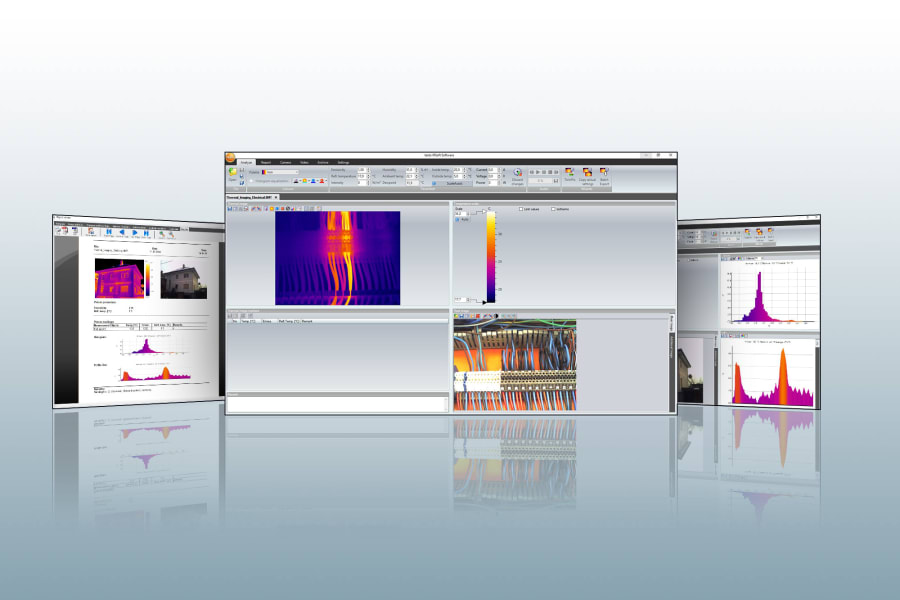
testo IRSoft - the analysis software for your Testo infrared camera
For many thermography applications, it is not enough just to take thermal images. More and more often, meaningful documentation is also required. Especially if you offer thermography as a service, for example. After all, your customers also want to know what they are paying for and what exactly the use of a thermal imaging camera has achieved. This is why the professional thermography software testo IRSoft is included with every Testo infrared camera. And this is what the software offers you:
Correct emission levels retrospectively
Highlight limit value violations
Set any number of measurement points and comment on thermal images
Superimposed display of infrared and thermal image (testo TwinPix, for Tetso cameras with integrated digital camera)
Create meaningful reports - easily with the integrated report wizard
Areas of application for thermal imaging cameras
Thermal imaging cameras are characterized by their versatility and are therefore in demand in a wide variety of industries. The areas of application include
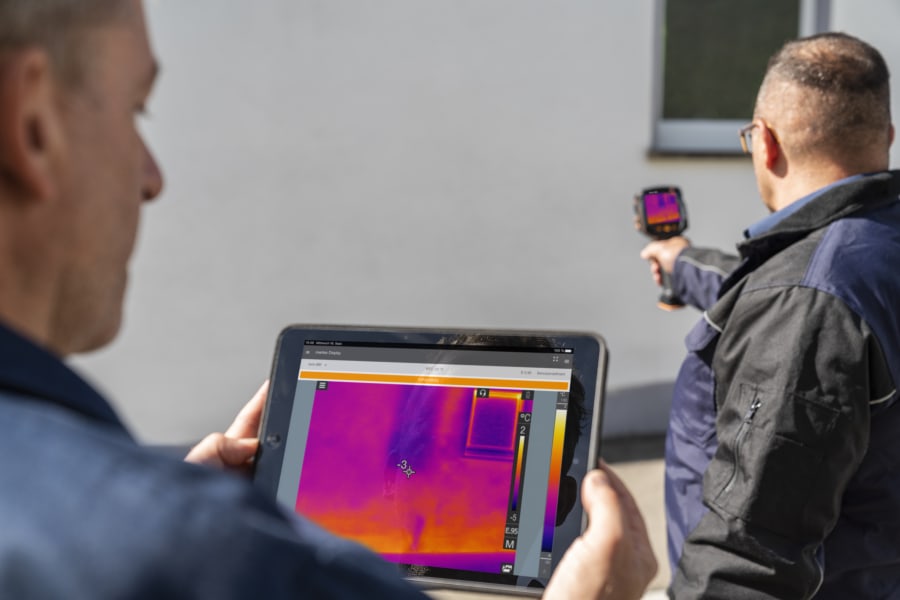
Thermal imaging cameras play a crucial role in detecting energy losses, thermal bridges and building defects. A thermal imaging camera for buildings helps energy consultants and architects to identify thermal weak points in buildings that can lead to energy losses. By visualizing temperature differences, areas with inadequate insulation are quickly made visible. They can also reliably detect penetrating moisture, such as that caused by roof leaks. This technology is also helpful in detecting mould, as damp areas that pose an increased risk of mould growth are clearly visible.
Glaziers, window fitters and carpenters also use thermal imaging cameras to specifically identify thermal weak points on windows, doors and façades and initiate renovation and repair measures.
Heating engineers and HVAC technicians use thermal imaging cameras to check the efficiency and functionality of heating systems and detect potential problems at an early stage. Leaks in heating systems can be localized quickly and precisely without the need for structural interventions. Even heat distribution is crucial for the comfort and efficiency of heating systems, and thermal imaging cameras help to identify and correct irregularities. In addition, thermal imaging cameras enable non-destructive leak detection in underfloor heating systems by making temperature differences in the floor visible.
Thermal imaging cameras play an essential role in the inspection and maintenance of refrigeration and air conditioning systems. By making temperature differences visible, problematic areas or defective components can be detected quickly and reliably during routine spot checks. In this way, these cameras make a significant contribution to the efficiency and operational safety of the systems.
Infrared cameras are indispensable tools in maintenance as they enable the early detection of failures in electrical and mechanical systems. Service and maintenance technicians, technical facility managers, process engineers and electricians use this technology to detect thermal anomalies in good time before costly failures and downtime occur. Regular thermographic inspections allow potential problems to be identified and rectified at an early stage. The thermal images can also be used to quickly detect overheated components and take measures to prevent dangerous damage.
In power generation and distribution, thermal imaging cameras are essential for monitoring medium and high-voltage systems. Energy suppliers and grid operators use thermographic cameras to check the function and efficiency of transformers, substations, overhead lines, turbines, generators and other system components for thermal irregularities. Regular thermographic inspections allow malfunctions, signs of wear or material fatigue to be identified and rectified, which increases the reliability of the systems and prevents failures. Thermal imaging cameras are also used to monitor photovoltaic systems, where inefficient modules can be identified and replaced in order to optimize the overall performance of solar systems.
Thermal imaging cameras support development engineers, research institutes and universities in the development of new technologies. They help to analyze and optimize the thermal properties of materials and components. In research, detailed thermographic data can be used to validate models and theories. In addition, thermal imaging cameras enable quality assurance in production by checking prototypes and products for thermal anomalies.
In quality assurance, thermal imaging cameras are valuable tools for checking product quality through thermal analysis. Quality managers, QA engineers and quality controllers use this technology to detect and rectify thermal irregularities in products. Thermal analysis can reveal material defects that are invisible to the naked eye. Regular thermographic inspections ensure that production processes run efficiently and without errors.
and numerous others, including veterinary thermography.
How do thermal imaging cameras work?
The functionality of the thermal imaging camera is based on the detection of infrared radiation emitted by objects. Put simply, the thermal imaging camera captures this radiation and converts it into an infrared thermal image in which the different temperatures are displayed as color differences.
How the thermal imaging camera works in detail
The camera has a detector (usually a microbolometer) that reacts to infrared radiation. Every object with a temperature above absolute zero (-273.15 °C) emits IR radiation. As soon as this hits the detector, it is absorbed and heats up the detector elements. This heating leads to a change in the electrical resistance in the elements.
The change in resistance is converted into an electrical signal, which is then processed by the camera's electronics. This signal is proportional to the captured infrared radiation.
The electrical signals are processed by the camera's internal image processing software, which converts them into a visible image. Different temperatures are assigned to corresponding colors. The resulting image is referred to as a thermogram.
The thermogram is shown on the display of the thermal imaging camera. Warm areas appear brighter, while cooler areas are darker. Typically, thermal imaging cameras use a colour scale ranging from blue (cold temperature) to green and yellow to red (high temperature) to visualize temperatures.
Purchase criteria for infrared cameras
Would you like to buy an infrared camera? You should pay attention to this:
Thermal sensitivity of less than 120 mK (makes temperature differences from 0.12 °C visible)
Also known as thermal resolution and given in millikelvin (mk), it provides information about the smallest possible temperature difference that the thermographic camera can detect.
Manual focus
Make sure that the thermal imaging camera has a manual focus. A manual focus enables a more precise adjustment of the focus to the target object, which is particularly important at different distances.
Interchangeable lenses
Interchangeable lenses significantly expand the range of applications for your thermal imaging camera. Wide-angle lenses are ideal for capturing large areas from a short distance, while telephoto lenses are useful for detailed inspection of smaller areas from a greater distance. Make sure that the camera offers compatible options for different lens types.
Software for analysis and professional reports
For professional documentation, we recommend our special thermography software testo IRSoft. In addition to processing the thermal images, this enables many other examination functions.
Simple and intuitive operation
Our products impress with their user-friendly handling and simple interface. They are operated via a highly sensitive touchscreen or an ergonomic joystick, which enables precise and convenient control.
Instead of infrared cameras:
More measuring instruments from Testo
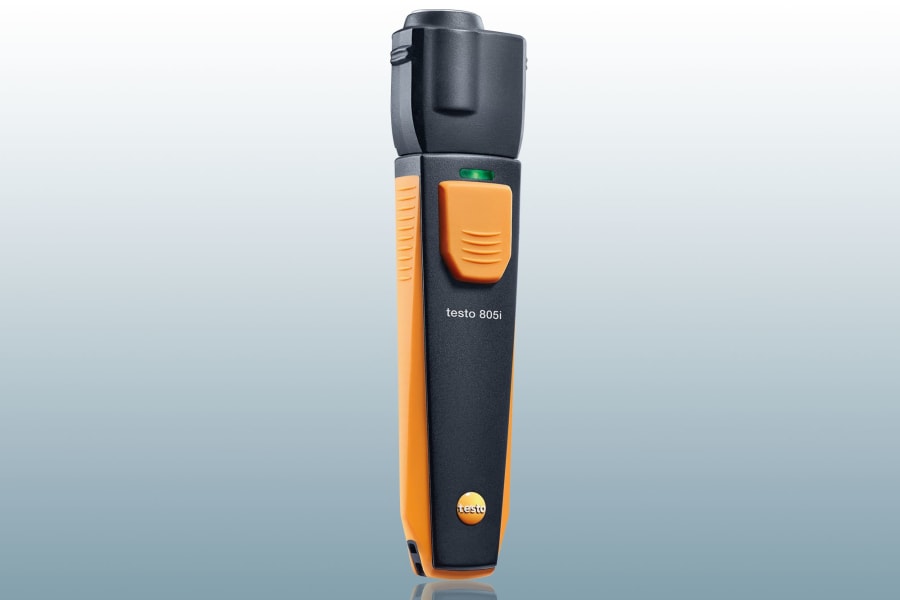
Highlight
Smart Probes
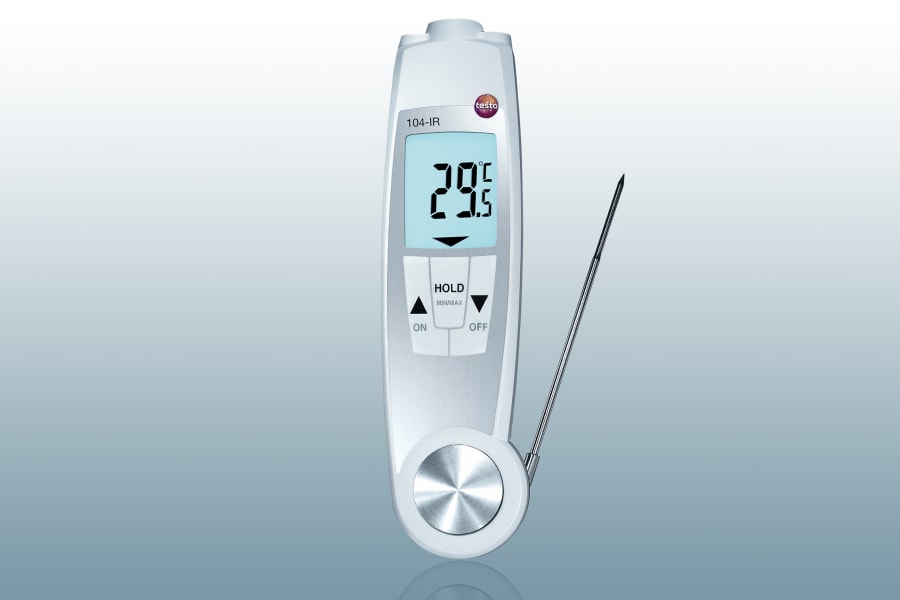
Bestseller
Puncture thermometer

Bestseller
Temperature data logger
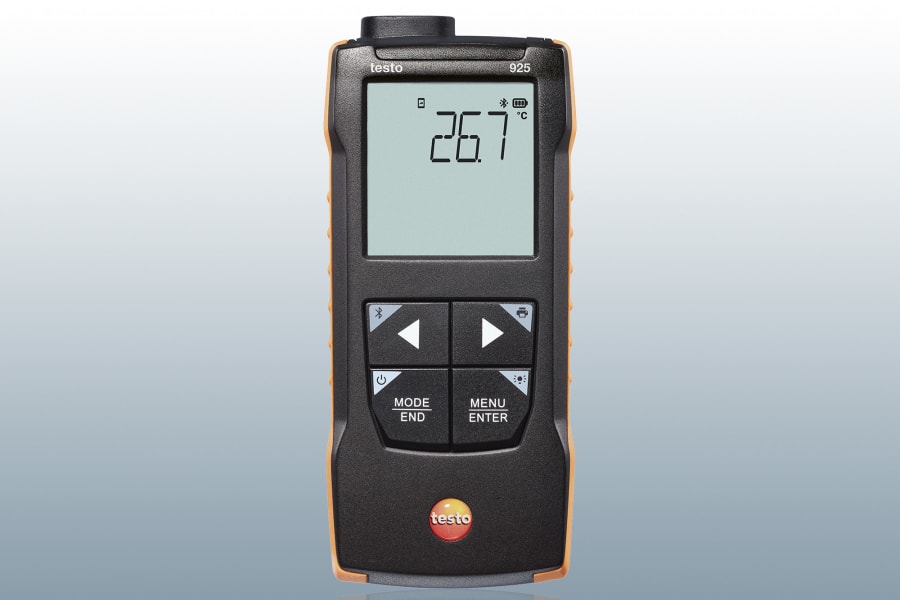
New!
Surface temperature measuring device
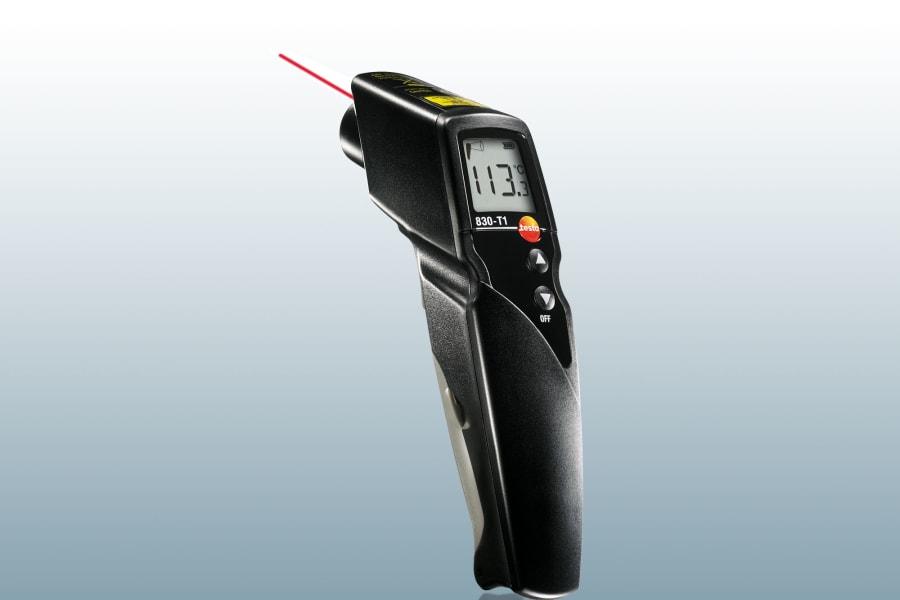
Bestseller
Infrared thermometer
Highlight
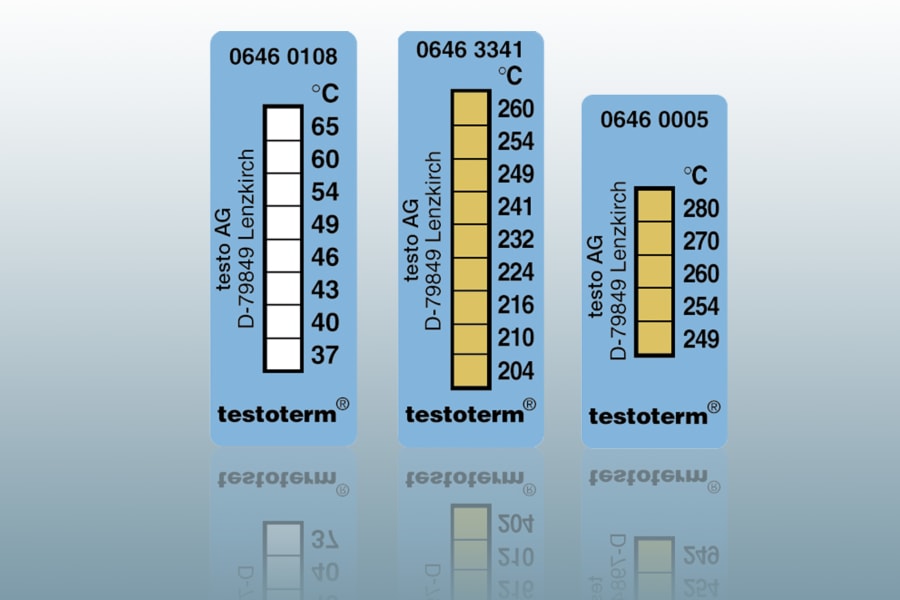
Temperature measuring strips