
Emission analyzer testo 350
Monitoring and optimizing cement production
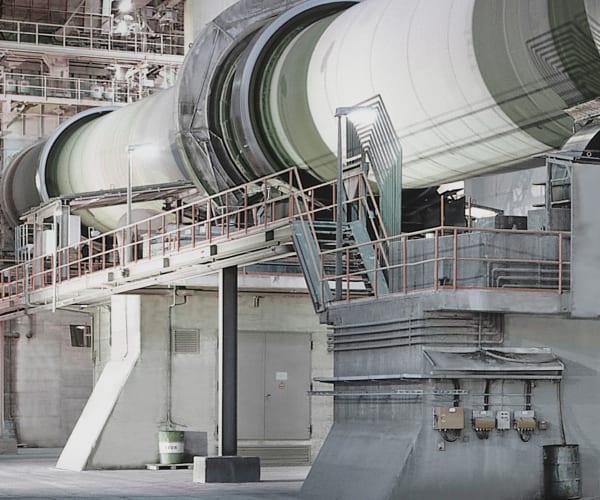
Worldwide, no material is used more for building than cement – and the demand is increasing daily. Accordingly, supply is growing, and the competition on the market is becoming tougher. As a result, impeccable product quality as well as time- and cost-efficient production are of crucial importance. On top of this, numerous environmental protection regulations must be adhered to.
The use of the most modern measurement technology, such as that of the testo 350, is thus indispensable.
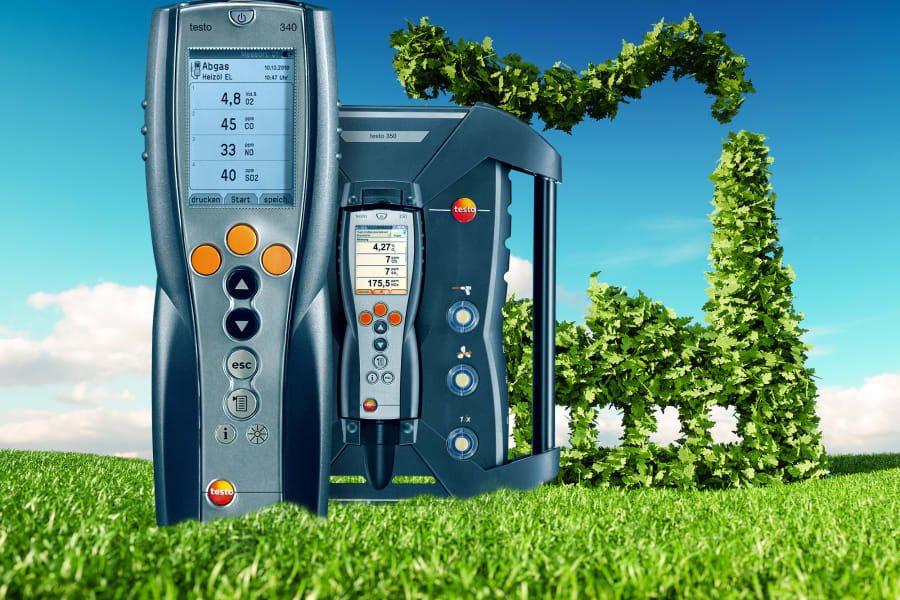
Good for the climate. And for the balance sheet.
Reducing emissions and energy costs
The challenge
Testing furnace atmosphere
In cement production, three main areas of use for the monitoring and analysis of occurring emissions can be defined.
Testing furnace atmosphere in brick production
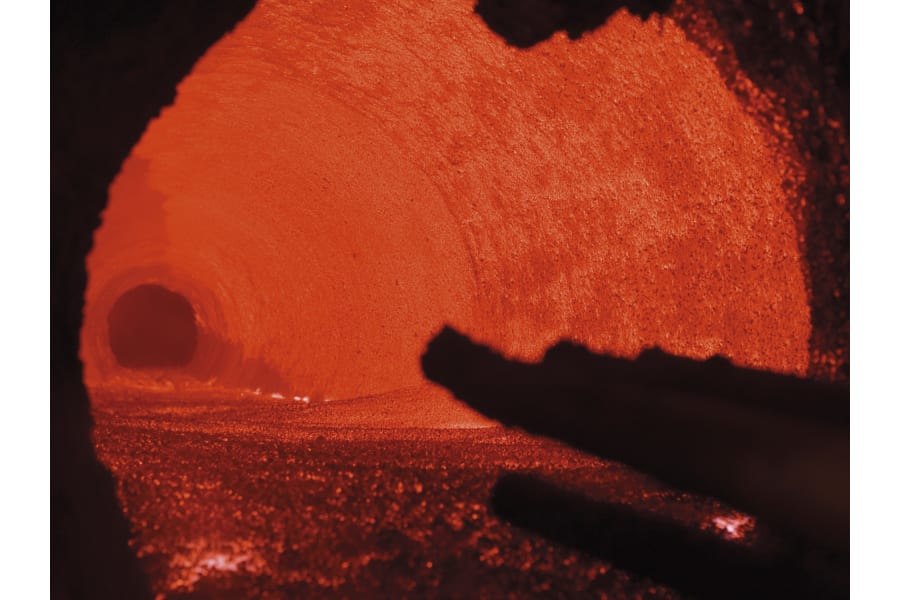
In this area, average temperatures of 1,100 °C to 1,300 °C are reached. In addition to this, concentrations of 2 Vol. % O2, max. 500 ppm CO and approx. 1,000 ppm NO are to be expected. A possible site for recording these values can be at the rotary furnace exit, for example. Here it is easy to establish whether incorrect air intake occurs between the pre-heating input and the pre-heating exit.
Testing furnace atmosphere in the pre-heater
In the core process of cement production, the raw material is passed down through a cyclone tower, where it is treated with hot process air from the opposite direction in order to drove out the CO2. At the exit from the pre-heater, measurement values of 700 °C, 3 Vol. % O2, 500 ppm CO and 400 ppm NO are to be expected. Daily measurement of these parameters is recommended.
The solution
testo 350 emission analyser - the advantages at a glance
The portable emission measuring instrument testo 350 is the ideal tool for professional flue gas analysis. It consists of the control unit and the analyzer box.
The control unit is the removable control and display unit of the testo 350. The measurement values are clearly presented in the colour graphic display of the control unit. The measurement technology is situated in the analyzer box. Thanks to the internal memory, measurement data can be transferred from the analyzer box to the control unit. If required, several analyzer boxes can be simultaneously operated and controlled with one control unit. The robust housing of the measuring instrument has an integrated impact protection. Downtimes due to instrument contamination are almost completely eliminated by the robust design. Closed chambers also protect the interior of the instrument from contamination from the surroundings.
As an alternative to the control unit, operation can also be carried out in direct connection with a PC or notebook. After programming, the analyzer box can conduct measurements and store data independently. This increases the efficiency of your measurement routine.

Testo flue gas analysers for
portable industrial emission measurement
testo 350 - analyzer unit for flue gas analysis system
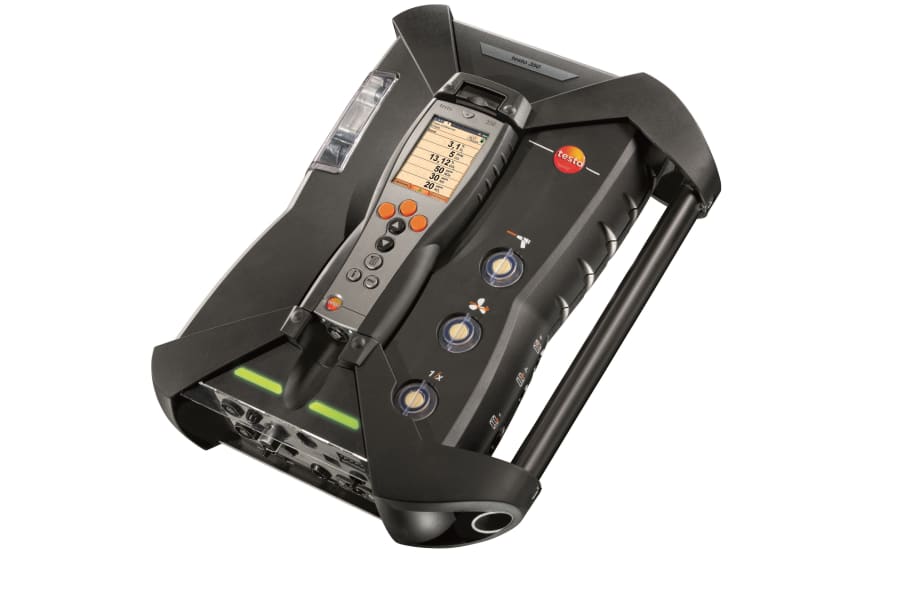
Flue gas analysis with up to 6 gas sensors - freely configurable with sensor change on site by the user
Measuring range extension enables unrestricted measurements to be carried out, even when there are high gas concentrations.
The service access panel on the underside of the unit allows quick access to service and wear parts, which the user can clean or replace
testo 350 - Control Unit for flue gas analysis system
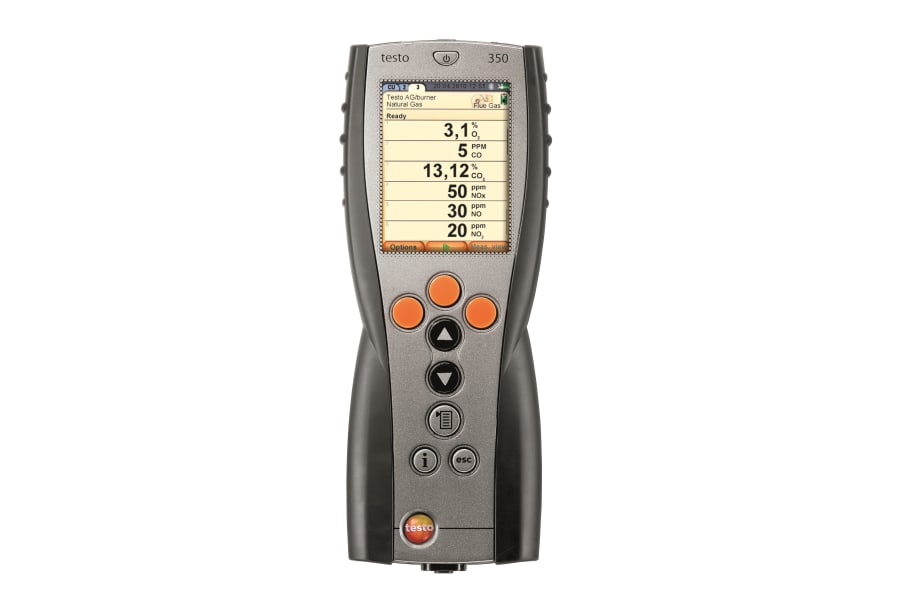
Flue gas analysis with up to 6 gas sensors - freely configurable with sensor change on site by the user
Easy operation of the testo 350 analyzer unit, even with spatial separation
Internal memory for receiving measurement data from the analyzer unit
Large colour graphic display, robust housing
testo 340 - flue gas analyzer for industry
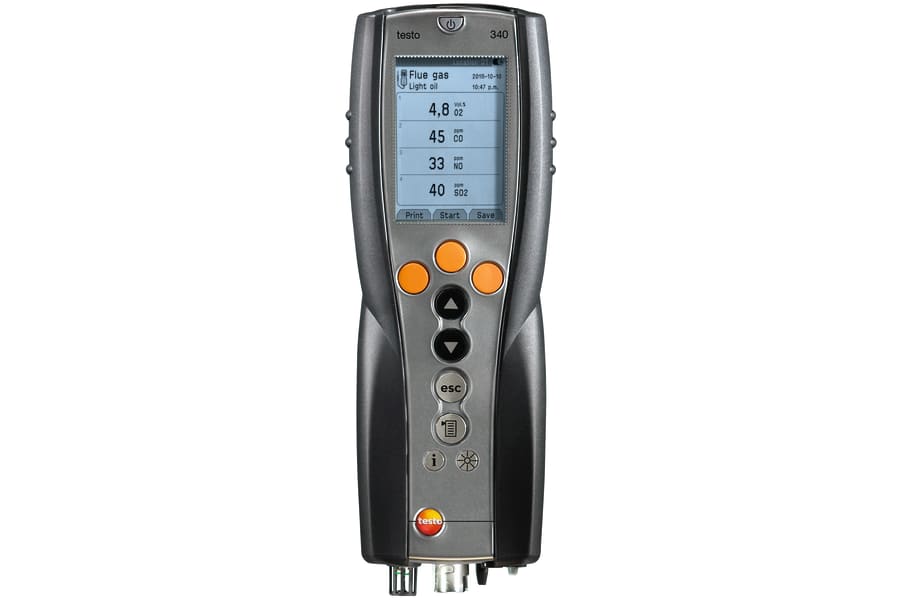
Flue gas analysis with up to 4 gas sensors - freely configurable with sensor change on site by the user
testo 340 flue gas analyzer incl. battery, calibration protocol and carrying strap, equipped with O2 sensor and integrated flow/differential pressure measurement
Measurement of CO, COlow, NO, NOlow, NO2 oder SO2 possible
Application video -
testo 350 in use at a cement plant
Flue gas analysis on cyclone preheaters at a cement plant. The video shows you in detail how to carry out an flue gas analysis using the testo 350:
Preparing for the flue emission test
Switching on and menu settings
Choosing the right probe and inserting it correctly
Flue gas measurement, including the recording and documentation of measurement values
At Testo, we’re here for you
Do you have any questions about applications, configuration or support? At Testo, we’re happy to help.