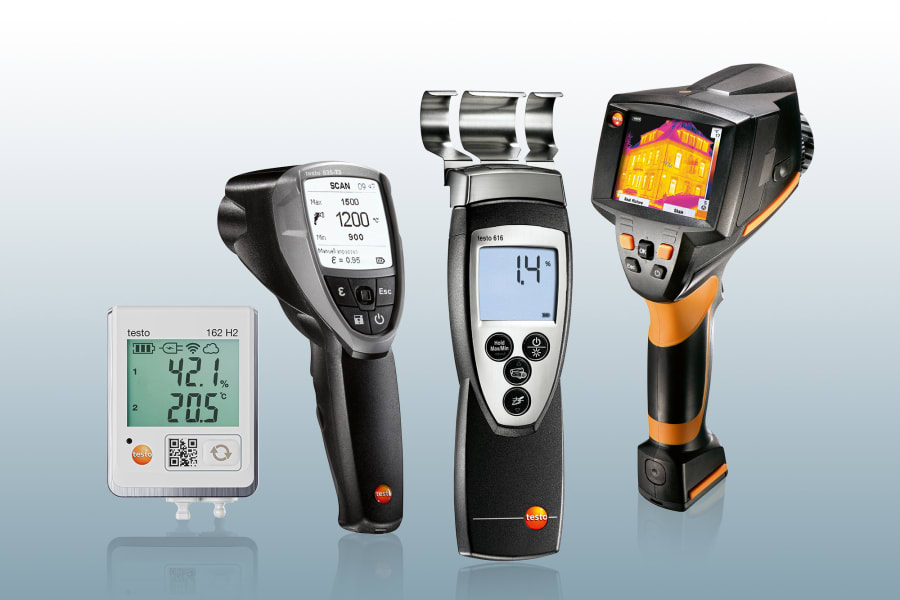
Hygrometer
for measuring the air humidity

Humidity indicates how much water vapor is in the air around us. It has a significant influence on our well-being and is one of the most frequently measured parameters. In closed rooms in particular, it is important to determine not only the temperature but also the humidity using a thermo-hygrometer.
What hygro-thermometers from Testo offer you
Extremely long-term stable humidity sensors
Highly sensitive sensors for a wide range of applications
Robust and compact measuring devices and thermo-hygrometers
Anything is possible: measure humidity with Testo
Applications for thermo-hygrometers
Measuring humidity with a hygrometer - but correctly
To use a thermo-hygrometer to reliably find out what the humidity level is like, there are a few tips to follow. This will ensure that your hygrometers provide you with precise readings from which you can then derive appropriate optimization measures. First of all, it is good to know that the optimum humidity level in a room is around 50 %. From a humidity level of 60 %, there is a risk of mold. At a value below 50 %, the risk of respiratory diseases increases as the human mucous membranes dry out.
If the humidity in the air in a room is too high (higher than 60 %), this means that the air can no longer absorb water. The result: condensation forms. This condensation settles on the window or walls - there is a risk of mold. Cold bridges in particular pose a risk here and must be monitored.
Too little moisture in the air dries out the airways and makes them susceptible to illnesses. Frequent ventilation and, if necessary, a humidifier can help here. Incidentally, the ideal humidity in rooms is 50 %.
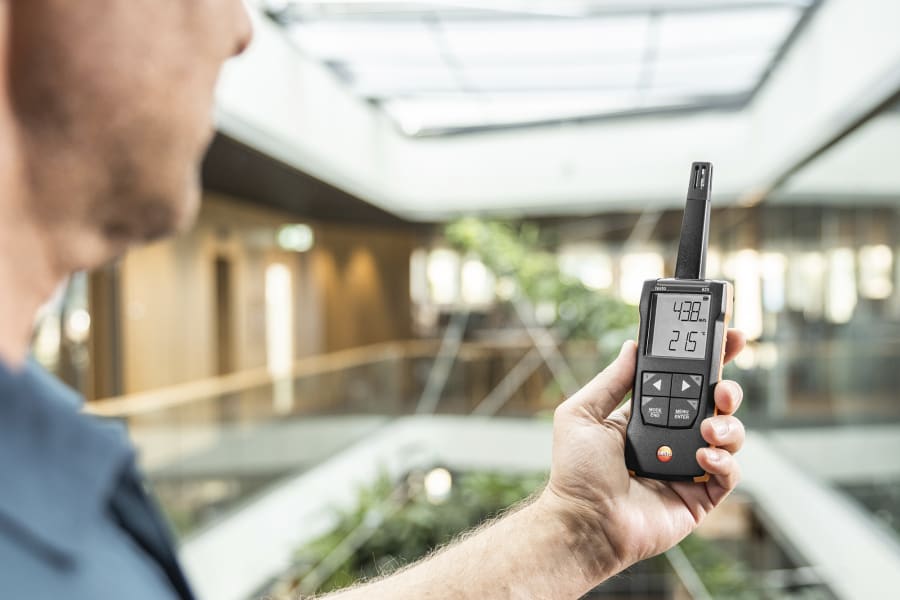
How to work optimally with hygrometers
When using a thermo-hygrometer to measure humidity, there are a few pitfalls that you should avoid in order to achieve the best possible result with your measuring device.
Always measure in the middle of the room and at chest height.
Hold the measuring device with an outstretched arm away from your body.
If you are using a humidity sensor, sway it gently twice per second in small movements.
Make sure that the air you breathe does not distort the result.
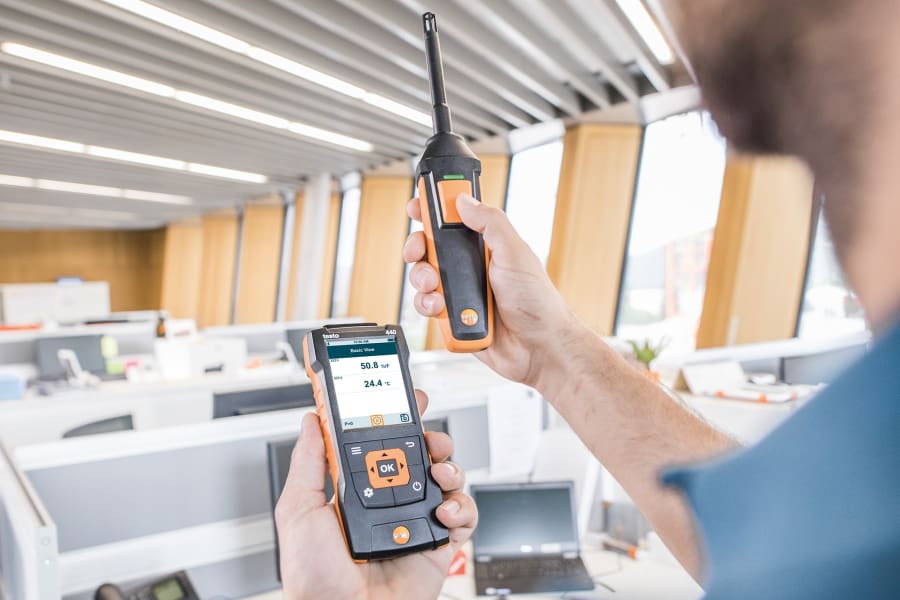
On the trail of mold with hygrometers
One particularly unpleasant consequence of excessive humidity is mold growth. Mold usually develops when the moisture content of the air is above 60% for a long period of time. Exterior walls, cold bridges and poorly ventilated areas behind sofas, shelves or cupboards are particularly at risk.
Tips for preventing mold indoors:
Make sure that there is always enough space between furniture and walls for air to circulate.
Ventilate regularly.
Monitor humidity and temperature with the appropriate measuring equipment, such as a thermo-hygrometer.
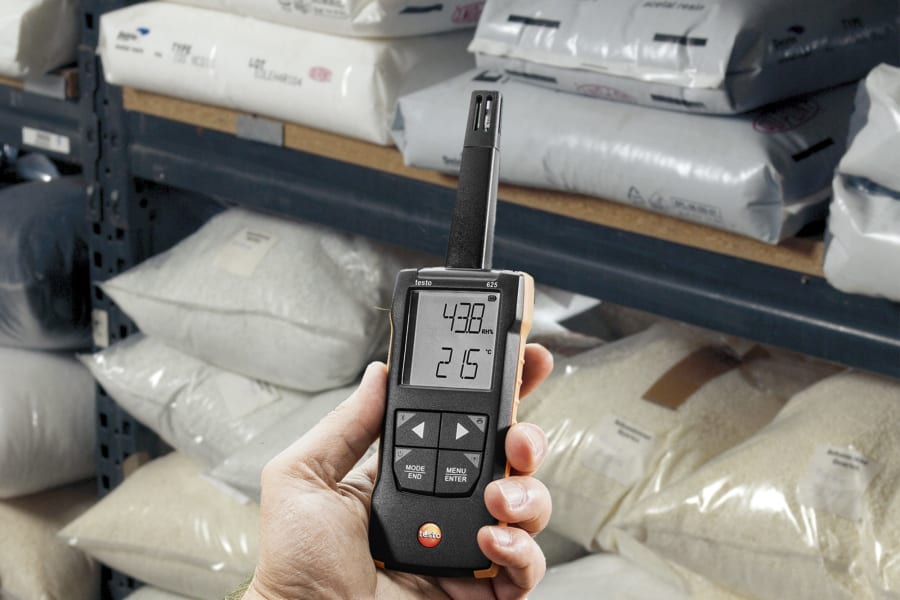
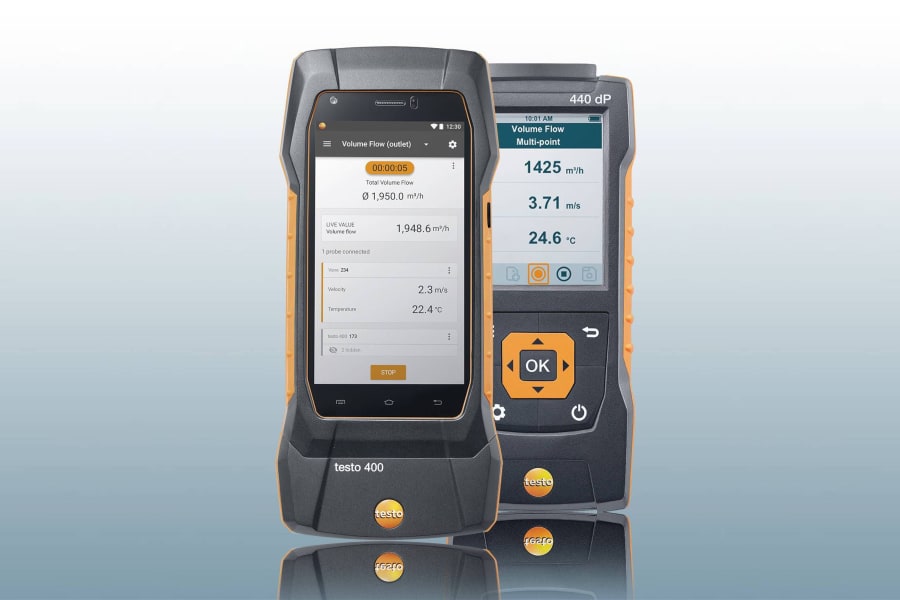
Universal climate meter testo 400
Consistently smart humidity and climate measurement.
Get to know the new universal climate measuring instrument testo 400 - your new companion for all climate and humidity measurements.
Smarter: With the intuitive smart touch display, it is as easy to operate as your smartphone.
Faster: You can create and send all measurements directly on site.
Better: Integrated measurement wizard for guided step-by-step measurements
More universal: Comprehensive probe selection for all climate parameters. Many probes are also available as wireless Bluetooth versions. This gives you more scope for measurement.
Other measuring devices for humidity, temperature, moisture and air humidity
Highlight
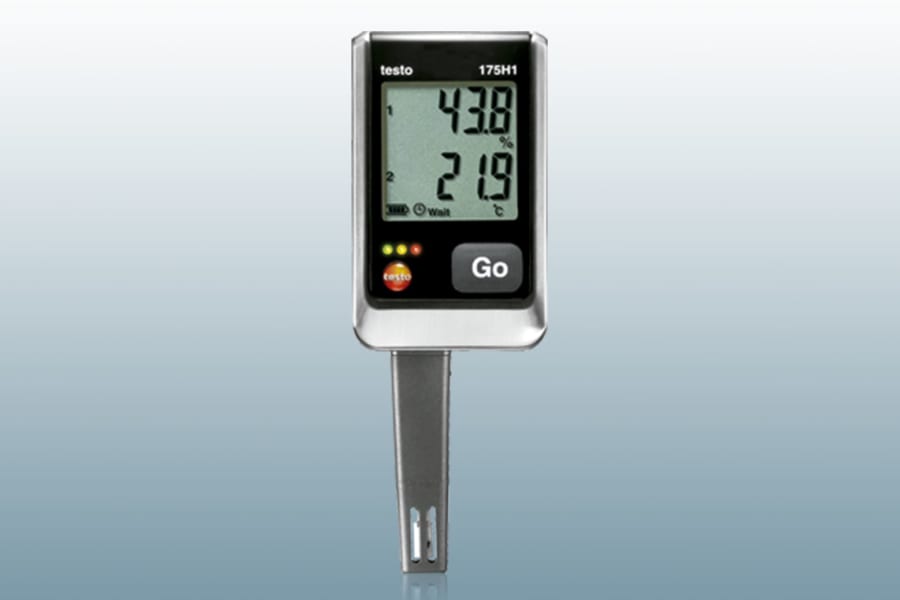
Humidity data logger
Highlight
Multifunctional measuring devices
Highlight
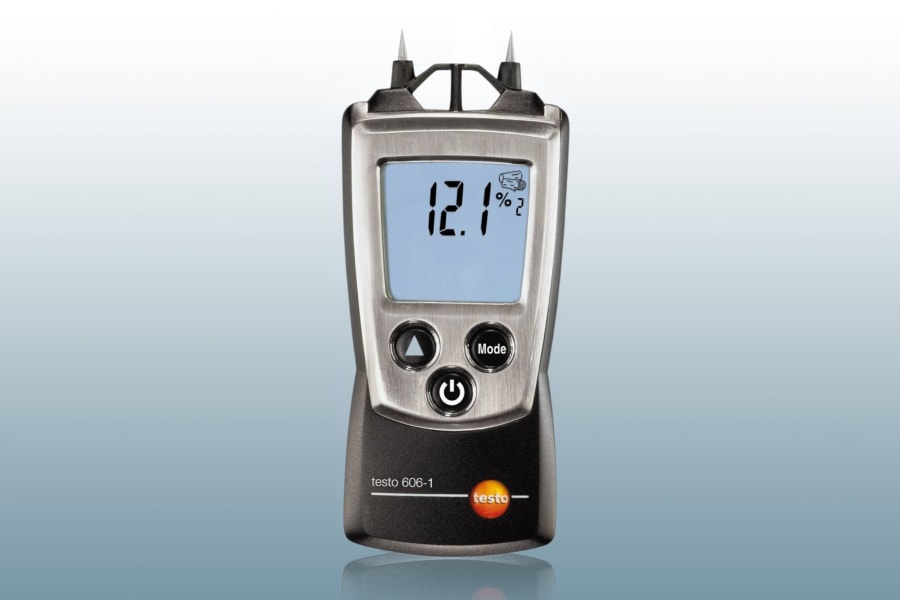
Material moisture meter
In order to record the indoor climate with complete precision, it is necessary to record other measured variables in addition to humidity. These include temperature, humidity and material moisture. With measurement technology from Testo - such as hygrometers - you are optimally equipped for these measurement tasks. Benefit not only from over 60 years of experience, but also from high-quality precision measuring instruments, a comprehensive selection of probes and our proven service, which always has your back when it matters.
For certain applications, it is necessary not only to measure humidity at certain points, but also to measure and document it over a period of time. This can be particularly useful in storage rooms for moisture-sensitive foods. The right measuring device for this task is a humidity data logger. Compact, precise and reliable, it measures the humidity at freely selectable intervals and records the measured values for later analysis.
If you want to measure not only air humidity but also material moisture quickly and reliably, you need a moisture meter. Thanks to the comprehensive selection of moisture sensors, you always have the right measuring technology to hand.
Material moisture is an important parameter in the building trade or in heating construction. For example, this is determined for concrete, masonry and screed or even firewood. At Testo you will also find the right material moisture meter for you.
The name says it all - a humidity meter (also known as a thermo-hygrometer) measures the level of humidity in the air. Indispensable for interiors.