Testo official store
Free delivery
Secure payment
Testo official store

Humidity meter
Important measured variable reliably determined
In the world of UK engineering, humidity isn't just a word—it's a critical measurement that, alongside temperature and pressure, forms the backbone of environmental analysis. These two factors, humidity and temperature, are the dynamic duo of indoor climate monitoring.
For precise control, you need a hygrometer. This isn't just a one-trick pony; it's a smart tool that goes beyond a simple humidity reading. A good hygrometer will also calculate key parameters like the dew point and the water content of the air, providing a deeper understanding of the atmosphere you're working with.
To take your data analysis to the next level, climate data loggers are your go-to solution. These clever devices automatically store all your readings, allowing for seamless transfer and comprehensive analysis on your PC. This means you can track trends, identify issues, and make informed decisions with a wealth of historical data at your fingertips.
stable humidity sensors in the measuring devices
Integrated or externally attachable humidity sensors
Can also be used in complex environments
Robust design
Large display with illumination
Anything is possible: humidity meters from Testo
More efficiency is always possible: with the right humidity meter
Measure humidity: Precisely determine the room humidity
The air humidity meter is an easy-to-use measuring device that works extremely precisely. It is always important to maintain the correct distance from cooler surfaces, as the humidity is higher in the direct vicinity of cold surfaces that radiate this cold than in warm air. A value measured here would simply be incorrect and not meaningful for the entire room. Furthermore, it is important to align the sensor in the center of the room and maintain a height of approx. 60 cm.
The air humidity meter should be moved during the measuring process; a gentle rocking back and forth is sufficient. This keeps the adjustment time to a minimum. This is the time the air humidity meter needs to acclimatize. If you attach great importance to the most accurate results, give the device a sufficiently long time to adjust to a temperature other than the previous one. If hygrometers are used to measure humidity, it is important not to hit the sensor with your own breath. The air you breathe is moist and falsifies the measurement result.
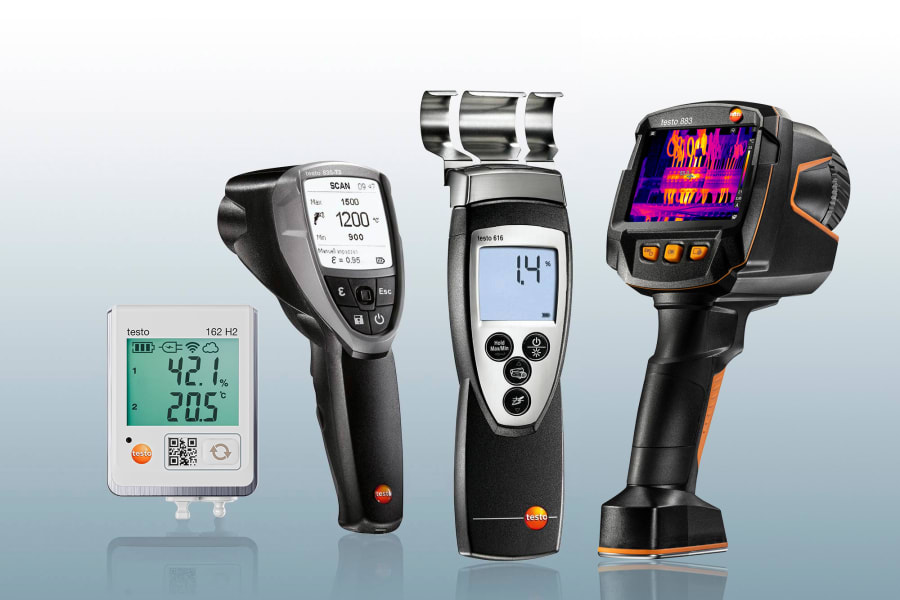
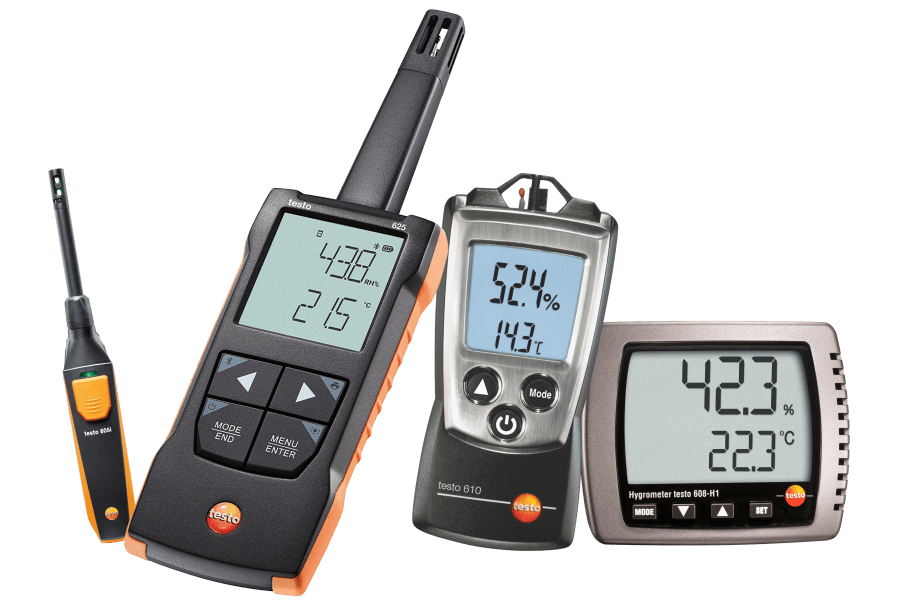
Thermo-hygrometer (humidity meter and thermometer) for calculating the dew point and wet bulb temperature
Infrared thermometer with humidity meter
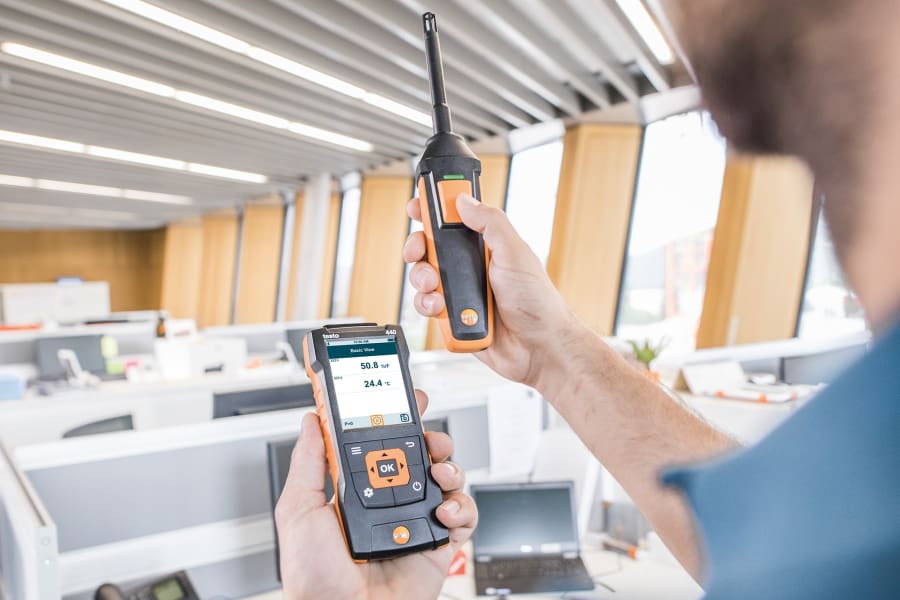
Smart Probes (humidity and temperature probes that can be operated and read out via smartphone)
Measuring humidity: What does a humidity meter measure?
The humidity meter determines the moisture content of the air as part of its measurements. Just as a thermometer measures the temperature, the humidity meter is responsible for and measures the water vapor content in the air. It is noticeable that, contrary to common assumptions, there is more water vapor in warm air than in cool air. Architects and builders know this: a building shell therefore rests in the winter months, the walls would not dry in summer at high temperatures and high humidity in the air. Cold, on the other hand, removes moisture.
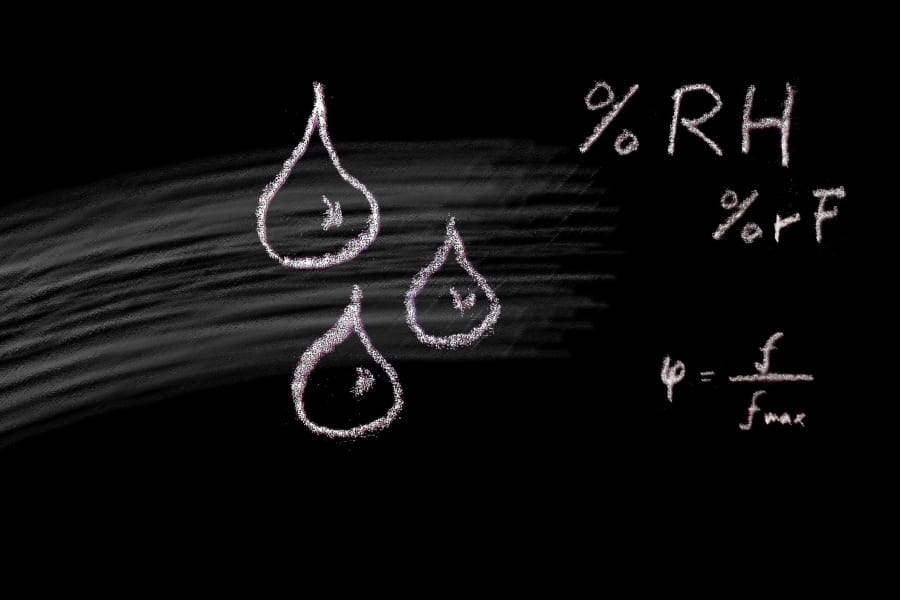
relative humidity: given in percent, calculation of the value by determining the existing humidity in the room and the maximum humidity
Absolute humidity: given in g/m³, calculation from the amount of water vapor in a closed room with a size of 1 m³
Dew point: temperature level at which condensation can occur
You are no doubt familiar with humidity meters for use at home. Most people use such measuring devices in the small weather station at home. Several values are measured there and shown on the display. However, humidity meters are also used in industry. They are used, for example, in industrial humidity measurement, in the calculation of cold chain values and in clean rooms. The measuring tasks are different and Testo has the right measuring instrument for all of them. Moisture meters are also available for critical situations, whereby adaptation to the intended use is more important than technical superiority.
Humidity meter
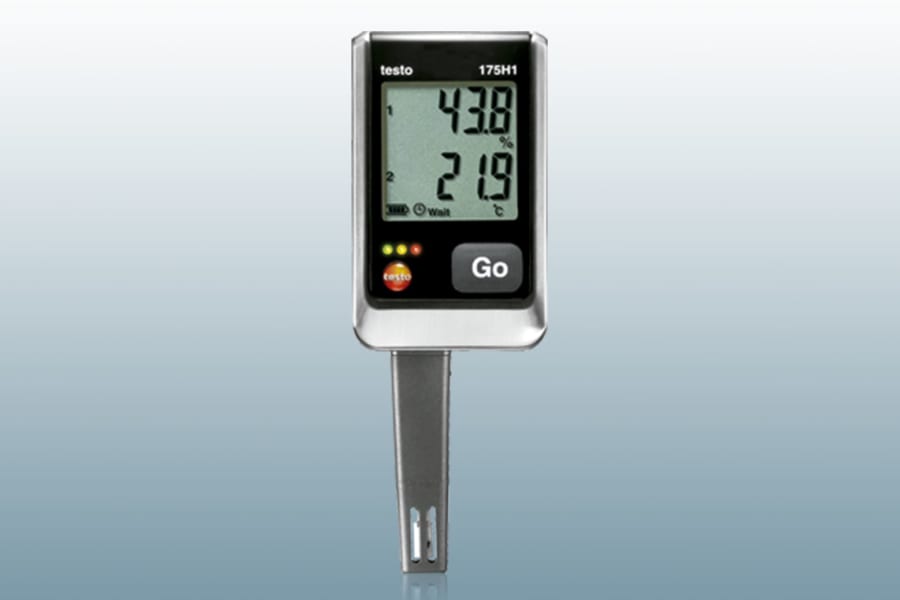
Highlight
Humidity data logger
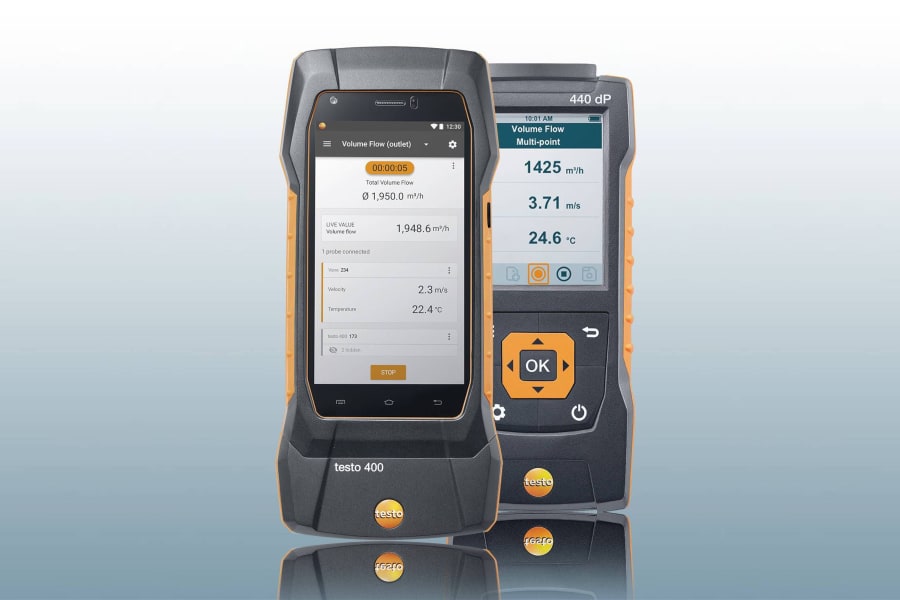
Highlight
Multifunctional measuring devices
Highlight
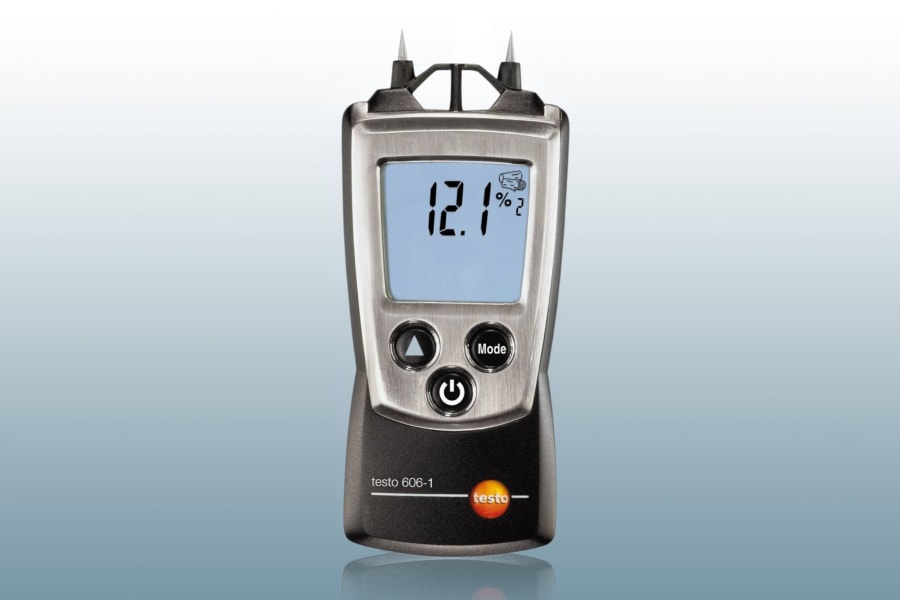
Material moisture meter
Different requirements, different measuring devices
Heating and ventilation systems are adjusted so that they provide a comfortable indoor climate. Relative humidity plays a role in this, as together with the temperature values it determines the climate. It should be between 30 and 65 percent to guarantee a comfortable climate.
Detection of mold: Mold is caused by incorrect ventilation and structural defects. The humidity meter can calculate the dew point and localize vulnerable areas in the house.
Long-term monitoring: recording the climate data of a room over a longer period of time
Measurement of material moisture: the material moisture meter monitors conditions for storing various materials, whereby the moisture of the stored materials themselves can also be checked.
The air humidity meter determines the air humidity in a room. However, it is not only important to know the value, but also to know what it results from. For example, the humidity increases with the number of people in the room. Ventilation behavior also plays a role: if humid air can escape regularly, the indoor climate remains more pleasant and drier. Building materials absorb or release different amounts of moisture, so this point must also be taken into account in the long-term assessment of the indoor climate.