Directly from the manufacturer
Free delivery
Fast delivery
Secure payment
Directly from the manufacturer

Differential pressure measurement
High precision thanks to state-of-the-art technology
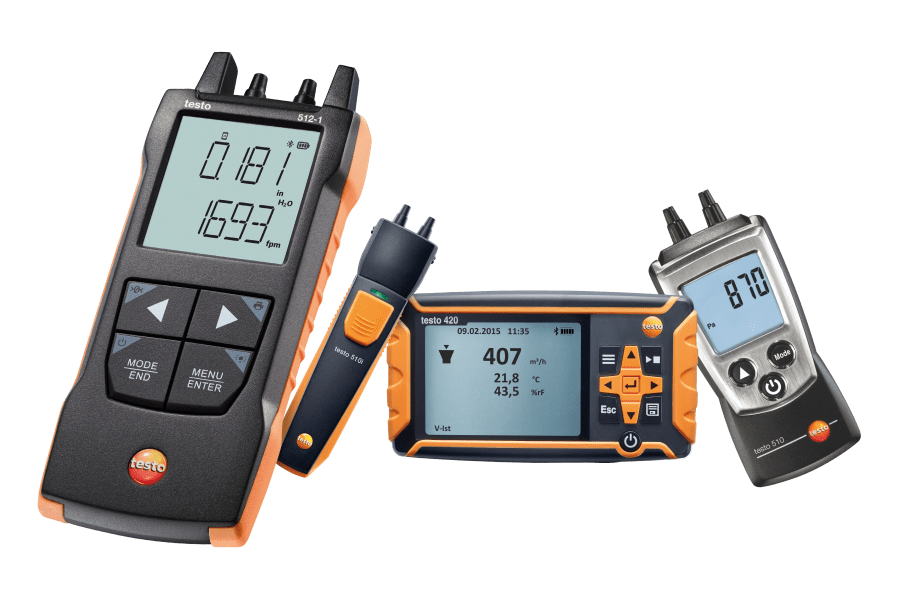
For UK engineers, having a precise and versatile differential pressure gauge is non-negotiable. Modern devices are built to handle positive, negative, and differential pressure with extreme accuracy, making them essential for a wide range of applications.
Forget bulky, complicated equipment. The latest generation of smart pressure gauges are designed for intuitive operation via your smartphone or tablet. This seamless integration allows for real-time data analysis and streamlined reporting, helping you work smarter and faster on-site.
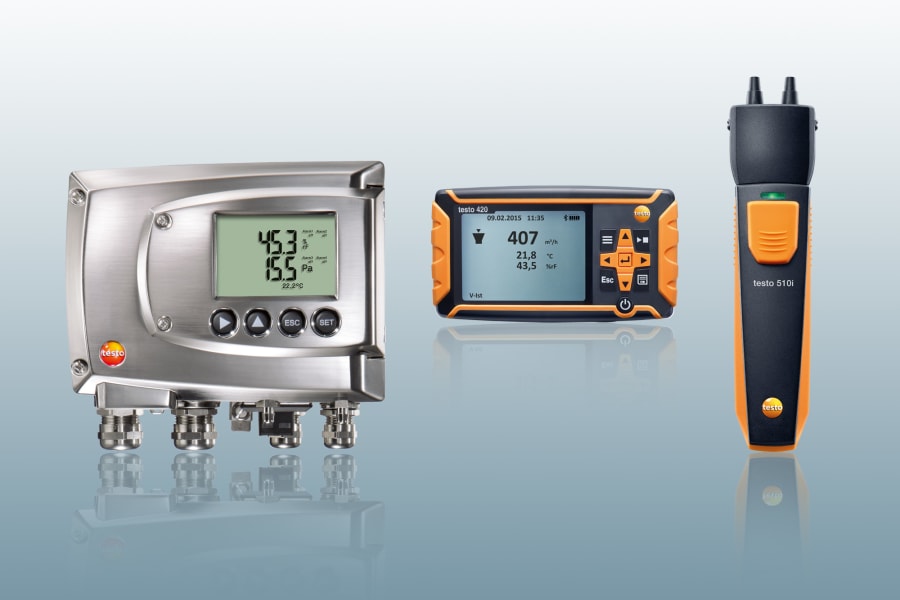
Testo's range of differential pressure gauges is a perfect example, offering a solution for every job. From compact, wireless probes like the testo 510i to a variety of sensors and transducers, you'll find the perfect tool to measure everything from gas flow on heating systems to pressure drops on air conditioning filters.
With the power of Testo's smart technology, you can be confident you have the right measuring device to meet the demands of any situation.
handy and easy to use
robust and suitable for various working environments
equipped with a large display for the best overview of the measured values
versatile in use thanks to optional accessories available
intuitive operation possible without instruction
Differential pressure gauges from Testo
Large selection from classic to smart.
Differential pressure gauges in use:
The most common areas of application
Simply smart
Work intuitively, as you would on your smartphone: The touchscreen and large colour display make configuration and control quicker and more intuitive – as easy as using a smartphone. Data analysis is also made easier and more reliable with new 30-minute trend charts and other easy-to-read graphs. Simply ingenious!
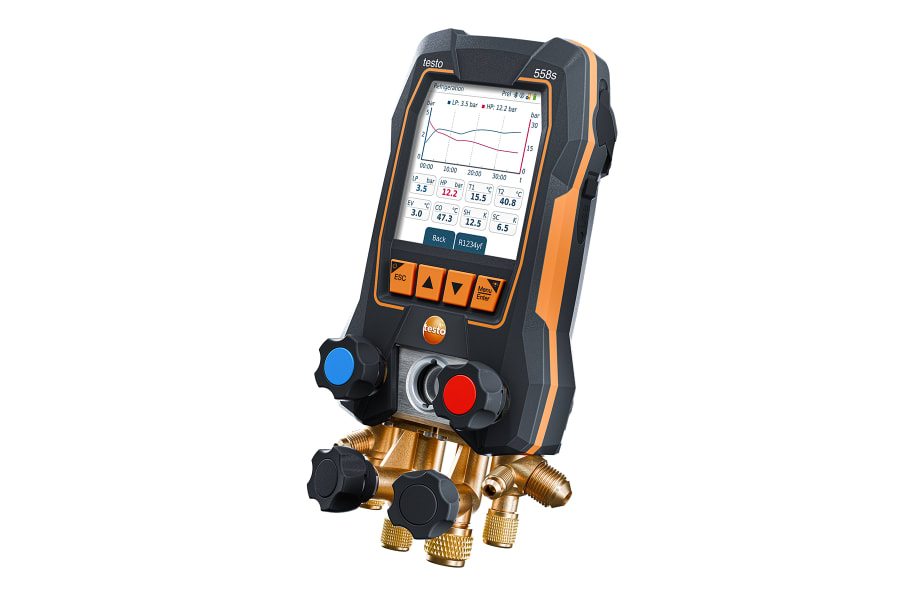
Trend curve of different readings over 30 minutes
Clear visualization of measurement results for easy evaluation and reliable analysis
Still with the option of operation via keypad
Capacitive touchscreen
Measure the differential pressure: Pay attention to the reference values
When measuring differential pressure, it is important to observe the so-called reference pressure. Because every measured variable refers to this! The vacuum is the reference pressure when measuring the absolute pressure, while the ambient pressure is relevant when measuring the relative pressure. As the user, you record two values, the differential pressure measurement gives the difference - the difference - between the two values. The differential pressure gauge is therefore used, which has two connections and is therefore able to record and display two values. Absolute pressure gauges measure the barometric pressure, whereby two types of barometric absolute pressure are available:
on the one hand, the pressure
related to the respective altitude and, on the other, the absolute pressure converted to sea level.
The converted absolute pressure is mainly used in meteorology, where it ensures the comparability of values. The most frequently used value is the average value, which is related to sea level: 1013.25 hPa.
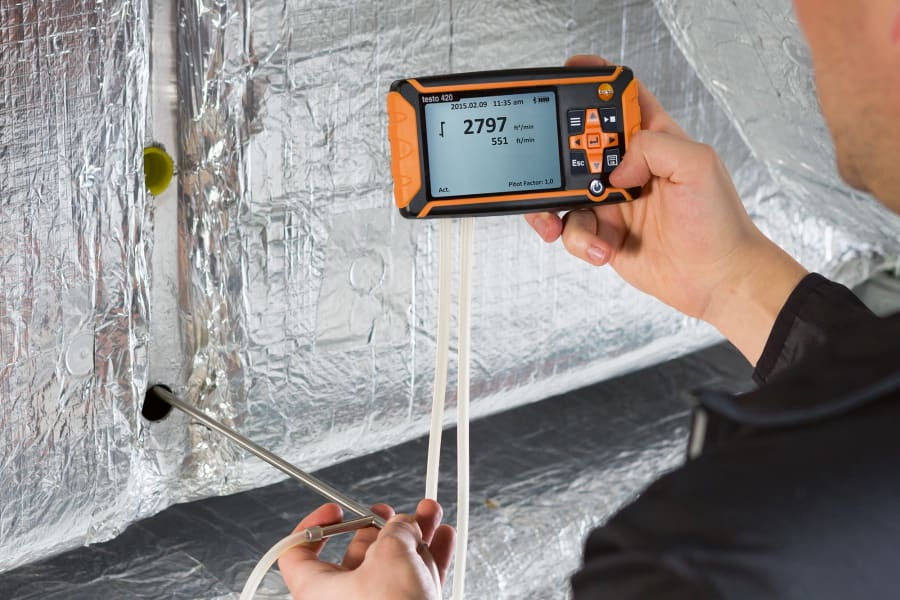
The absolute pressure gauge only ever has one hose connection and cannot be zeroed. Accordingly, the relative pressure can be determined with the differential pressure gauge. All measurements result in a positive or negative value, which stands for positive or negative pressure. Important: Differential pressure measurement can only be precise if the differential pressure sensors are working properly, which in turn means that the devices used must be highly sensitive. They must compensate for or tolerate different temperatures during differential pressure measurement and should also be as handy and robust as possible. Quite a lot of requirements for a small measuring device!
The differential pressure gauges (and differential pressure sensors) from Testo are exactly the right choice, because these devices work precisely during measurements, are sensitive enough and cover numerous areas of application:
can be used in heating engineering
can be used in ventilation technology
for use in clean rooms
suitable for flow measurements
In order to be able to carry out the differential pressure measurement precisely, highly developed devices are required that measure the pressure precisely and are still easy to use. In order to be equipped for every situation, devices with connectable probes are used, for example, which can also record other measured variables.
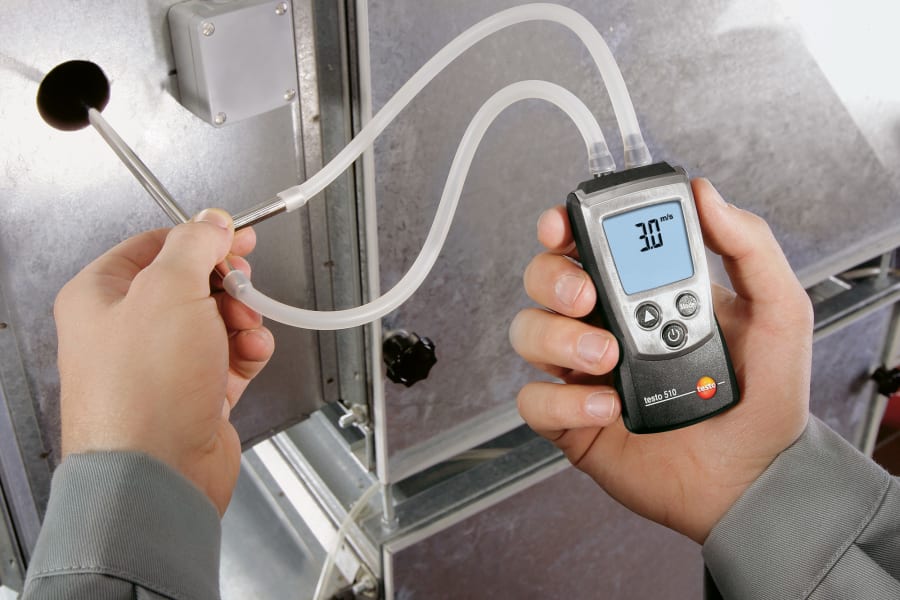
Perform pressure measurement correctly: Avoid errors
Even if the devices for differential pressure measurement are state-of-the-art measuring devices that communicate with the smartphone and thus rely on the use of the latest technologies, human error can still cause the measured values to be incorrect, even with an extremely sensitive differential pressure sensor. Firstly, it is important that the right pressure is applied to the right connection. The positive connection belongs on the positive pressure, the negative connection on the negative pressure. Other common errors include:
Measurements without a pitot tube in a contaminated environment
Failure to change the air filter in good time
No precise regulation of the pressure difference in the clean room
Confusion of + and - connections
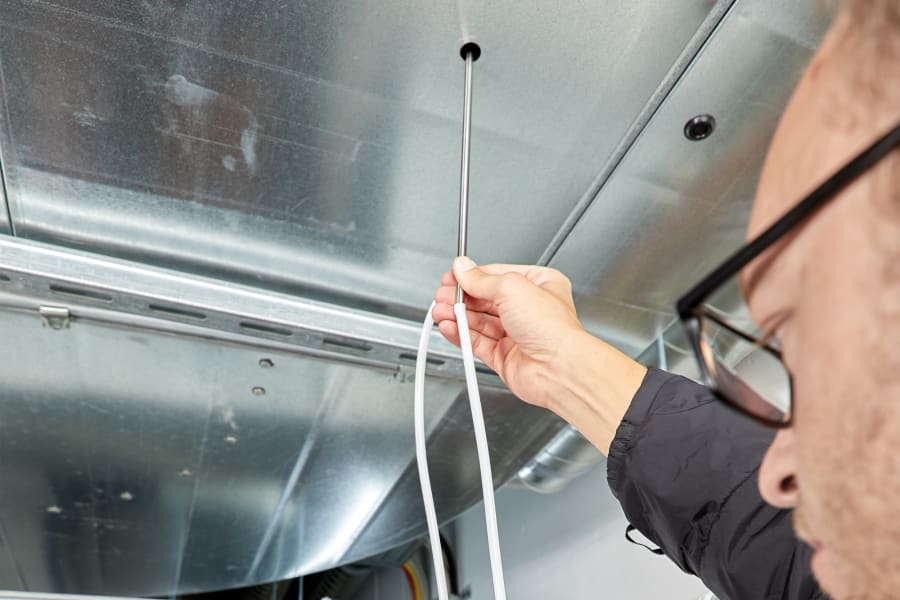
Differential pressure measurement is not everything
More pressure gauges from Testo
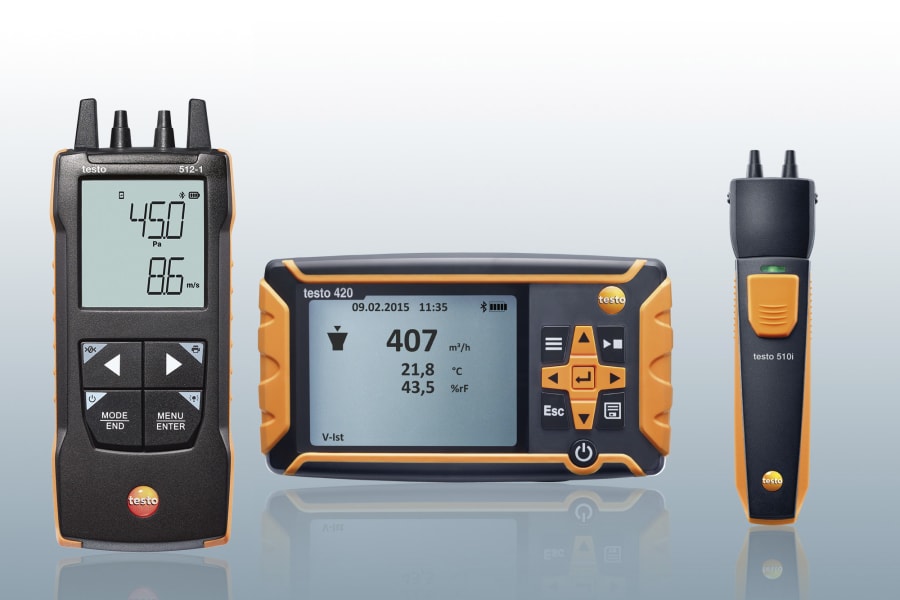
New!
Pressure gauge
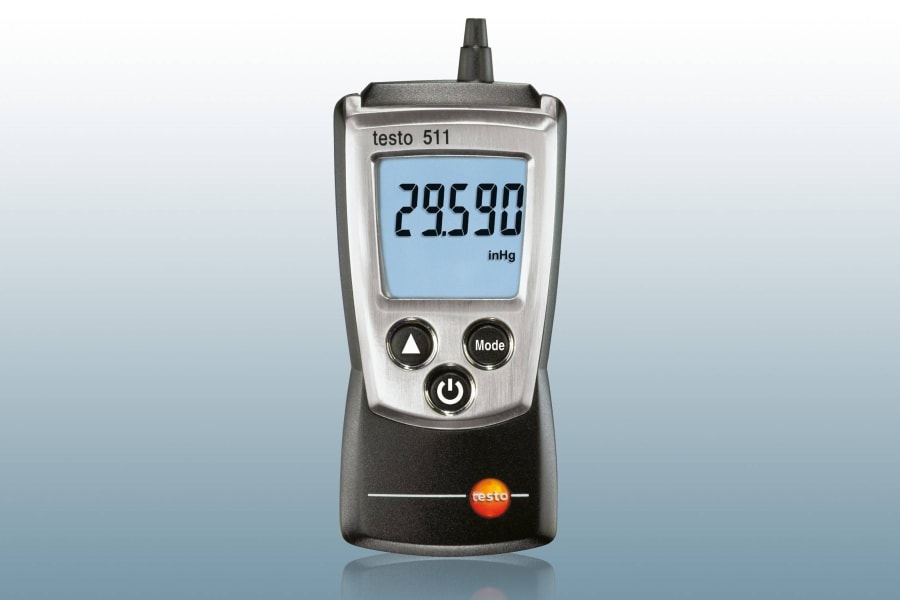
Highlight
Absolute pressure gauge
Highlight
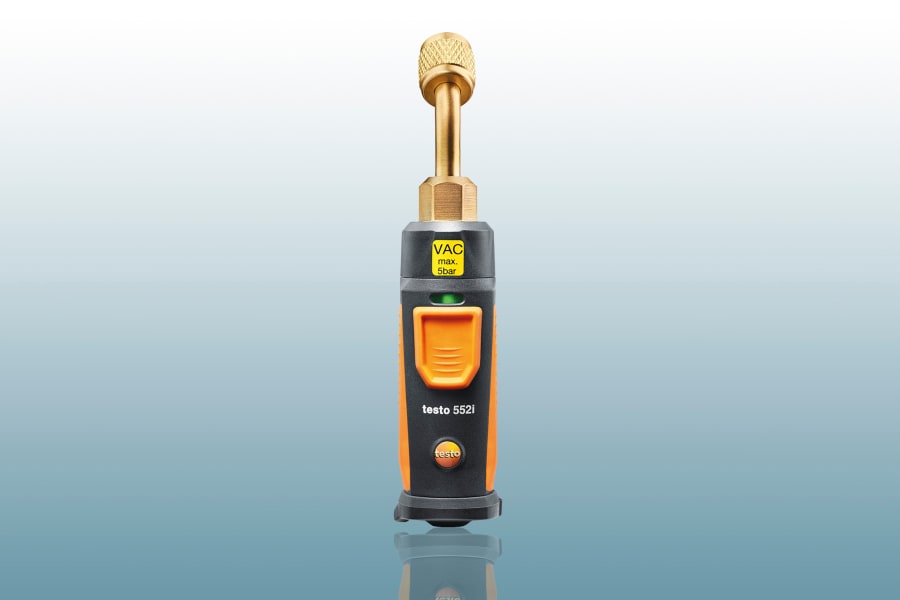
Vacuum gauge
Testing by differential pressure measurement
Different pressures are measured when measuring differential pressure. For all of them, it is important that the right differential pressure measuring device is available. Whether in building services engineering or in industry, whether in research or in science: the pressure can only be measured with the right device. The leak detector is also important, as it is not uncommon for a check to reveal a leak. The device detects exactly where this is and recognizes all common refrigerants.
The vacuum gauge works just as precisely as the other Testo gauges. It is equipped for the evacuation of heat pumps or air conditioning systems and is an installation aid for every user. Various functions are combined in one device and the required measured values are recorded precisely and displayed clearly. In this way, all requirements can be mastered where a differential pressure sensor plays the most important role and ensures greater safety in the company and in the tested systems.
Pressure is one of the most important parameters of all, along with numerous other measured variables. Different types of pressure need to be measured, for which Testo provides you with the right device. For example, for differential pressure measurement or for measuring absolute pressure. It is often more practical to use a multifunctional device than to rely on individual devices. Digital pressure gauges can also be found here. By the way: In air conditioning and heating technology, differential pressure measurement is the most common measurement of all, which explains why Testo also focuses on the corresponding devices and why high-precision measuring instruments for this type of pressure measurement have been developed or are still being further developed.
Other pressure gauges are:
Absolute pressure gauges
Leak detectors
Vacuum gauges