Directly from the manufacturer
Free delivery
Fast delivery
Secure payment
Directly from the manufacturer

Frying oil management in multi-site companies
Objective measurement, change criteria and standardization
Why frying oil is a quality and cost driver
2026/07/08:
Frying processes are a recurring quality lever in gastronomic establishments: consumers expect a standardised result in terms of colour, texture and aroma. At the same time, frying oil is a relevant cost factor, the price development of which can fluctuate greatly. In companies with several locations, an additional problem arises: If switching decisions are made subjectively, the product quality varies between companies and oil consumption can neither be planned nor optimized.
Scientific background in brief: Oil aging is measurable
During frying, chemical processes such as oxidation, hydrolysis and polymerization take place. This produces degradation products that change the properties of the oil: viscosity, smoke behavior and heat transfer can shift. In practice, this means that oil "ages" not only visibly, but also structurally – and this change can be objectified using suitable key figures.
"Color" and "smell" are not enough: TPM as an established parameter
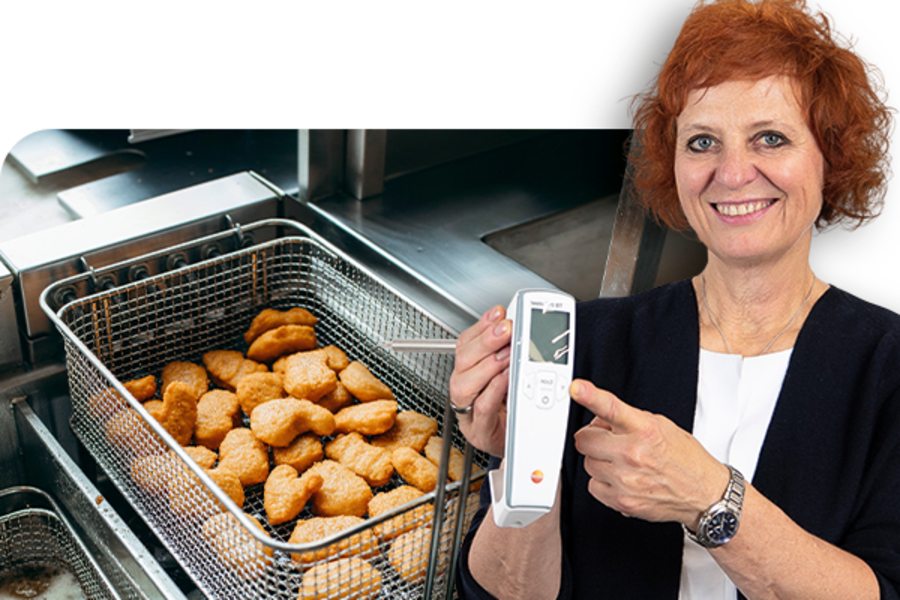
For objective assessment, the parameter TPM (Total Polar Materials) has been established in many applications. TPM describes the proportion of polar degradation products in the oil, which increases with service life and load. The advantage of a TPM-based decision is its reproducibility:
In contrast to sensory impressions, a key figure is comparable across locations and can be neatly anchored in standard processes. Objective measurement creates more transparency, especially for operations managers, quality managers and purchasing departments.
A clear measurement routine is important here: measurement at a defined operating temperature, at fixed fryers or lines and with a clear assignment to the shift. Only then will the values be reliable for trend analyses and benchmarking.

Limit values and target range: Actively control oil quality

In many countries, limit or guideline values have been established for the assessment of frying oils, marking the point at which an oil is no longer considered suitable for food safety reasons. However, to ensure consistent product quality during operation, it is not so much the legal limit value that is decisive, but a stable, controlled range in which the oil quality moves over time. Of course, without violating the legal requirements.
In practice, this means that the measured values should not only be documented, but also used as a control variable. Depending on the value, predefined measures are then triggered:
continued operation is possible in the finish area
when approaching limit values, a refresh (e.g. by topping up according to process logic) can be useful
if the limit values are reached or exceeded, a partial replacement or complete oil change is required
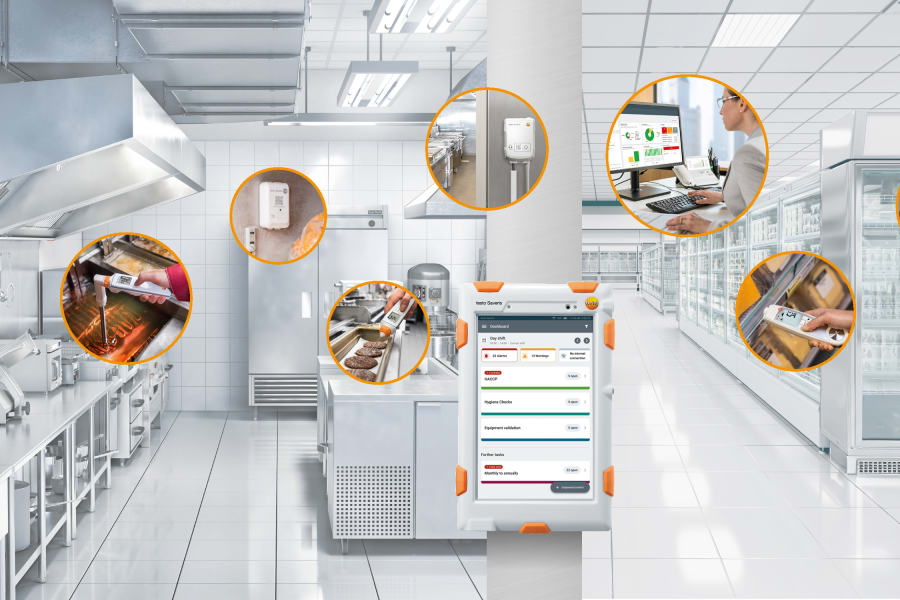
In this way, companies ensure consistent frying quality and avoid unnecessary oil costs. In addition, the recorded measured values enable trend analyses, benchmarking between locations and better central control.
find out more