
- Home
- Know How
- Temperature Meaurement
- Basics
- How temperature sensors work
Sensors: how they work
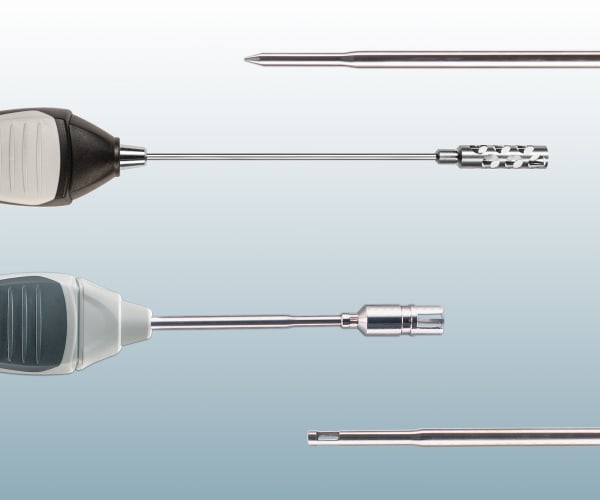
The choice of the right sensor determines the accuracy of the measurement result. However, there is no sensor that can do everything equally well:
A large measuring range generally means limited accuracy.
Particularly fast probes are usually not suitable for robust everyday measurements.
The design determines which probe is optimally suited for which measurement task.
Thermocouple sensors
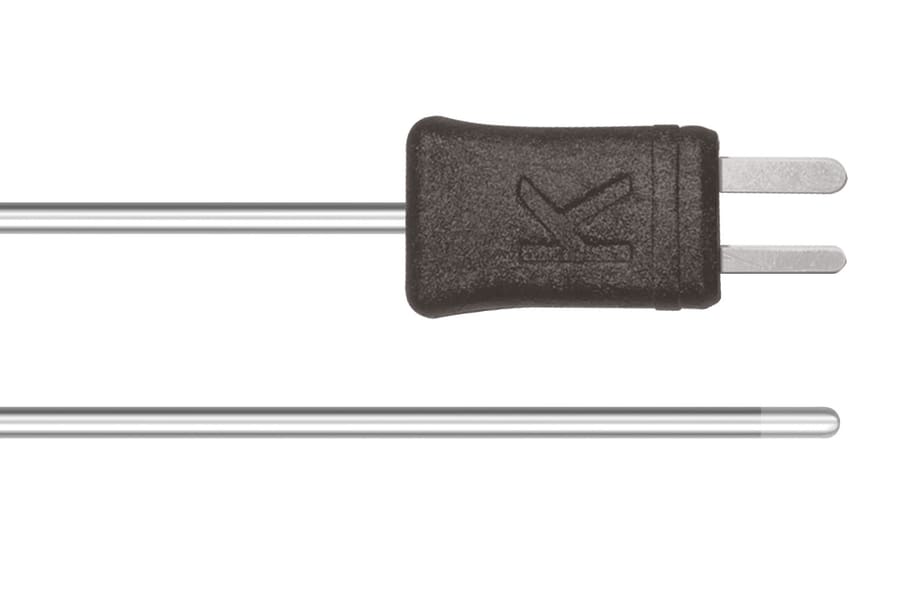
Electrical voltage at measuring point / reference junction.
Measured value at reference junction is converted to 0 °C.
Sufficient equalisation time must be taken into account.
Operating principle: Seebeck effect – two different metals generate a temperature-dependent voltage.
Very large measuring range: −270 °C to over +1,370 °C.
Common types: Type K (NiCr-Ni), Type T (Cu-CuNi), Type J (Fe-CuNi).
Platinum resistance sensors
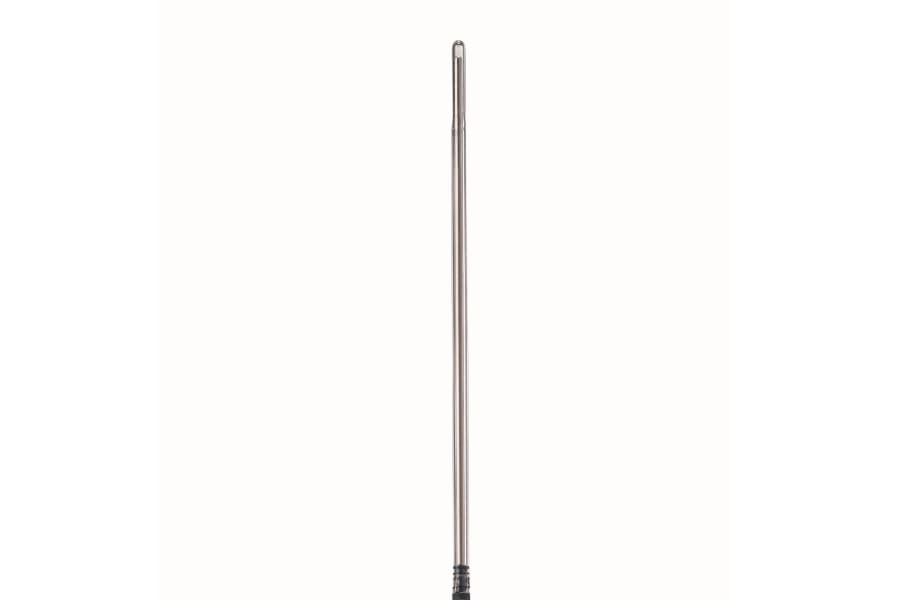
Measuring principle: positive temperature coefficient effect of metals.
Relationship: temperature and electrical resistance.
Reference value at 0 °C: Pt100 = 100 Ω, Pt1000 = 1,000 Ω (wound platinum wire); measuring range −200 °C to +850 °C in each case.
Pt1000 less susceptible to interference with long lead wires.
High accuracy and long-term stability.
Thermistor sensors
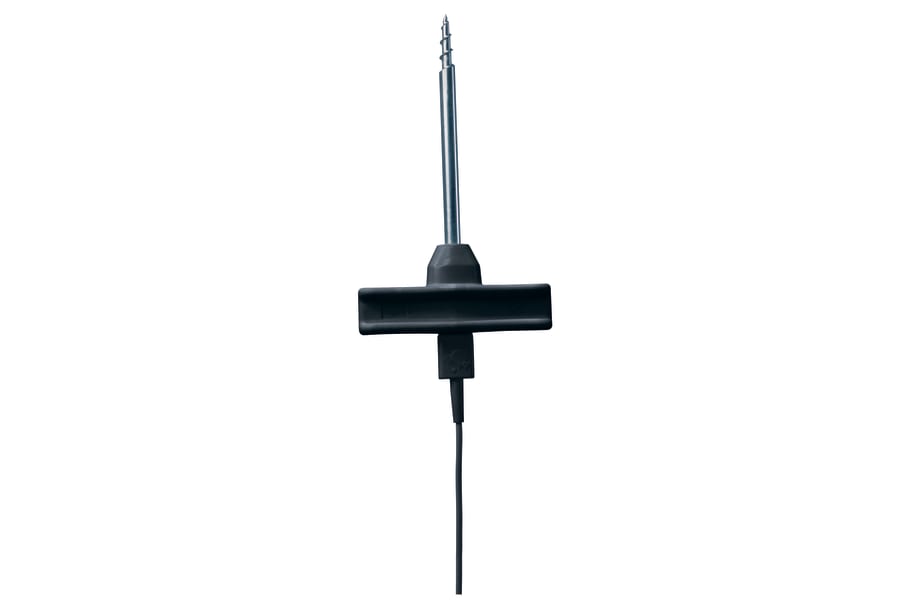
Temperature sensors based on mixed oxide ceramics.
Negative temperature coefficient: NTC.
Without reference junction compensation – ideal for refrigeration and freezer rooms.
Resistance decreases non-linearly as temperature rises – very high sensitivity.
Typical measuring range: −10 °C to +300 °C.
Cost-effective and compact, but with a limited measuring range.
Do you have questions or would you like personal advice? Contact us!
We look forward to supporting you with our expertise and individual solutions.