
- Home
- Know How
- Thermal Imaging Camera
- Selecting a thermal imaging camera: criteria, comparison & product overview | Testo
Selecting thermal imaging cameras:
From the measurement task to the right instrument
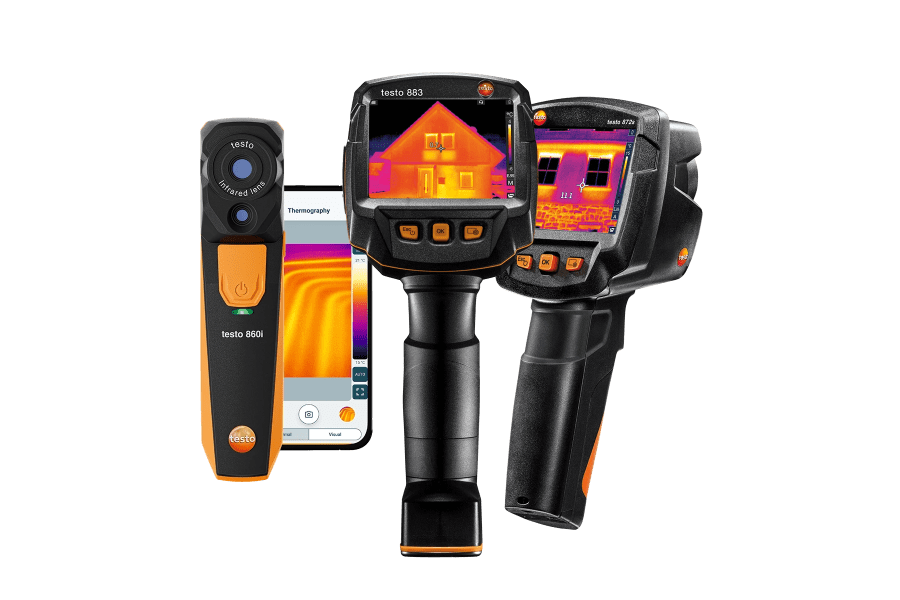
The best thermal imaging camera is the one that captures your target objects large and sharply enough at your typical working distance (IFOV + focus), makes small temperature differences visible (NETD) and supports your documentation (software/app/reporting). If you consistently check these three axes, you avoid poor purchases – and obtain reproducible results in building, electrical, maintenance or PV applications.
Which criteria matter when choosing?
The decisive factors are: object size and working distance (IFOV), the required level of detail and contrast (resolution + NETD), focusability (for sharp measurement points) and workflow functions for recurring inspections (image management, reports, standardisation). Additional functions to prevent measurement errors (support for ε/RTC, scale assist, distance aid) increase measurement reliability, especially with reflective surfaces and small targets.
Quick selection path (3 steps)
If you only have one minute, proceed as follows:
Define the target object and typical distance,
Check IFOV (is the target large enough in the image?),
Clarify the reporting workflow (Do I need standardised reports and recurring comparative measurements?).
You can find the detailed checklist, including application profiles, on the following page:
Step 1: Define the measurement task (object, distance, environment)
Define the measurement task in two sentences: “I measure object X (size Y) from distance Z under conditions W.” From this, derive the resolution/optics, NETD and focus requirements.
Object size & distance: IFOV as a gate
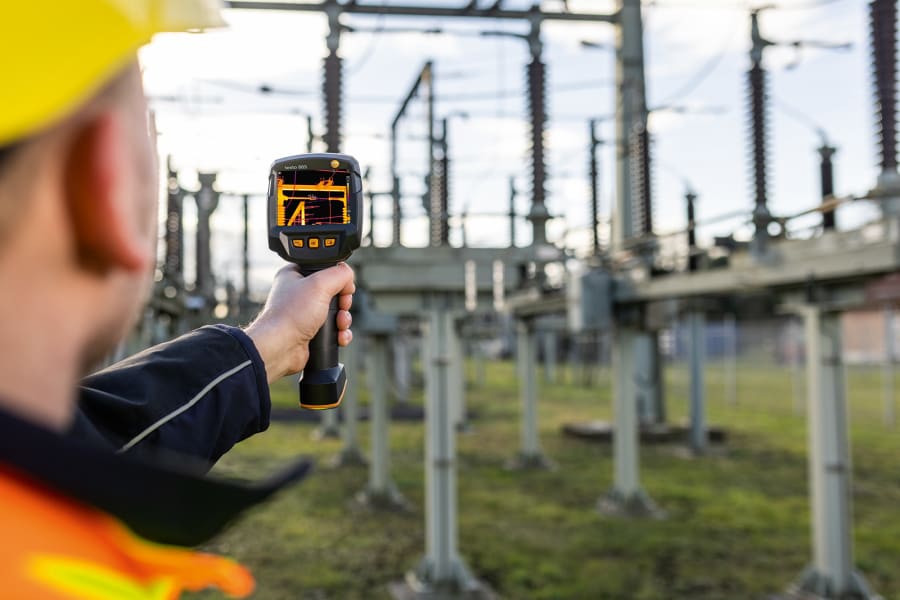
If the target object occupies only a few pixels, a mixed pixel consisting of the object and background is created. Therefore, use IFOV as a gate: Does the object size match the distance and optics?
Step 2: Clarify workflow requirements (reporting, repeatability)
Documentation: measurement points, scale, series of images
For comparability, you need clear measurement-point logic (naming), consistent scale logic (consciously fixed/auto) and reproducible capture parameters (distance, angle, focus).
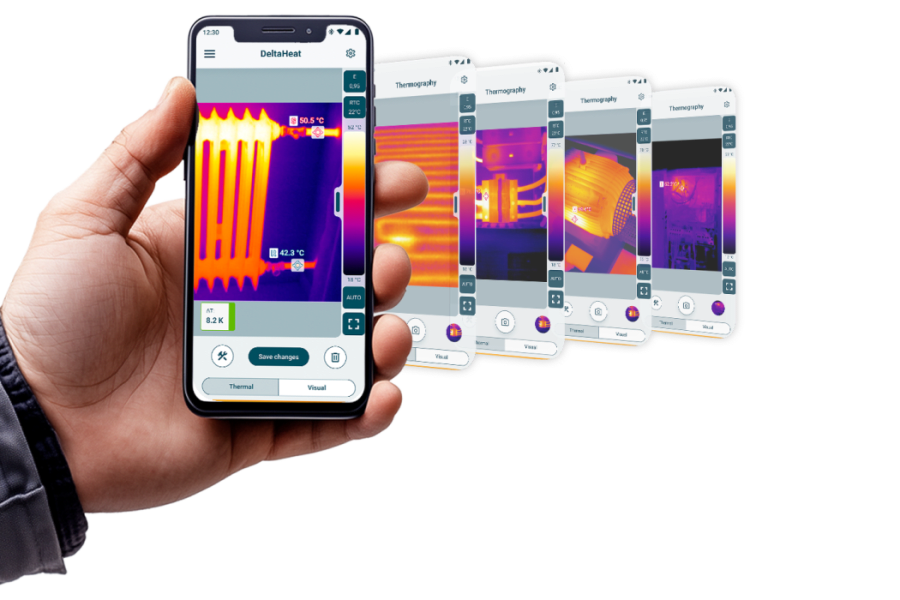
Software/app: reporting and data exchange
Software/app saves time and reduces errors in reporting and handover.
Step 3: Plan functions to prevent measurement errors
The more reflective the measurement object and the smaller the target, the more important functions that systematically reduce measurement errors become.
Emissivity/RTC support
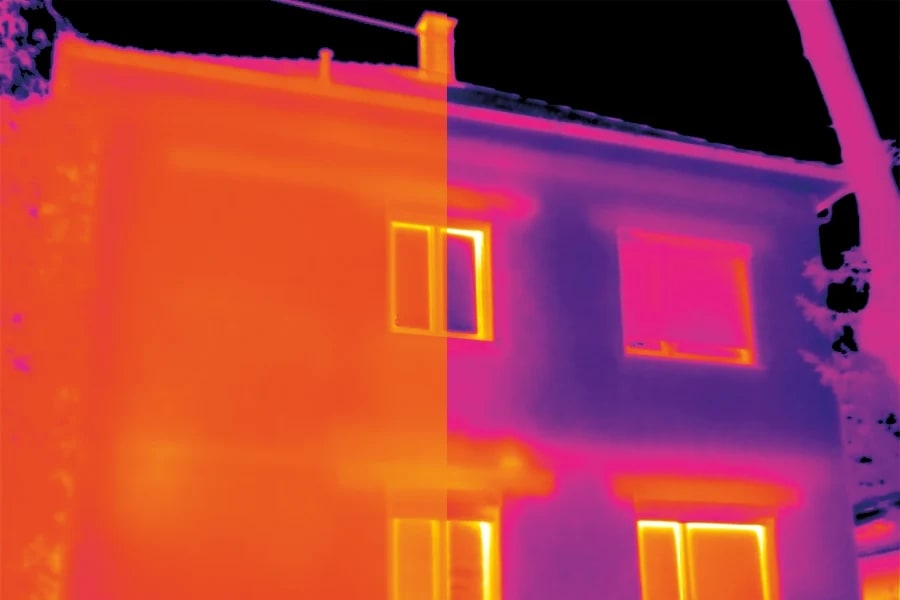
Support for setting emissivity (ε) and reflected temperature (RTC) reduces systematic deviations.
Distance aid and scaling assistant
Distance aids help you maintain the correct measurement distance. Scaling assistants support comparability.
Product overviews & next steps
Accessories, service and registration
Accessories (e.g. lenses) expand the range of applications; service (calibration/maintenance) and registration ensure long-term usability and documentation capability.
Do you have questions or would you like personal advice? Contact us!
We look forward to supporting you with our expertise and individual solutions.