Directly from the manufacturer
Free shipping
Fast delivery
Secure payment
Directly from the manufacturer

Your Temperature Mapping is Only as Good as Your Last Change:
When (and Why) to Re-Map

When Your Pharma Facility Changes, Does Your Temperature Map?
Temperature mapping is often treated as a box to check, a qualification exercise completed once during commissioning, filed in a binder, and revisited only when an auditor asks. But your facility is not a static environment. HVAC systems age. Renovations happen. Equipment moves. Seasons change. And the thermal map you validated a year ago or last season may bear little resemblance to the environment your product is living in today.
The fundamental promise of a temperature mapping study is that you know your terrain. Reframing mapping from a one-time qualification event to a living, maintained program is one of the most practical steps a facility can take to close the monitoring gap between what the paperwork says and what the environment is actually doing.
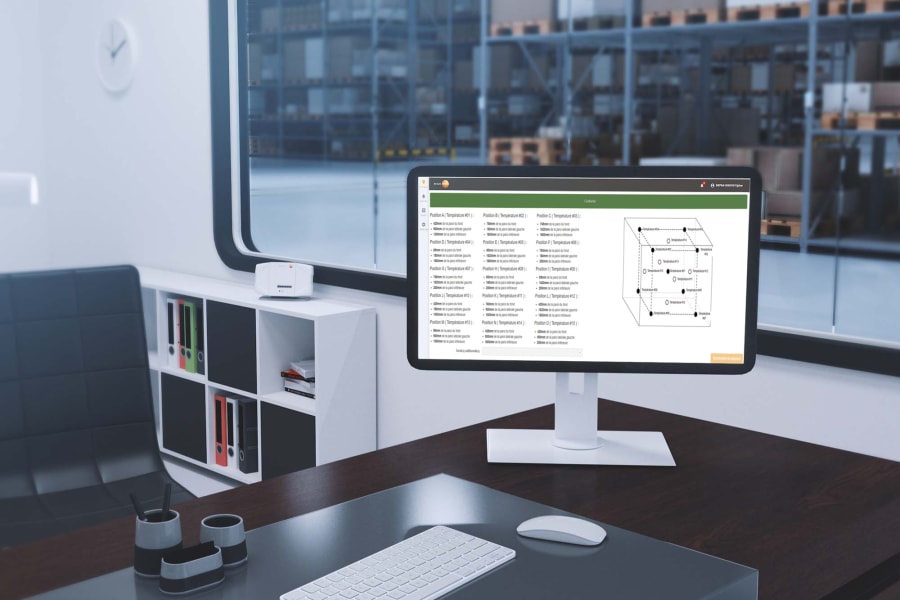
What a Temperature Mapping Study Actually Tells You
Most facilities treat a mapping study as a confirmation exercise, something that validates what they already believe to be true about their environment. In practice, it is often the opposite. Done properly, a mapping study reveals:
Where hot and cold spots exist and how consistently they appear
How the environment responds to door openings, occupancy changes, and loading patterns
How conditions vary between summer and winter operating cycles
Whether current sensor placement is positioned to catch actual risk, or just to pass a walkthrough
That last point matters more than most facilities acknowledge. Sensor placement decisions made during initial installation are often made before the full behavior of the environment is understood. A mapping study can, and frequently does, reveal that the monitoring system's existing sensor locations are not capturing the spaces most likely to drift out of specification.

Temperature Maps Have an Expiration Date
The conditions under which a mapping study was conducted are assumptions baked into every compliance decision that follows it. When those conditions change, the map changes with them, whether or not a new study has been run.
The most common triggers that render a prior mapping study unreliable include:
Renovations, wall modifications, the addition of pass-throughs or airlocks, or even the rerouting of utility lines can alter airflow patterns in ways that are not predictable from prior mapping data.
A replaced unit, a rebalanced system, or a change in setpoints can introduce new airflow dynamics. However, not all HVAC-related changes require a full facility re-map. The scope of re-mapping should be proportional to the scope of the change. A like-for-like replacement of a single rooftop unit may only require re-mapping of the zone that unit services, while a major racking expansion or reconfiguration is likely to alter convection patterns throughout the space and warrant a complete re-map. Determining the appropriate scope is best handled through a formal impact and risk assessment completed before the change takes effect, involving an interdisciplinary team that includes facilities, operations, engineering, and quality assurance.
Adding a freezer, repositioning a biosafety cabinet, or introducing large equipment that generates heat or disrupts airflow creates thermal influences that did not exist when the original study was conducted.
A fully loaded cold room behaves differently than a partially loaded one. If your facility's typical inventory volume or pallet configuration has changed meaningfully, the original mapping conditions may no longer represent how the space actually operates.
Temperature and humidity conditions outside the building, and the degree to which they influence conditions inside, vary with the seasons. A mapping study conducted in January does not capture summer peak loading behavior, and vice versa. Many regulatory frameworks and industry standards expect both summer and winter mapping to be on file.
Even in the absence of any specific triggering event, most quality systems establish a periodic re-mapping requirement to account for the gradual changes that accumulate in any operating facility. Facilities with the best re-mapping requirements typically use 18-month or 30-month frequencies, depending on the criticality of the product. This helps ensure they are capturing a summer and winter every other mapping.
The Regulatory Expectation
Regulatory bodies do not specify a universal re-mapping interval, but the expectation that mapping is a maintained program, not a one-time event, is well established across EU GMP Annex 15, USP 1079, and WHO Technical Report Series guidance on temperature-controlled storage. While the U.S. Food and Drug Administration does not have published temperature mapping guidelines, qualification and mapping data is expected during inspections.
The consistent thread across these frameworks is the principle of continued suitability: an organization must be able to demonstrate not just that a controlled environment was once qualified, but that it remains qualified under current conditions. A mapping study conducted before a significant facility change and never updated cannot support that demonstration.
From an audit perspective, the question is rarely whether a mapping study was done. It is whether the mapping study on file reflects the environment as it currently exists.
Temperature Mapping in Practice - Expert Insights
Sean Merrill, a validation engineer at Testo with more than eleven years of experience in commissioning, qualification, and validation, has seen firsthand what separates a defensible mapping program from one that creates risk. Here is what he had to say.
According to Sean, the biggest mistake facilities make is treating mapping as a one-time event, rather than an ongoing program. When they do so, risks affecting product quality can go undetected, directly threatening patient safety. In his experience, the best organizations have periodic review and re-mapping frequencies that are procedurally defined, and, most importantly, they adhere to those schedules.
Sean also points to a re-mapping trigger that facilities frequently overlook: their own excursion and deviation records. A periodic review should include an assessment of whether the frequency or magnitude of excursions has increased over time, as this can indicate lapsing temperature control long before a formal audit surfaces the issue.
What does a well-maintained temperature mapping program look like in practice?

"This should start with a planned, proceduralized periodic review process that includes assessments from facilities and engineering, operations, and quality assurance. The review should include an assessment of alarms, excursions, and deviations over a defined time period, review of maintenance and repair records, and a thorough assessment of the building to look for trends that might indicate equipment wear, insulation degradation, or other issues that may affect temperature control. Additionally, a procedurally defined re-mapping frequency between two and five years, depending on the facility risk profile, type of product stored, and the criticality to patient safety and public health should be established."
The cost of not maintaining that discipline, Sean notes, extends well beyond compliance. Product loss alone can be significant. A single pallet of finished drug product can exceed $1M in value, and a facility storing thousands of pallets is putting the entire supply chain at risk. Regulatory citations, customer audit findings, and loss of business are additional consequences that compound the exposure.
Re-Mapping Is Not a Sign of Non-Compliance
One of the more persistent misconceptions in quality culture is that initiating a re-mapping study signals a problem, as if it were an admission that something was wrong with the prior qualification. In fact, the opposite is true.
Re-mapping is not limited to times following a triggering event. A facility that proactively re-maps on a defined periodic schedule is demonstrating exactly the kind of quality culture that regulators expect to see. It is evidence that your organization treats compliance not as a destination reached at commissioning, but as an ongoing operational discipline.
The facilities most likely to face findings related to mapping are not the ones that re-map too often. They are the ones that have not updated their studies in years, despite operating in environments that have changed in meaningful ways.
Where to Start
If your organization has not reviewed its mapping status recently, the following is a practical starting point:
Review your change control log. Any physical, HVAC, or equipment change since the last mapping study should be evaluated against your re-mapping criteria. If your quality system does not currently include re-mapping criteria as part of change control, that is itself a gap worth addressing.
Check your mapping study date against your current seasonal requirements. If you have summer and winter studies on file, confirm they reflect the current configuration of the facility, not a prior layout.
Evaluate your sensor placement against your mapping data. If your monitoring system's sensor locations were set before mapping was conducted, or before a significant change, there may be a mismatch between where you are monitoring and where the risk actually lives.
Testo's mapping and validation services are built to support exactly this kind of program review, whether your organization needs a full re-map, a targeted assessment following a specific change, or a consultative review of your current qualification status. Learn more about Testo pharma services.
Want to Hear More on Temperature Mapping and Qualification?
In Episode 5 of Measuring Up: Thinking Out Loud, "Commissioning, Qualification, and Validation: The History and Evolution of Validation," host Bill White sat down with Sean Merrill to trace the origins of CQV practice and explore what rigorous qualification looks like in today's pharmaceutical facilities. If the questions this piece raises are ones your team is working through, it is well worth a listen.

Know your terrain and keep knowing it. Testo's mapping and validation services help pharmaceutical facilities establish, maintain, and defend a mapping program built for the way environments actually change over time.
Pharmaceutical Environmental Monitoring Solutions
Browse Testo's complete portfolio of hardware, software, and GxP services for
environmental monitoring, cold chain transport, sterilization, and lyophilization.