Directly from the manufacturer
Free shipping
Fast delivery
Secure payment
Directly from the manufacturer

Anemometer
Wind speed precisely determined

An anemometer is indispensable for determining a flow field in an air duct or for determining the temperature in industrial ventilation systems.
A distinction is made between the thermal anemometer and the vane anemometer. The latter is the oldest form of anemometer and works in a similar way to a windmill: the air flowing through it drives the impellers, causing them to rotate.
Control of air conditioning systems
Control of flow fields in technical systems
Measurement of the dimensioning of various ducts
Determination of air velocity in wind turbines
Weathering for underground workplaces (e.g. mines)
Anemometer from Testo
You might also be interested in
Flow measurement: Particularly necessary for duct measurement
Flow measurement using a anemometer is particularly important for duct measurements. It checks how high the air velocity is in the duct in question. This measurement is particularly important for ventilation and air conditioning systems, as any system can only be used effectively and efficiently if the air flow is at an appropriate speed.
A wind speed measuring device is also used for duct outlets, whereby the outlet measurement is relevant here. The anemometer detects small changes that are important for the entire system. Such changes relate, for example, to the speed of the air flow and the volume flow.
Air velocity is often underestimated, especially in rooms, but it has a decisive influence on the climate in the room. In addition to air velocity, temperature and humidity also play a major role in a comfortable indoor climate, which is why all three values should always be monitored. The values can be measured using the thermal anemometer.
It makes sense if the anemometer selected for flow measurement has various additional functions that allow the average value of the measured values to be determined, for example. It is also essential to save the most recent data in order to obtain a realistic overview of the development of the values.
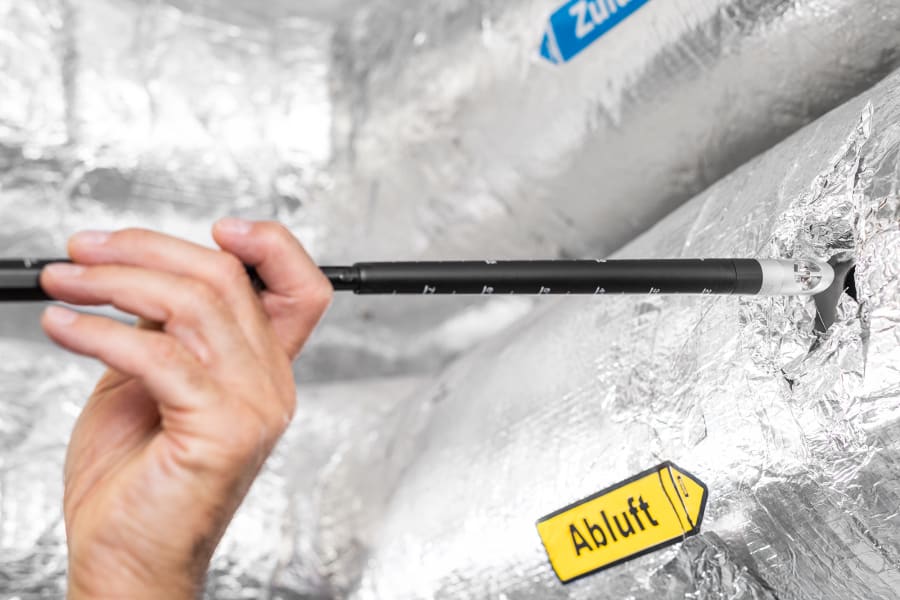
How the measurement works
The time taken by the blades to complete a full rotation gives the wind speed. The speed of the measured air flow is calculated from the measured time. The thermal anemometer, on the other hand, heats a heating wire, which is cooled with the help of an air flow. A higher current supply prevents cooling or compensates for it.
The flow velocity is related to the amount of current required, as the heat transport changes with the flow velocity. Put simply, the more current flows, the higher the flow velocity.
Air velocity monitoring possible
Simultaneous measurement of temperature and humidity
Various flow meters available for different applications
Ensuring the efficiency of systems and devices
Easy evaluation of data possible
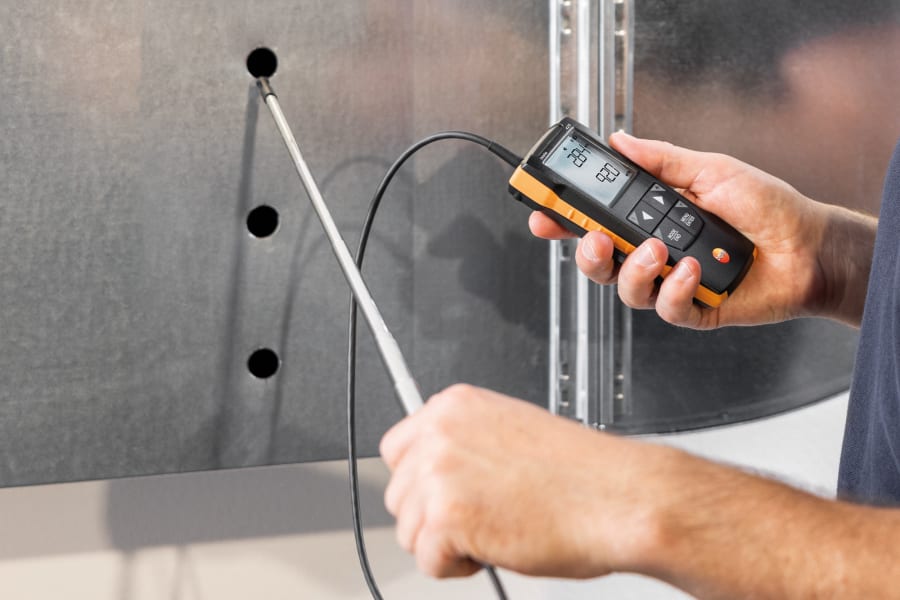
Anemometers: Suitable devices for all applications
The measurement of wind speed and other values is only realistic if you use the right device and can rely on the performance of the device. When purchasing a new anemometer, you should therefore check in advance whether the device can measure the desired wind speed and whether it is possible to evaluate the data to the required extent.
It is important to know that anemometers are equipped differently and that a volume flow measuring hood is used differently to a thermal anemometer.
simple application and operation
High sensitivity
Collection of the required data
Rapid evaluation of the data
Formation of mean values
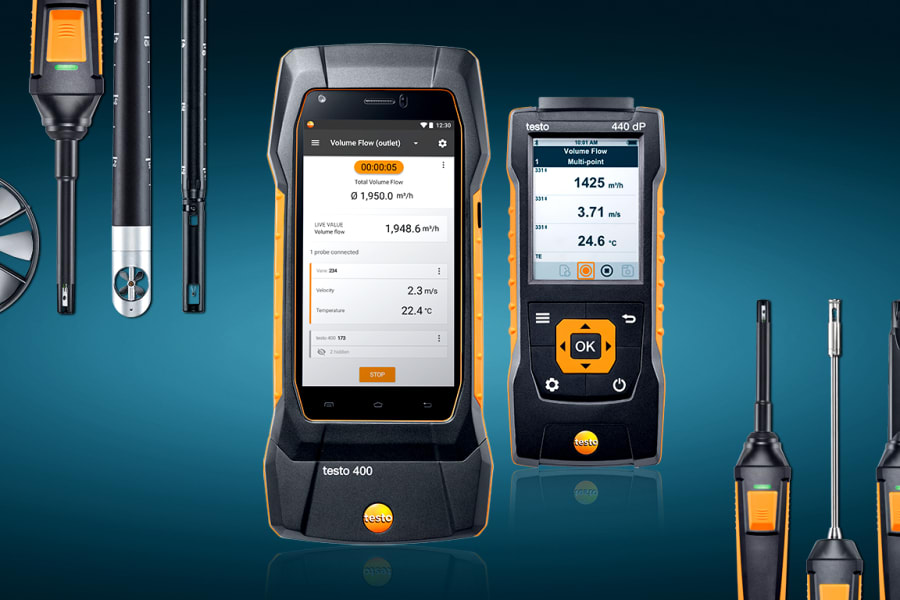
Multifunctional devices
For all climate and ventilation measurements.
more info
Measure wind speed: Conversion of different units
The devices offered by Testo as anemometers for wind measurement are not only able to carry out a measurement at just one point and thus offer a so-called spot measurement. Users who use the appropriate programs can also carry out multi-point measurements. These so-called network measurements are aligned to international standards (DIN/ISO/Ashrae).
Furthermore, you can also convert the measured results into different units and display them. Using the vane anemometer, for example, it is possible to display the wind speed in Beaufort as well as the wind chill. The values can be displayed in the units m/s, km/h or kts, and conversion into mph and fpm is also possible.
At Testo, the focus is on the anemometer - that and the required values that need to be collected and calculated. You can choose from a range of anemometer variants, so you can find the right anemometer for both indoor and outdoor use. Using the individual devices is made even easier by using a smartphone and the corresponding app.
Testo also offers multifunctional measuring devices that allow all relevant data to be determined simultaneously.
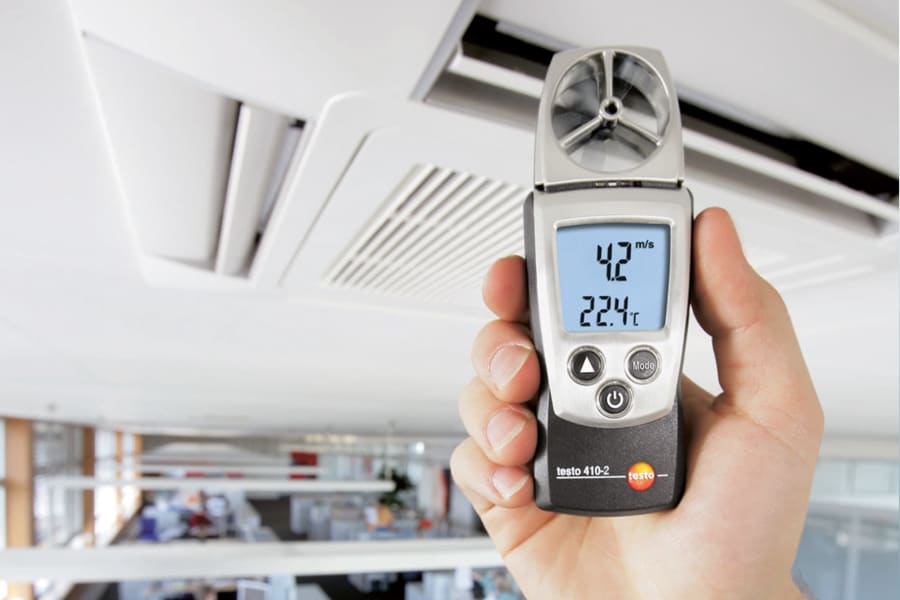
Measuring the flow
A flow meter is not only required as an anemometer for outdoor use, but is also used indoors, as already mentioned. The device can significantly simplify numerous measurements here and it is possible to combine different measuring devices with each other. A normal anemometer can be supplemented with an impeller probe, which can then be used to calculate the volume flow. It can also be used to determine the flow velocity.
The measuring ranges displayed in each case are decisive for the strength of the various flows to be recorded. The differential pressure gauge, which is attached directly to the ventilation duct, can also be used for the purpose of flow measurement. Testo offers the right measuring instrument and the necessary accessories for all areas of application!
Carry out indoor and outdoor measurements
Calculate measured values
Forward values
Carry out evaluations

Anemometers for measuring flows and other values:
New!
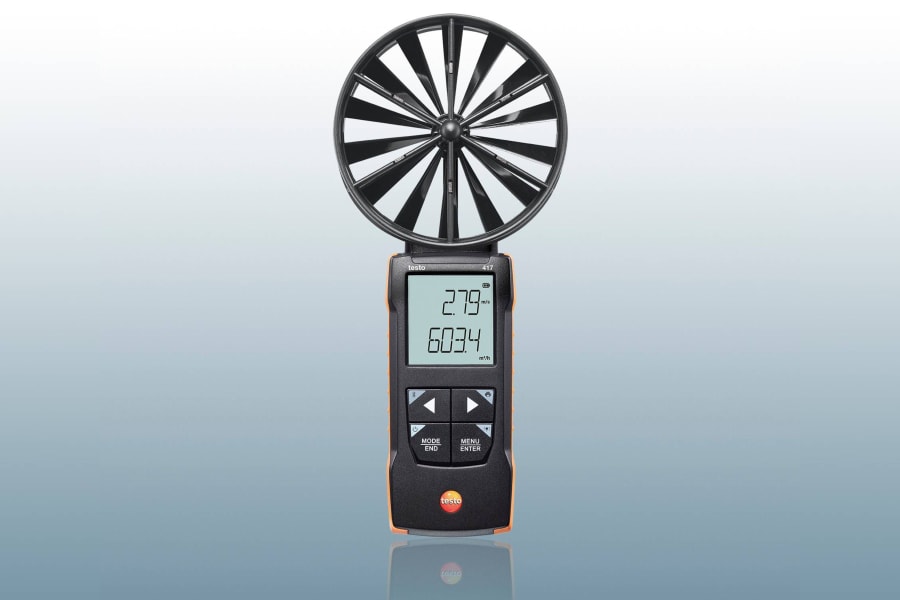
Impeller anemometer
For flow measurements at air outlets and in ventilation ducts as well as for testing the supply and exhaust air at disk valves, ventilation grilles and swirl outlets.
Bestseller
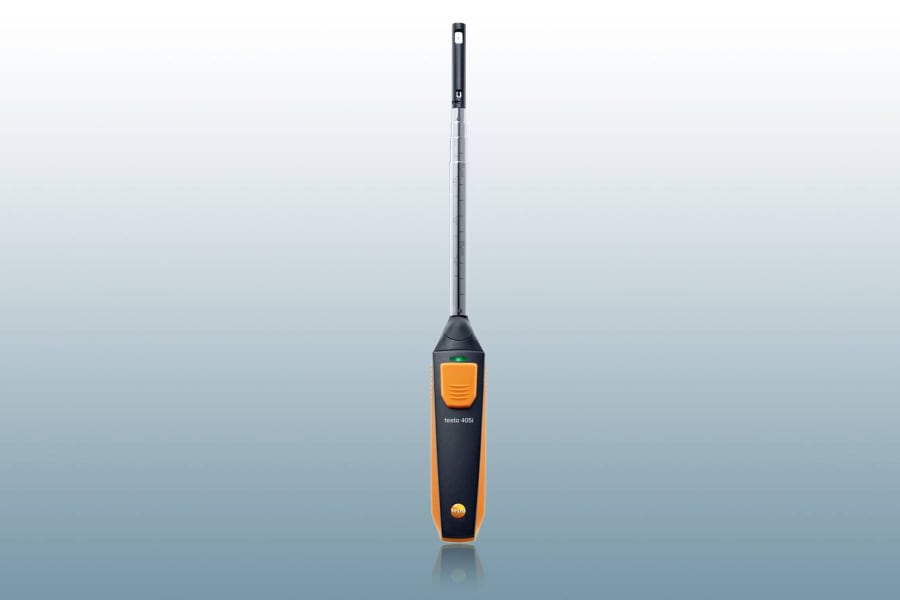
Thermal anemometer
For flow measurements at air outlets and in ventilation ducts as well as for testing the supply and exhaust air at disk valves, ventilation grilles and swirl outlets.

Highlight
Volume flow hood
For larger ceiling outlets for measuring volume flow, temperature and relative humidity.
Bestseller
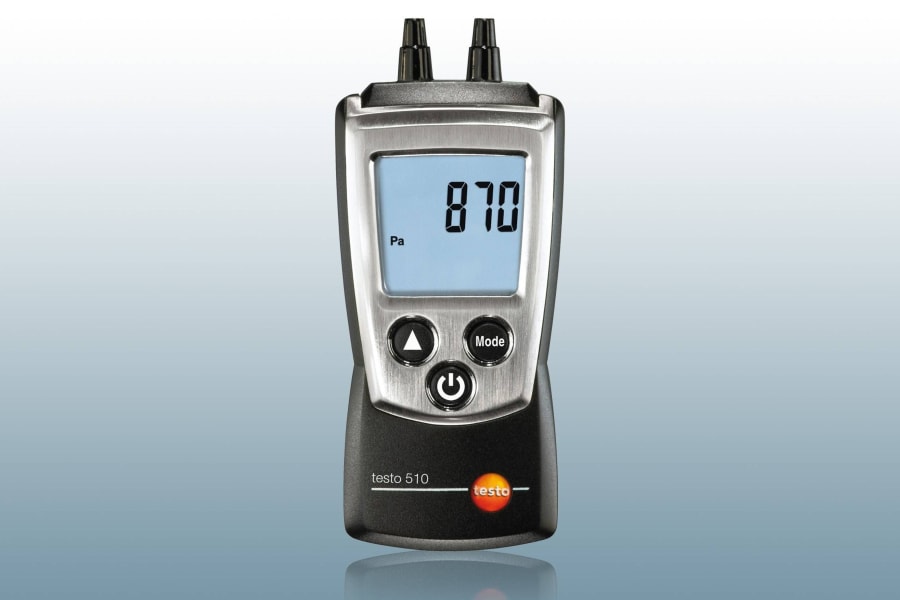
Differential pressure gauge
Ideal for differential pressure measurements on filters and pitot tube measurements in ventilation ducts.
Highlight
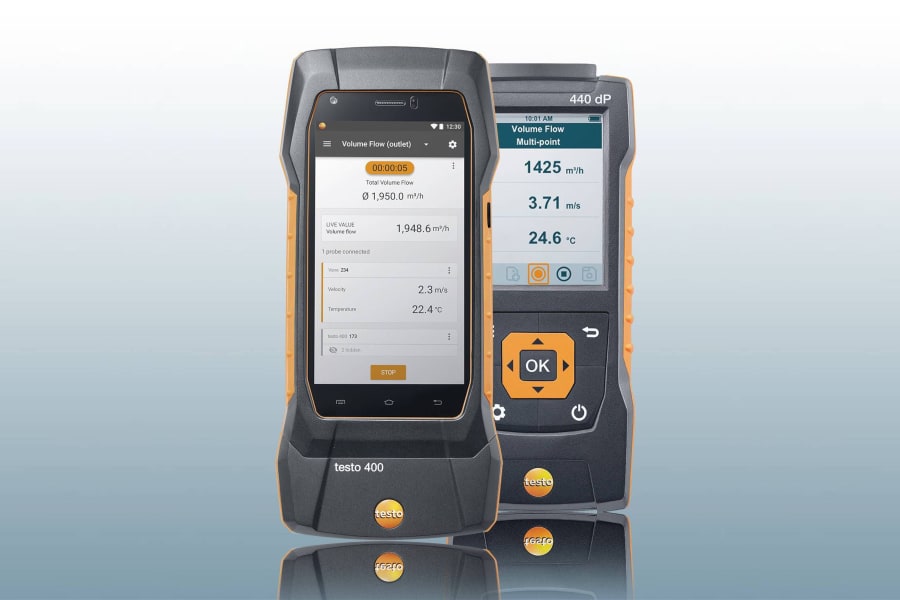
Multifunctional measuring devices
For all air conditioning and ventilation measurements.