Directly from the manufacturer
Free shipping
Fast delivery
Secure payment
Directly from the manufacturer

- Home
- Thermal Imagers crafted in Germany
NFPA Conference
Discover Testo Thermal Imaging and how they assist in NFPA 70B Compliance
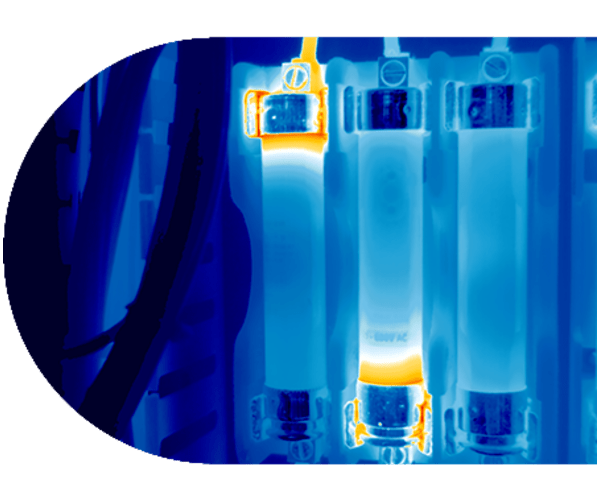
Join us at the NFPA Conference & Expo, beginning June 22nd at the Mandalay Bay Convention Center in Las Vegas. Visit booth #1339 to explore how thermal imaging plays a critical role in NFPA 70B electrical maintenance programs enabling early detection of overheating components to prevent failures and fire incidents. Meet with an expert to see how our thermal imagers can help you stay compliant with NFPA 70B and strengthen your fire prevention strategy.
Meet with a Thermal Expert today!

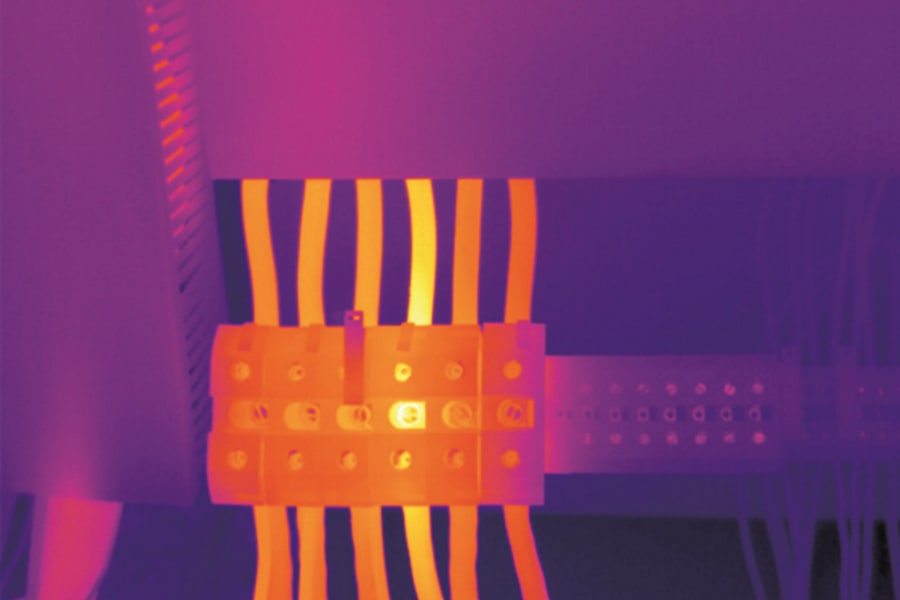
NFPA 70B, "Standard for Electrical Equipment Maintenance," has undergone a significant transformation, moving from a "recommended practice" to a "standard" in its 2023 edition. This change implies that its guidelines are now enforceable, marking a crucial shift in electrical equipment maintenance.
What is NFPA 70B?
Learn about the NFPA 70B Standard and how it affects your thermal processes
NFPA 70B in Summary
NFPA 70B Thermal Imagers
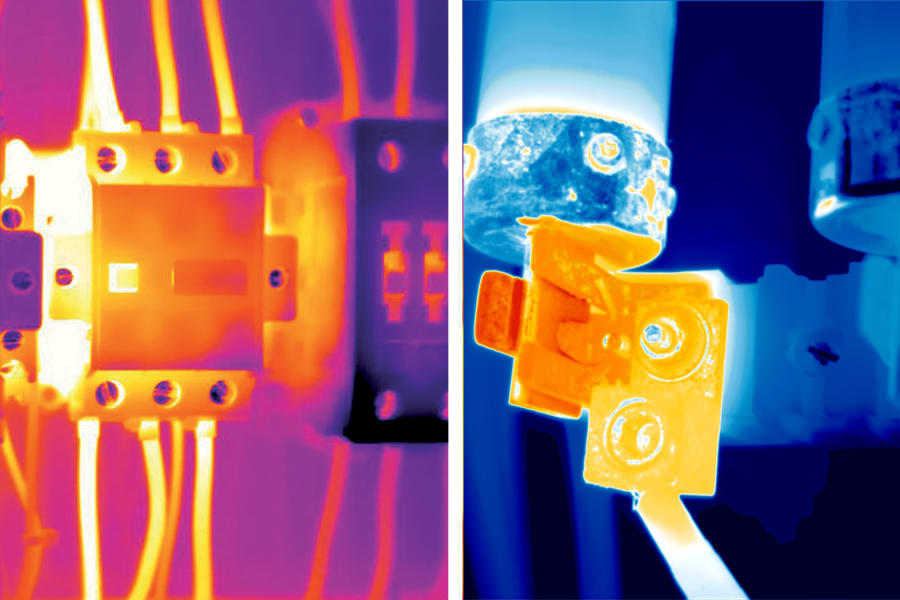
Explore the NFPA 70B Compliant Thermal Imager lineup from Testo!
Discover Testo Thermal Imagers
IFOV Calculator
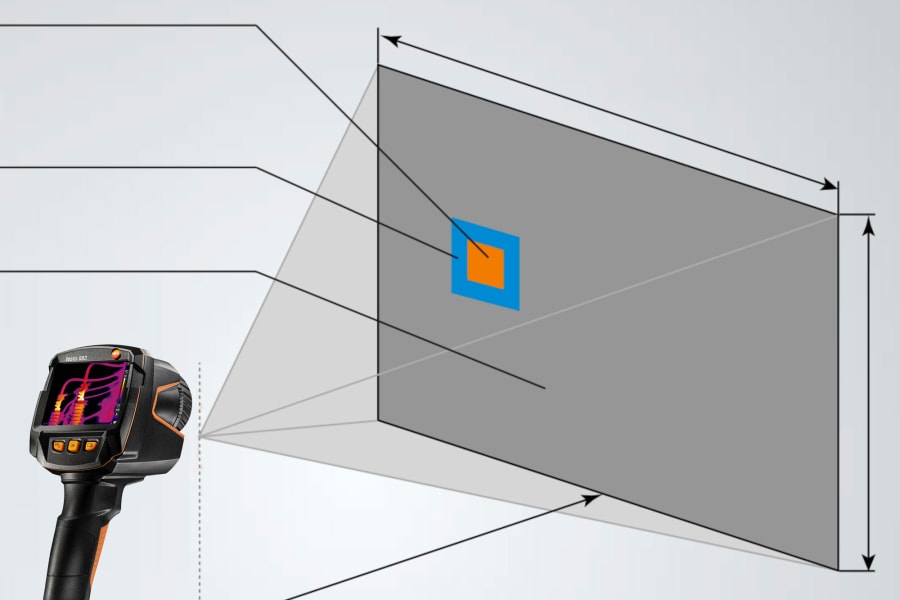
Calculate minimal distance required for proper imagery on a target area.
For Small Object Measurement

Contact us
Schedule a consultation today with our Thermal Specialist for detailed info.
Schedule a meeting with an expert below!
Upcoming Webinar: Contractor & Industrial Electrical Maintenance Made Easy with Testo and Gimba
Built for electrical contractors, industrial maintenance, and reliability pros: Testo's Jeff Ryerson, Level III Thermographer, and Gimba's Jonathan Nelson go live to review a real NFPA 70B program that cut documentation time 60% and saved up to $30K in labor. See how thermal imaging and Gimba turn compliance into a labor-savings win, then bring your questions for the live Q&A.
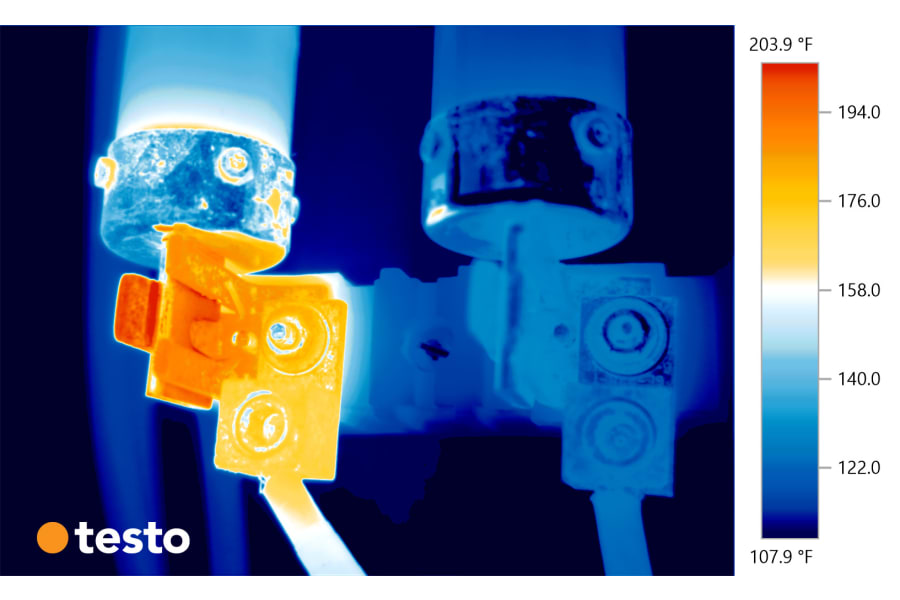
Testo + Gimba.io Reducing NFPA 70B Documentation Time by 60%
See how a University electrician transformed routine maintenance inspections into a fully compliant Electrical Maintenance Program (EMP) aligned with NFPA 70B standards.
By combining Testo thermal imaging with the Gimba.io platform, they uncover risks, documented critical findings, and built a proactive strategy that reduces downtime, improves safety, and stands up to audits.
What to Know About IR Inspections
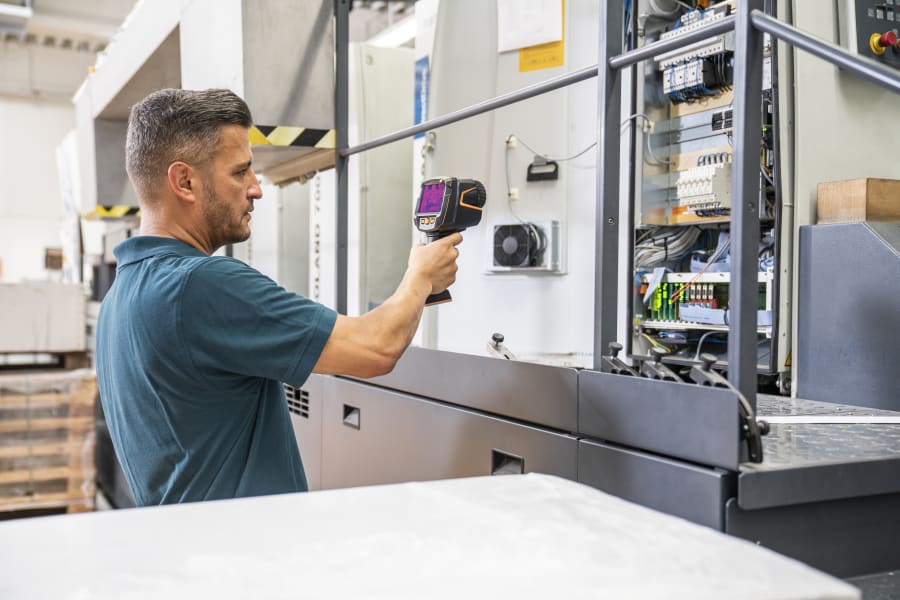
Infrared Inspections aren't just about finding problems, they're about delivering more value.
This guide outlines how thermal imaging helps uncover hidden issues, strengthen maintenance programs, and create new service opportunities.
In this live demo from the AHR Expo, we show how thermal imaging quickly identifies dangerous electrical hot spots before they lead to equipment failure, safety hazards, or costly downtime. Using a Testo thermal imager, we visualize abnormal temperature patterns inside an electrical panel, something the naked eye simply can’t detect.
NFPA 70B in Summary:
NFPA 70B is now a mandatory standard, not just a recommendation, for electrical equipment maintenance.
Proactive Maintenance: with documented electrical maintenance programs (EMP), regular inspections, and testing.
Safety and Reliability: through early detection of issues to prevent equipment failures and electrical hazards. Tools like thermal imaging are required at 12 months or 6 months intervals depending on the asset’s condition (Section 7.2.1.1 and Table 9.2.2).
Structured Approach: with guidelines for maintenance interval, procedures, and required personnel qualifications and training.
In short, NFPA 70B sets the rules for keeping electrical systems safe and working correctly through planned, regular maintenance.
Key Requirements of NFPA 70B For Thermal Imaging:
NFPA 70B, the Standard for Electrical Equipment Maintenance includes mandatory thermographic inspections for all electrical connections and terminations.
Section 7.2.1.1 mandates that infrared thermographic inspection of electrical connections and terminations must be performed in accordance with Section 7.4.
Section 7.4 mandates how the inspections must be conducted:
7.4.1: Infrared Thermography shall be used when required to verify temperature differences (delta T) of the following:
Similar electrical components under similar loading
Comparison between electrical components and ambient air temperatures
7.4.3: Temperature differences between the area of concern and references shall be documented.
7.4.3-6: Inspections must be performed at normal circuit loading. When normal loading is not feasible, a circuit loading of not less than 40% of nominal circuit loading is permitted. Circuit loading characteristics shall be documented and retained for future reference.
Table 9.2.2: Highlights the recommended maintenance intervals. Infrared Inspection on all equipment is a standalone recommendation with 12-month intervals for equipment in Condition 1 and 2, for Condition 3 there is a 6-month interval.
Section 8.4.1, 8.4.2 Requires testing personnel to be qualified to operate the test equipment and perform the test procedure on the specific equipment to be tested.
Test records shall contain the following minimum information:
Identification of the testing person and organization.
Identification of the equipment under test.
Nameplate or label data from the equipment under test.
Environmental conditions, such as humidity and temperature, could affect the results of the tests or calibrations.
Date of the test.
Indication of test performed.
Indication of pass/fail criteria, where applicable.
Indication of as-found and as-left test results, where applicable.
Test operator’s comments or recommendations, where applicable.
Testo Recommendations for NFPA 70B Requirements:
Implementing NFPA 70B requires a calibrated thermal imager, training for personnel, and a system for documentation. The inspection of each electrical component must include with the thermal image the date, time, electrical loading, ambient temperature, and environmental conditions.
When considering thermal imagers for NFPA 70B compliance, it is crucial to focus on features that enable accurate temperature measurement, reliable detection of thermal anomalies, and ease of documentation. All of our recommended solutions have onboard ∆T analysis and wireless connectivity (Wi-Fi and Bluetooth). Here’s a breakdown of key specifications:
Essential Thermal Imager Specifications:
Accuracy: Accurate temperature measurement is paramount. Testo thermal cameras provide industry leading calibration across the full operating range of the camera to provide reliable measurements of ±2°C (3.6°F) or ±2% of the reading.
Calibration: NFPA 70B requires calibration traceable to national standards. Testo’s North American service center provides calibration and repair services for all our instruments.
Delta T (ΔT) Measurement: The ability to accurately measure temperature differentials (ΔT) is essential for NFPA 70B compliance. The camera should have features that facilitate ΔT measurement and analysis onboard.
Resolution and Optics: for proper measurement and documentation adequate resolution and field of view are needed to give a small spot size for measurement (also known as IFOV). We recommend at least 320x240 resolution along with interchangeable optics for inspecting equipment at different distances. Our systems include an IFOV Warning function to make sure you have the proper resolution to measure a small hot spot.
Battery System: Consider systems with interchangeable batteries and multi-bay chargers to give you the run-time you need for longer inspections.
Measurements for Electrical Load and Environmental Conditions: Testo’s NFPA70B solutions connect via Bluetooth with the Testo 770-3 Clamp meter for documenting electrical load and with the 605i Temperature/Humidity Probe for environmental conditions.
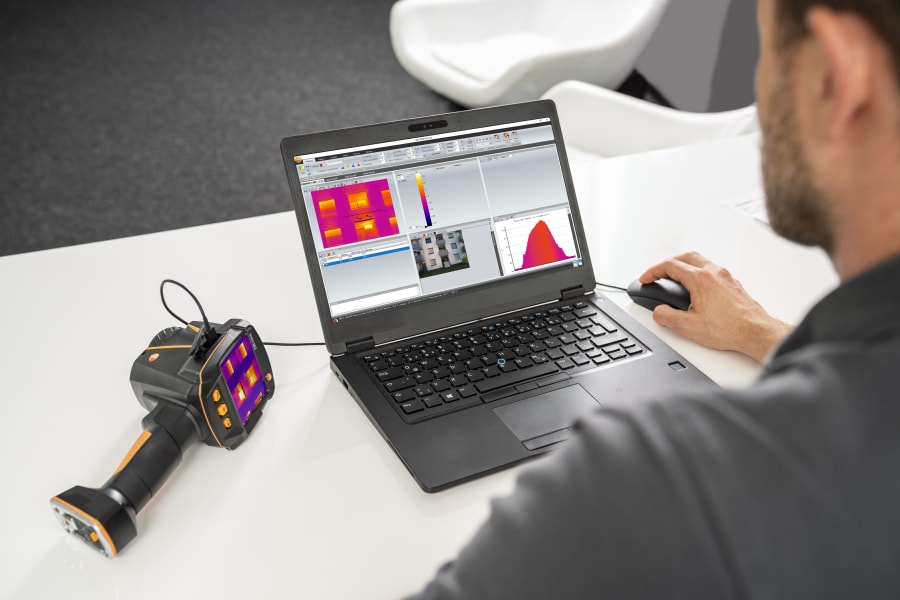
Image Storage and Reporting: The camera should have ample storage capacity for thermal images and the ability to generate reports. Testo IRSoft and is included with the cameras. There is no subscription fee required. The 883 Cameras also include SiteRecognition to tag inspection points, and speed documentation.
Solutions for Thermography Inspections,
NFPA 70B, and Reliability Programs
Designed to build your thermography program or services business. Interchangeable lenses to get the right field of view and measurement spot, tool style batteries, and dual battery charger to run all day. SiteRecognition software automatically organize and annotate your inspections. Built in DeltaT is essential for NFPA70B inspections.