Directly from the manufacturer
Free shipping
Fast delivery
Secure payment
Directly from the manufacturer

- Home
- Testo Bioanalytics
- Technology
Technology
Next-generation food safety starts here. testo Lab on a Chip combines advanced technology with a streamlined workflow to provide rapid, reliable Listeria testing on-site making environmental monitoring fast, easy and lab-free.
TESTO LAB ON A CHIP
How it Works
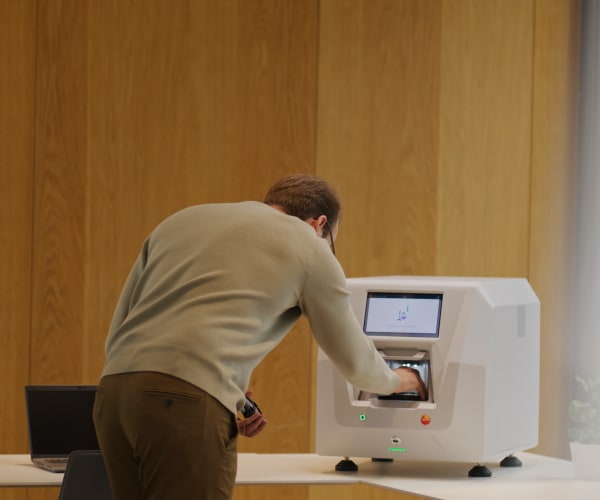
testo Lab on a Chip simplifies Listeria environmental testing with an intuitive, fully contained workflow. Automated sample processing and AI-powered detection deliver rapid, actionable results with no specialized lab, no complex preparation and optional enrichment.
Sample Capture &
Organism Recovery
A Letheen broth pre-moistened swab optimizes surface recovery efficiency while maintaining organism integrity, enabling reliable transfer into the cartridge for downstream processing.
Sealed Cartridge & In-Cartridge Reagent Handling
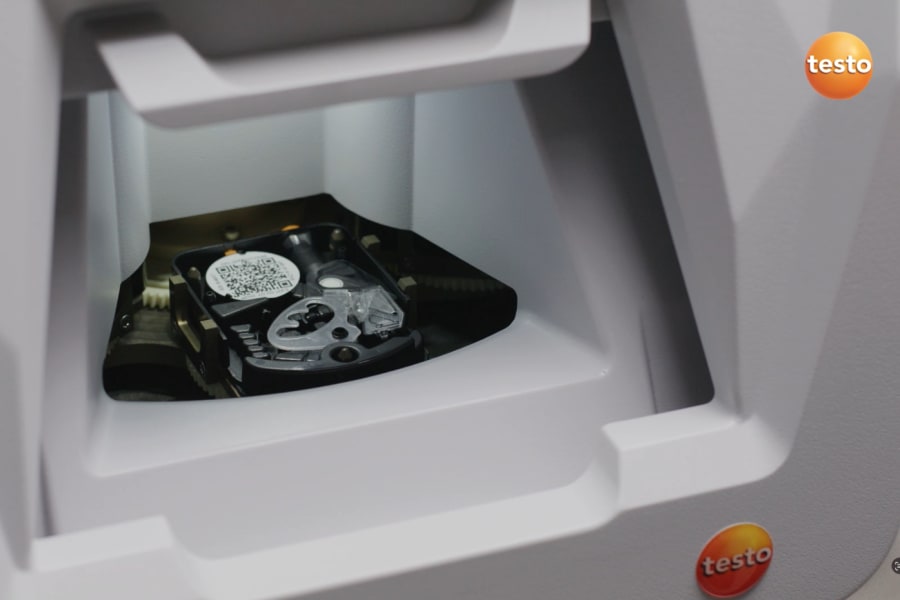
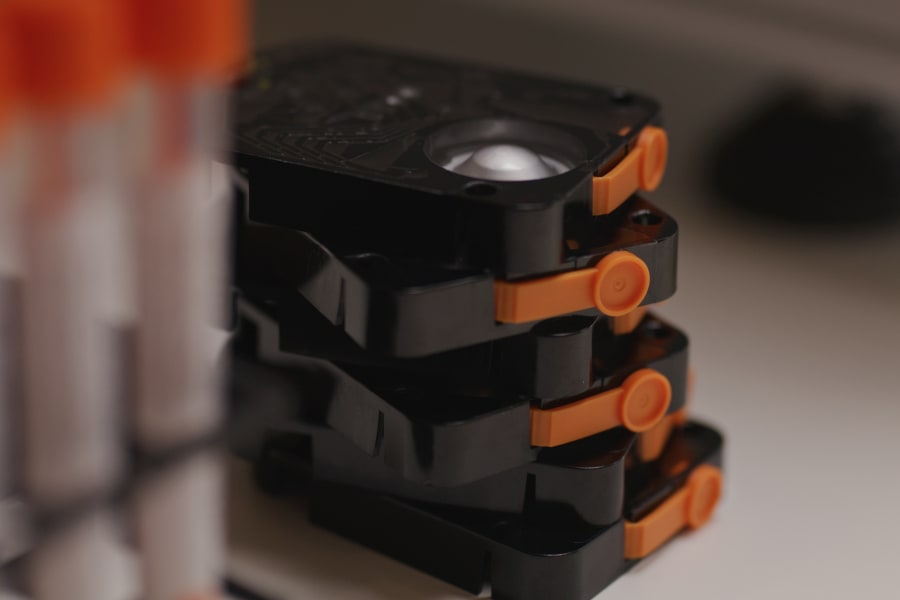
Insert the swab into the Test Kit cartridge and snap off the head at the narrow notch. The sample is sealed inside the cartridge where pre-loaded reagents are routed through microfluidic channels to condition the sample and prepare it for detection.
Automated Processing, Imaging & AI Interpretation
Inside the cartridge, the Analyzer runs an automated sequence of unit operations (~150 steps) to reduce matrix interference, block non-relevant signal, and label targets. The system captures thousands of images and applies trained AI to interpret multi-signal patterns.
Confidence Checks, False-Positive Controls & Reporting
Before results are reported, software applies quality and confidence criteria — multi-signal agreement / dual-stain logic if applicable, internal controls, and consistency across fields of view — to minimize false positives. Results are shown on-screen and can sync to the testo Cloud for trending and alerts.
Testing Workflows Compared
Evaluate testing workflows across critical parameters. This side-by-side comparison clarifies trade-offs that influence operational efficiency and decision-making.
See why testo Lab on a Chip outperforms traditional methods where it matters most.
Third-Party Labs Traditional Testing Workflow | PCR / Isothermal On-Site Molecular Workflow | testo Lab on a Chip Simplified On-Site Workflow | |
|---|---|---|---|
Time to Actionable Results | Multi-day turnaround Shipping + queue time | Same/next-day results Often depends on enrichment + run | Same-day results Within < 2.5 hours, on-site |
Testing Location | Off-site laboratory Sample shipping required | On-site or internal lab Dedicated prep area required | On-site testing No shipping delays |
Operational Impact | Longer holds and delayed release Root cause analysis starts late | Shorter holds than off-site Often next-shift investigation | Reduced holds Same-shift investigation Immediate corrective actions |
Product Holds & Downtime | Extended product holds Increased storage costs | Reduced holds vs. 3rd party Could depend on enrichment timing | Reduced holds Faster release decisions |
Workflow Complexity & Staffing | Simple on-site sampling Heavy shipping logistics + coordination | Additional prep and pipetting steps Trained personnel needed | Streamlined 3-step workflow (Swab → Cartridge → Result) No specialized lab required Designed for non-specialists |
Containment | Transport + multiple handoffs Less control over handling | Open-tube handling Cross-contamination risk | Sealed cartridge system Fully contained workflow |
Detection Focus | Detects DNA (live or dead) May trigger non-actionable positives | Detects DNA (live or dead) Risk of detecting residual DNA | Detects living organisms Actionable decision support |
See how testo Lab on a Chip enhances and fits within your existing EMP. We’ll help assess your individual ROI, review validation and performance expectations, and map the impact on your current workflows.
Frequently Asked Questions
Have questions? Our FAQ section provides clear answers about testo Lab on a Chip, including its on-site use, rapid Listeria detection, workflow efficiency, cost advantages, and how it compares to traditional testing methods helping you understand how this innovative solution streamlines food safety and protects your brand.
testo Lab on a Chip is an on-site system for detecting living Listeria spp. in food production environments. It is designed to simplify environmental monitoring with a swab-to-cartridge workflow and provide same-shift results and the complexity of a traditional microbiology lab.
testo Lab on a Chip is a high-performance, lab-quality solution built for environomental monitoring in food manufacturing facilities. It is especially relevant for food safety, quality, sanitation, and plant operations teams.
Currently, testo Lab on a Chip detects Listeria spp. We are working on identification of other common foodborne pathogens, such as Salmonella and E. coli, in the future.
Results are displayed on the testo Lab on a Chip Analyzer and can be send to the optional testo Cloud software. Positive results can optionally trigger an e-mail alert.
The system is intended for environmental monitoring in food production environments. Typical use cases include food-contact and non-food-contact areas such as equipment surfaces, drains, walls, conveyor areas, and other hygiene-critical zones. Use should follow the current validated method and instructions for use.
The primary use case is environmental monitoring. Any use beyond the validated workflow should be reviewed against the current instructions for use and application guidance.
Traditional culture methods can take multiple days, and many rapid methods still require lab infrastructure or specialized handling. testo Lab on a Chip is designed to provide a simpler on-site workflow and faster decision support at the plant.
No. The system is designed for use at the production site and to reduce reliance on traditional lab workflows. Training requirements and operating conditions should follow the current instructions for use.
Performance depends on the validated workflow and sample type. We can provide current performance data and study information during technical evaluation.
Validation and certification status should be reviewed based on the current approved claims for the product. We can provide the latest available information on validation studies, quality documentation, and applicable certifications during evaluation.
Faster environmental detection helps teams identify issues earlier, investigate potential contamination sources sooner, and make corrective decisions without waiting days for external lab turnaround.
The system can support sanitation verification and follow-up investigation by helping teams check whether Listeria contamination is still present after cleaning. It is intended to support faster corrective action and better environmental visibility.
Setup is easy. Simply plug in and begin testing. Installation and onboarding timing may vary slightly depending on your site configuration, including power, connectivity, and any optional digital features.
testo Lab on a Chip is designed for easy, on-site use without specialist staff, a dedicated lab, or extensive training. The system is designed to simplify the workflow. Training and onboarding requirements depend on site needs.
The strongest fit is food production environments that need faster environmental monitoring and simpler on-site testing workflows. This often includes facilities where response speed, sanitation follow-up, and operational simplicity matter.
Lease pricing for the testo Lab on a Chip Analyzer starts at $1,500 per month. Your final price depends on system configuration, testing volume, and support needs. Contact us to review your workflow and receive a custom quote.
Yes. We offer remote demos so you can see the workflow, discuss fit for your facility, and review technical and operational requirements.
Yes. Should you face a challenge, we have a dedicated technical service expert ready. Contact us via email (support@testo.bio), phone or chat.
Yes. Optional digital tools may be available depending on your setup. These can support result review, storage, and notification workflows. Please contact us to discuss current options.
We can provide technical documentation, instructions for use, and applicable validation materials to support your evaluation process.