Directly from the manufacturer
Free shipping
Fast delivery
Secure payment
Directly from the manufacturer

Understanding Thermal Imaging

Top 11 Things Building Owners & Property Managers Should Know About Infrared Inspections
You manage the building. You sign the insurance. You absorb the cost when something fails.
Infrared inspections are one of the most practical tools available to protect that investment, and most building owners do not know nearly enough about them. Here is what you need to know before your next inspection, or before you decide to skip one.

1) Establish a Program Strategy
A single infrared inspection is useful. A recurring inspection strategy is where the real value is.
Annual electrical inspections, periodic building envelope scans, and post‑storm roof surveys establish a documented history of building condition. Over time, this history improves reliability, reduces unplanned failures, supports capital planning, strengthens insurance positions, and protects asset value.
Most building owners adopt one of three program strategies:
Fully Outsourced:
Relying on qualified third‑party inspectors for scheduled surveys is effective when internal expertise is limited. Results depend heavily on the inspector’s training, methodology, and equipment quality. Professional‑grade imagers, proper calibration, and documented reporting are essential to avoid missed or misinterpreted findings.
Hybrid Program:
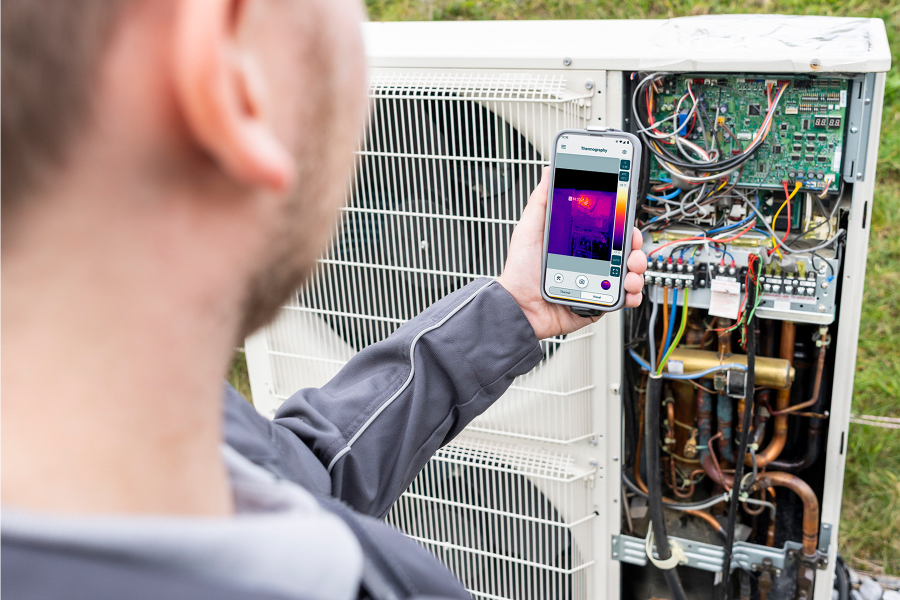
Many owners supplement annual third‑party inspections by equipping maintenance staff with compact, personal thermal imagers for day‑to‑day troubleshooting. This allows teams to safely investigate hot panels, motors, or HVAC issues between inspections, escalate real risks faster, and validate repairs without replacing certified inspections.
Fully In‑House:
Larger portfolios may bring inspections entirely in‑house, investing in trained thermographers, professional equipment, and formal inspection processes. When properly maintained, this approach offers maximum control and responsiveness, but requires ongoing training, calibration, and process discipline.
The right strategy is intentional, documented, and matched to the building’s risk profile.
2) Infrared Inspections See What Visual Inspections Miss
A standard walk-through inspection tells you what a building looks like. An Infrared inspection tells you what is happening inside it.
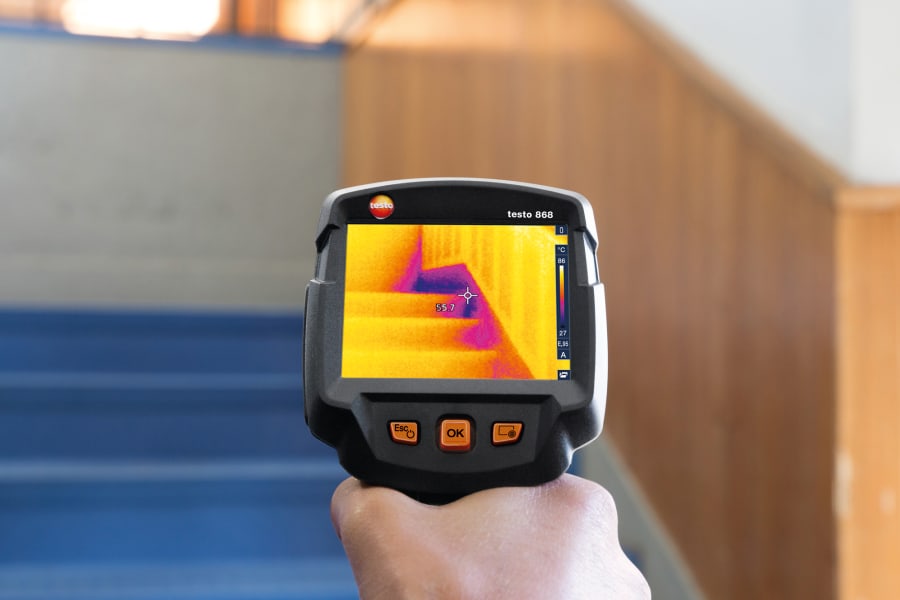
Thermal cameras detect heat signatures invisible to the naked eye. That means finding moisture trapped behind drywall before it becomes mold, electrical connections failing inside a panel before they cause a fire, and HVAC issues wasting energy before your utility bill spikes. By the time a problem is visible, it is usually already expensive.
3) The Best Time to Inspect Is Before Something Goes Wrong
Most infrared inspections happen after a problem surfaces. That is backwards.
A proactive inspection gives you a baseline. It documents normal operating conditions across your electrical systems, roof, envelope, and mechanical equipment. Every future inspection compares to that baseline. That is how you catch drift, degradation, and developing failures early, while repairs are still minor.
4) Electrical Systems Are the Highest Priority
If you do one infrared inspection, start with your electrical system.
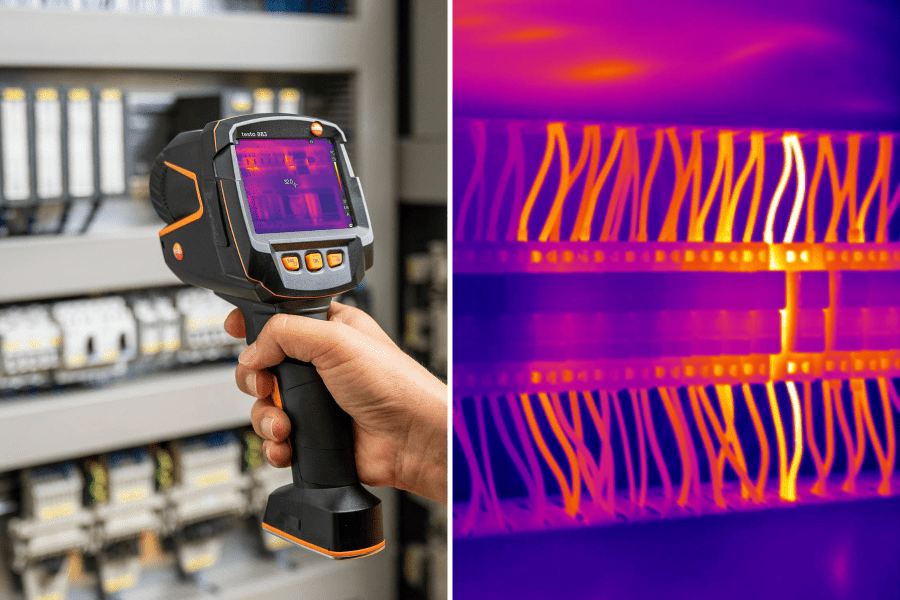
Loose connections, overloaded circuits, failing breakers, and unbalanced loads all produce heat before they produce failures. Those failures range from nuisance trips to panel fires. Thermal imaging finds them at the stage where the fix is a tightened lug or a replaced breaker, not a burned-out switchgear cabinet and an insurance claim.
NFPA 70B, the standard for electrical equipment maintenance, now uses mandatory language requiring regular inspection of electrical systems. Your insurer may already be asking about this.
5) Roof Inspections Are Most Effective After Dark or at Dawn
Wet insulation under a flat or low-slope roof retains heat longer than dry insulation. A thermal camera walked across your roof after sunset reveals exactly where moisture has infiltrated, even when the surface looks fine.
This matters because a targeted repair of a wet section costs a fraction of a full roof replacement. Thermal imaging lets you fix what is actually failing instead of replacing what still looks okay.
6) Building Envelope Scans Can Cut Your Energy Bills
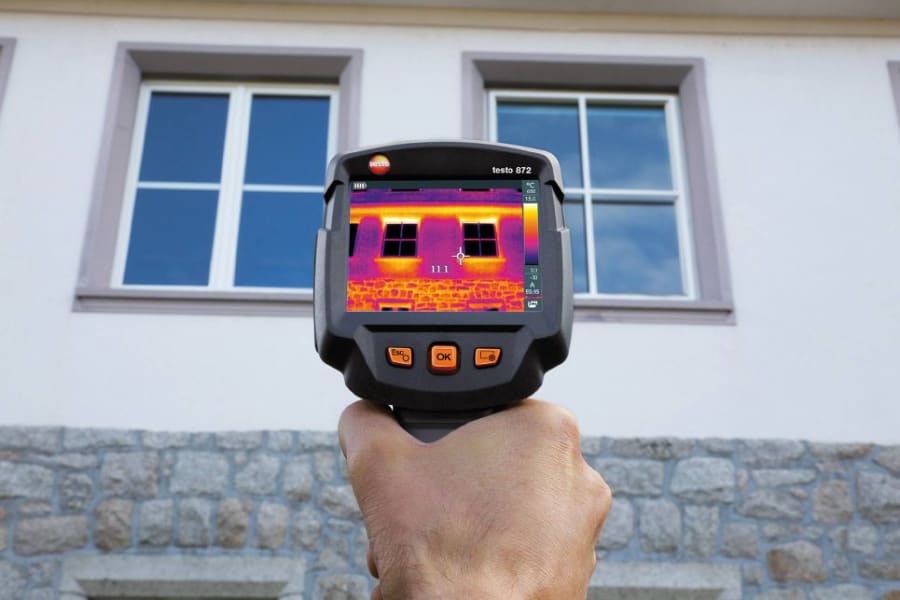
Air leakage and insulation failures are invisible from the inside and outside under normal conditions. Under the right temperature differential between indoors and outdoors, a thermal camera makes them obvious.
Missing or compressed insulation, gaps around windows and doors, and thermal bridging through structural elements all show up clearly. For a commercial building, even modest improvements to envelope performance can mean significant annual energy savings.
7) Your Camera Is Only as Good as the Person Behind It
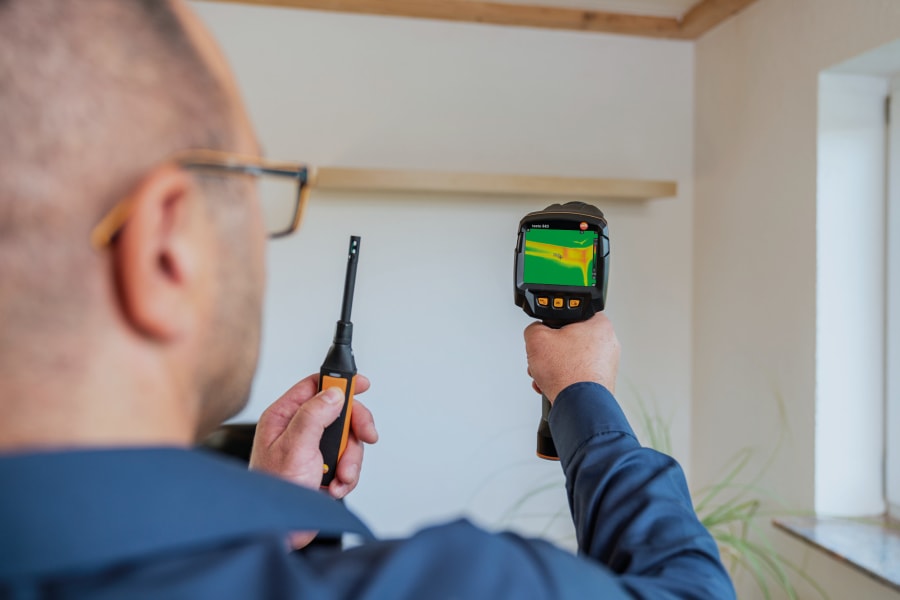
Investing in a thermal camera is a smart move. Investing in training for the person using it is what makes that camera worth anything.
Emissivity settings, reflected apparent temperature, solar loading, thermal equilibration time, and minimum delta-T requirements all affect the accuracy of your results. A technician who does not understand these variables will produce images that look professional and miss the problem entirely.
Look for formal thermographer certification through ASNT or a recognized training body. Level I covers camera operation and data collection. Level II covers analysis and diagnosis. That gap matters significantly when you are trying to determine whether a hot spot is a loose connection or normal operating variance. Untrained camera operators do not find more problems. They find fewer, and they misclassify the ones they do find.
If your team owns a camera and nobody on that team has formal training, the camera is not an asset yet. It is a liability with a lens.
8) Insurance Companies Are Paying Attention
Many commercial property insurers offer premium discounts for buildings with documented infrared inspection programs. Some are beginning to require them as a condition of coverage for properties above certain values or in specific occupancy categories.
An inspection that finds nothing wrong still gives you documentation that you performed due diligence. An inspection that finds a problem and leads to a repair is exactly the kind of loss prevention your insurer is hoping for. Either way, the paperwork works in your favor.
9) A Thermal Image Without a Report Is Just a Picture
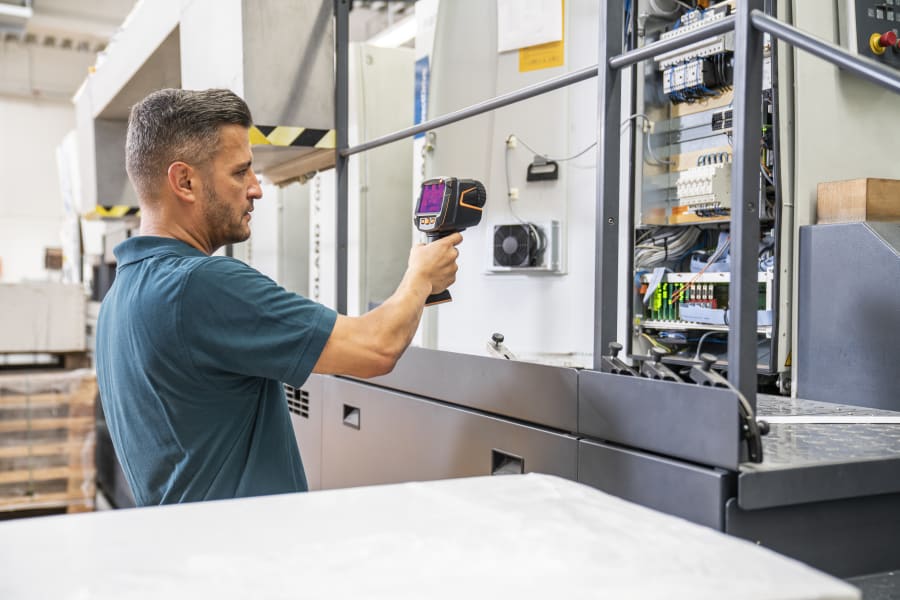
The value of an infrared inspection lives in the documentation, not the images.
A professional report should include the thermal image, a corresponding visual image, ambient conditions at the time of inspection, emissivity values used, the temperature differential of any anomaly found, a severity classification, and a recommended corrective action. If your inspection report does not include all of these, you cannot prioritize repairs, defend findings to an insurer, or track improvement over time.
10) Choose the Right Camera for the Application
Not every infrared inspection requires the same camera. The right choice depends on the type of work being done.
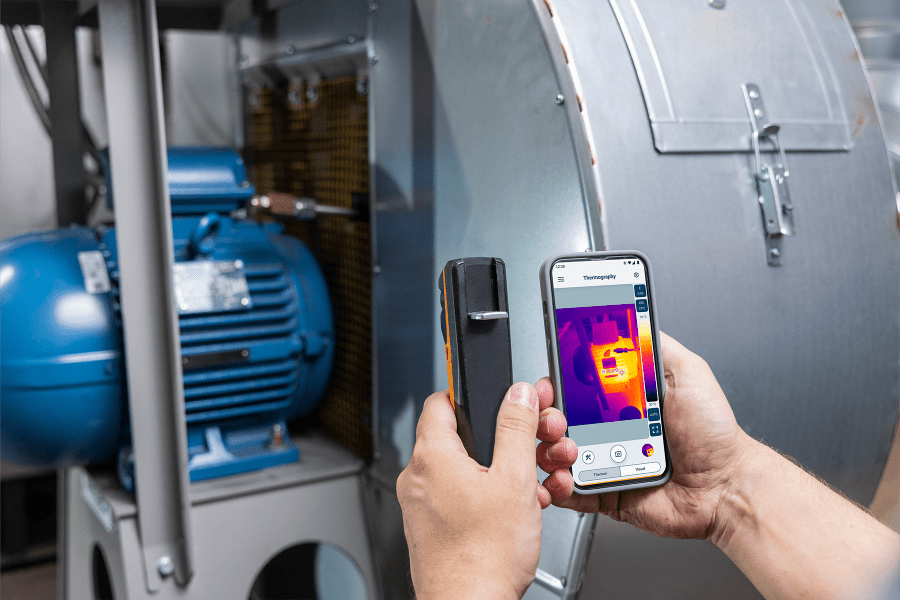
For technicians doing quick troubleshooting, spot checks, and basic electrical or mechanical inspections, a compact tool such as the Testo 860i may be the right fit. It is practical for everyday field use and convenient when speed and mobility matter most.
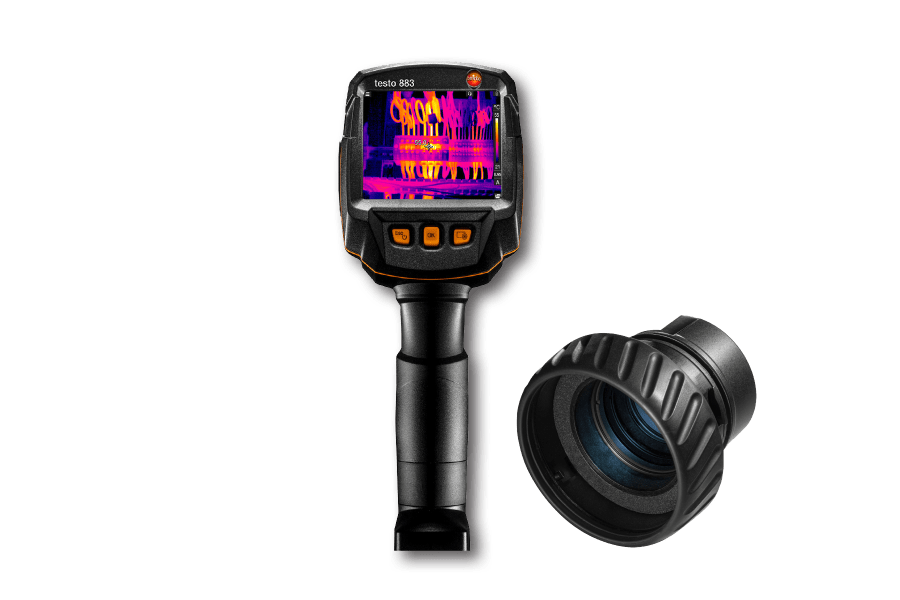
For larger facilities, more detailed inspections, and professional thermography programs, a higher-performance camera such as the Testo 883 is the better choice. It offers the image quality, detail, and reporting capability needed for more demanding building, roof, and electrical applications.
The key is to match the camera to the job. Too little capability can limit what you find. The right tool helps ensure the inspection is both efficient and reliable.
11) The Camera Pays for Itself on the First Find
A professional-grade thermal camera built for building and electrical inspections typically runs between $3,000 and $15,000 depending on detector resolution, thermal sensitivity, and feature set. For a facility maintenance team or service provider running regular inspections, that is a one-time capital expense that can pay for itself on the first significant find.
A single electrical failure leading to downtime, fire suppression activation, or structural damage can run into six figures before the smoke clears. A roof moisture issue caught early costs a targeted patch. The same issue missed for another season can mean a full replacement. The camera does not just find problems. It finds them at the stage where fixing them is still affordable.
The math is straightforward. The harder question is why so many buildings are being maintained without one.
Looking for your thermal solution? Check out our lineup of imagers:
Technician Imagers: Compact thermal imaging for fast diagnostics, everyday troubleshooting, and instant ROI in the field.
Field Inspection Tools: Versatile thermal imagers designed for detailed inspections, documentation, and professional reporting.
Reliability & Preventative Inspections: Advanced thermal imaging built for condition monitoring, predictive maintenance, and asset protection.