
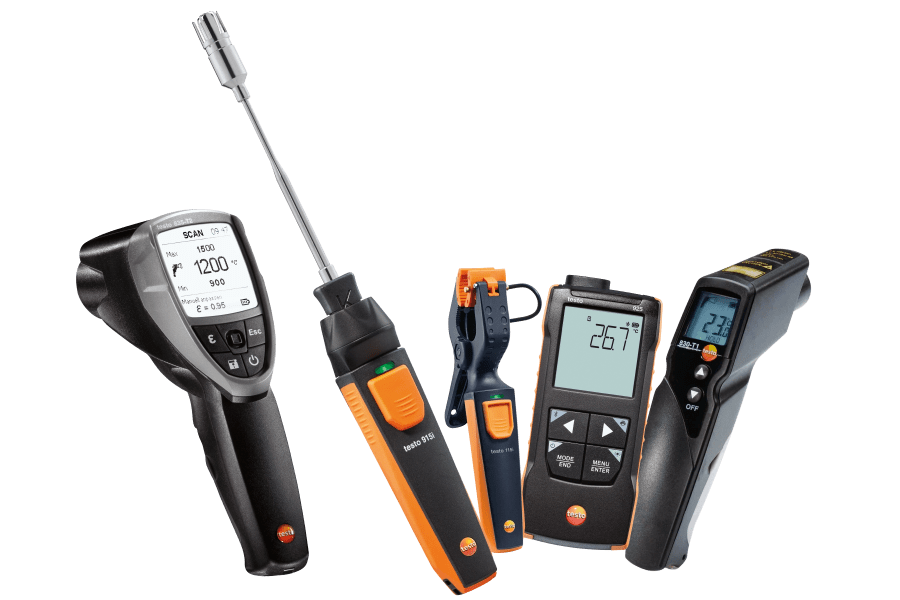
Thermometers for every measuring task
Temperature plays a role for most people on a daily basis, both for professional and personal reasons. A thermometer checks the outside or room temperature, it is used in warehousing and to monitor compliance with the cold chain in the food industry.
Without a temperature gauge, many things and situations could not be assessed accurately, as temperatures are perceived subjectively. A thermometer is therefore necessary to evaluate temperatures objectively. Modern digital thermometers from Testo are highly precise and reliable, robust and ideally equipped for the respective application.
Infrared thermometer
Temperature sensor for surface temperatures
Air temperature sensor
Penetration sensor
Thermal imaging cameras
Temperature data logger
What a temperature measuring device from Testo offers you
Robust workmanship, even for tough practical use
High-precision sensors for reliable and accurate measurement results
Comprehensive selection of probes for your temperature measuring device - including custom-made products
Calibration and service from a single source
Measuring devices for temperature measurement
Where do you want to measure temperature?
Digital thermometer: Easy reading of the values
Everyone is probably familiar with the simple thermometers that have a measuring scale and a green, blue or red line in the middle. This changes depending on the temperature. The liquid that forms this line expands when it heats up and contracts again when it cools down. It therefore rises as soon as it gets warmer and falls when it cools down again. However, reading the values is often quite inaccurate and hardly possible in the tenths range. The digital thermometer, on the other hand, has a sensor at the front tip of the probe. There are various sensor types which can be selected for the respective measuring task.
Temperature measurement with thermocouples is based on the thermoelectric effect. If two legs made of different metal alloys are welded at their ends, an electric current flows if the measuring point (hot end) has a different temperature than the reference point (cold end). Each thermocouple material has its own characteristic curve. The characteristic curve shows the relationship between the applied temperature and the generated electrical voltage. In practice, the Testo customer groups mainly use type K thermocouples in industry and air conditioning technology and type T thermocouples in the food sector.
Platinum resistance sensors are based on the so-called PTC thermistor effect. All metals are PTC thermistors, for example, because they have the property of increasing their electrical resistance as the temperature rises (i.e. they conduct electricity better when cold than when hot). This effect can be used for temperature measurements. Sensors with platinum resistance sensors are among the most accurate sensors available. They are durable and resistant to ageing. They are used particularly in laboratories.
Thermistors are modern temperature sensors that convert temperature changes into resistance changes. In contrast to the platinum resistance sensors just presented, their resistance decreases with increasing temperature. As they have a negative temperature coefficient, they are also called NTCs (= Negative Temperature Coefficient). Thermometers with NTC technology do not require any adjustment time to the ambient temperature (as they do not have a reference junction). This makes them ideal for use in cold rooms and freezer rooms.
extremely accurate measurement
reliable temperature measurement in the respective medium accurate measurement in the tenths to hundredths range
robust processing
data storage possible
A digital thermometer has yet another advantage. It can be used in conjunction with a temperature data logger, allowing temperature data to be collected and stored. These values are required over a longer period of time, for example when testing cooling appliances or air conditioning systems. The stored data can also be used to prove compliance with a consistent temperature in a food chain.
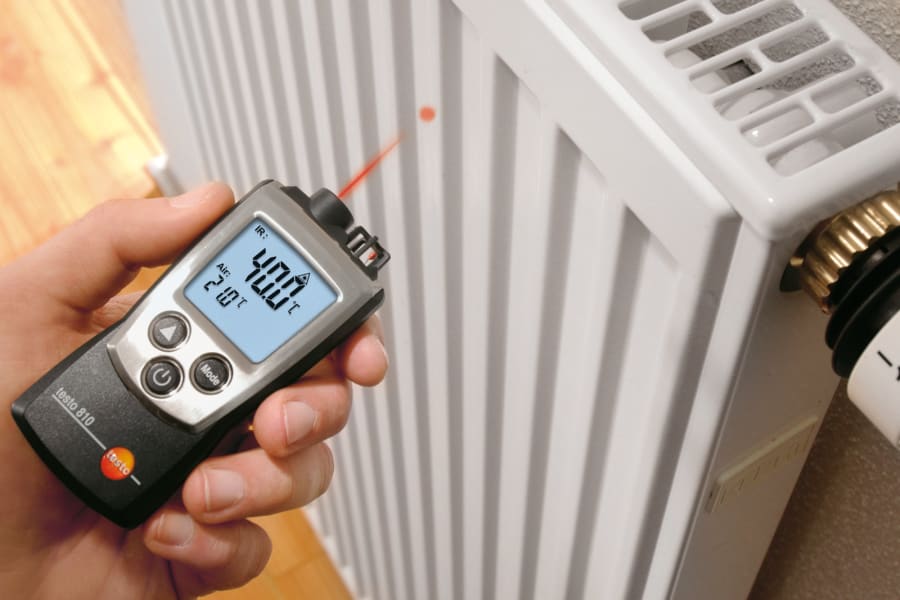
Temperature measurement: it is necessary here
In your private life, you want to know what the weather is like outside and whether you need a jacket or not. You look at the thermometer and rely on its readings. It's no different in the commercial sector, where a digital thermometer in conjunction with other measuring devices has to decide how to proceed, for example in food processing. Food transports are checked with the aid of temperature measuring devices, and chimneys and exhaust pipes are tested to determine exhaust gas loss. The air temperature is measured for the weather forecast, chemical solutions in the laboratory must be checked for their temperatures using an immersion measurement. When grilling, the barbecue thermometer shows whether the steak has already reached the right temperature inside.
There are many areas of application for thermometers, but one thing is always the same: precise thermometers that display the measured values clearly, accurately and reliably are essential.
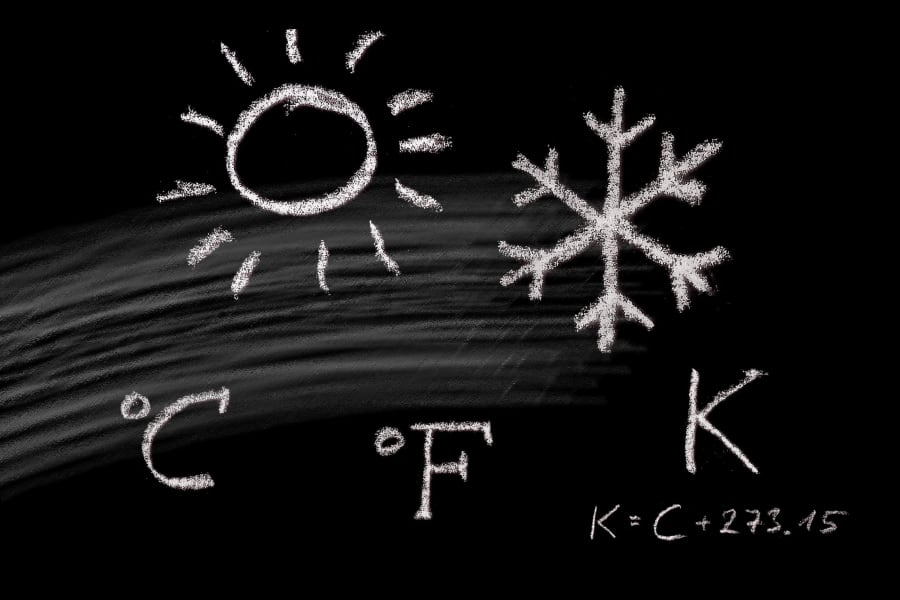
Thermometers for home and business
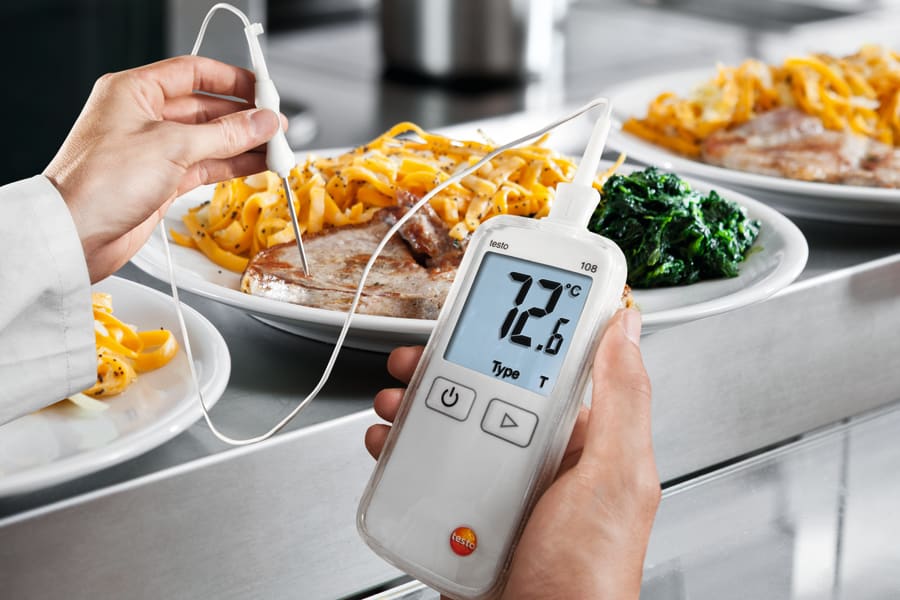
Testo offers the right thermometer for every need. Whether you are looking for a digital thermometer for use in the home and garden or whether you need a high-performance device to support you in your company as a member of the Smart Probes: Thermometers are among the most frequently used measuring devices in all areas. All variants impress with their reliable temperature measurement. Meat thermometers are used in the home and in the catering industry. These are insertion thermometers that ensure that the chef knows the core temperature of the food being prepared. As it can be used to check not only meat, but also fish and other foods, this type of thermometer is also known as a roasting thermometer
Thermo-hygrometer: Great climate?
The thermo-hygrometer is a small all-rounder and is used in many areas. It is able to determine the temperature and humidity at the same time. In the context of smart probes, such measuring devices are used, for example, to monitor greenhouses and warehouses, to test the indoor climate or in heating technology.
Measuring temperatures in liquids
When measuring temperature, it is always important that the temperature sensor used is kept at approximately the same temperature. If it is too cool, it draws energy from the surrounding medium and the measured value is too low. A sensor that is too hot, on the other hand, releases energy into the medium and the displayed value is higher than the actual value. This point is particularly relevant when measuring temperatures in liquids. In addition to the appropriate intrinsic temperature, the immersion depth of the sensor must be large enough. It should be immersed between 10 and 15 times its diameter in the liquid.
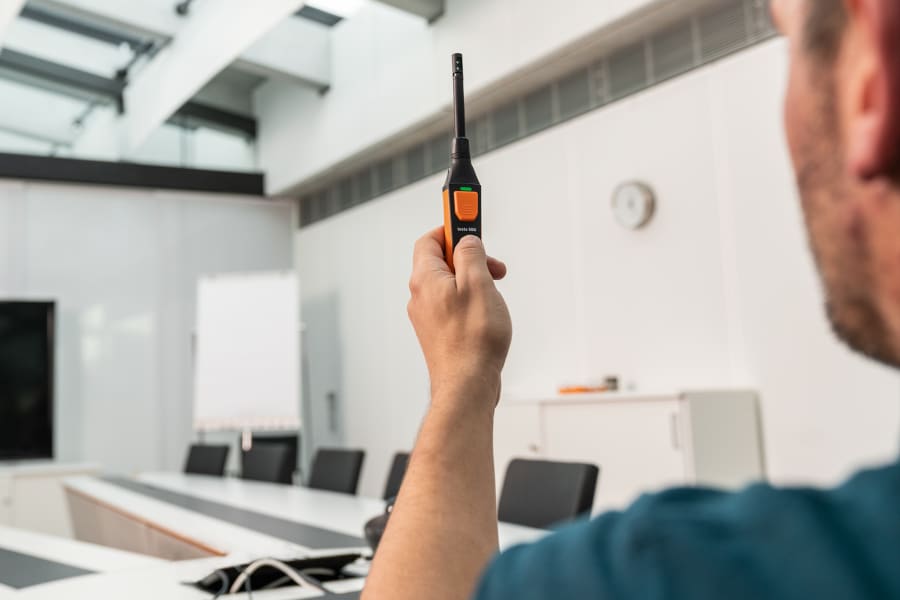
More measuring instruments from Testo
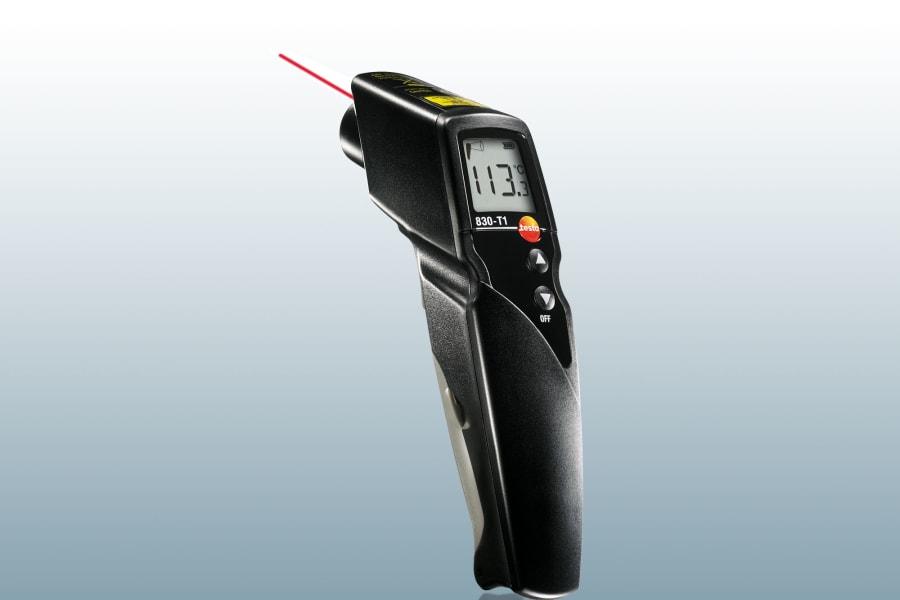
Bestseller
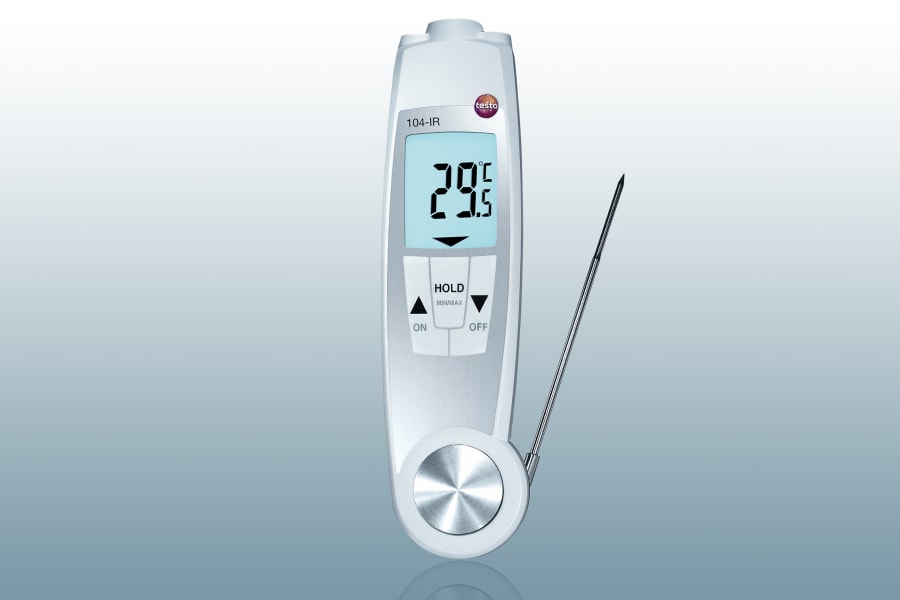
Infrared thermometer
Measure temperatures safely and precisely from a distance without contact.
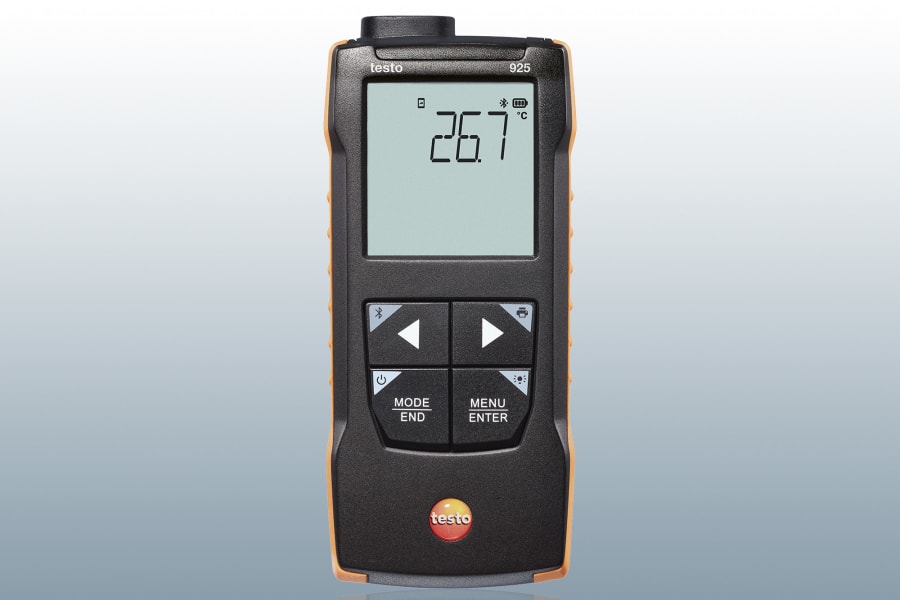
New!
Surface temperature measuring devices
Temperature measuring devices with fixed or exchangeable probes for surface temperatures.
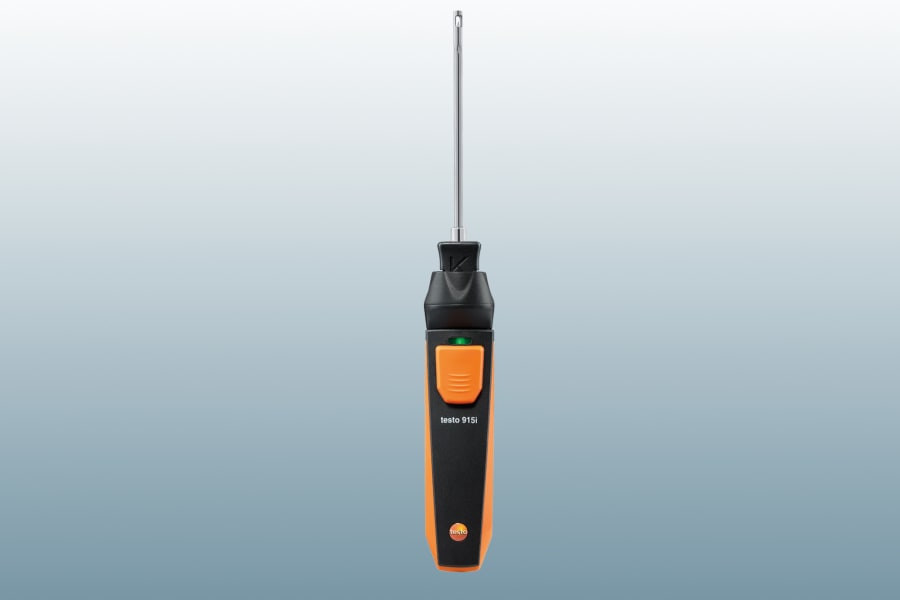
Highlight
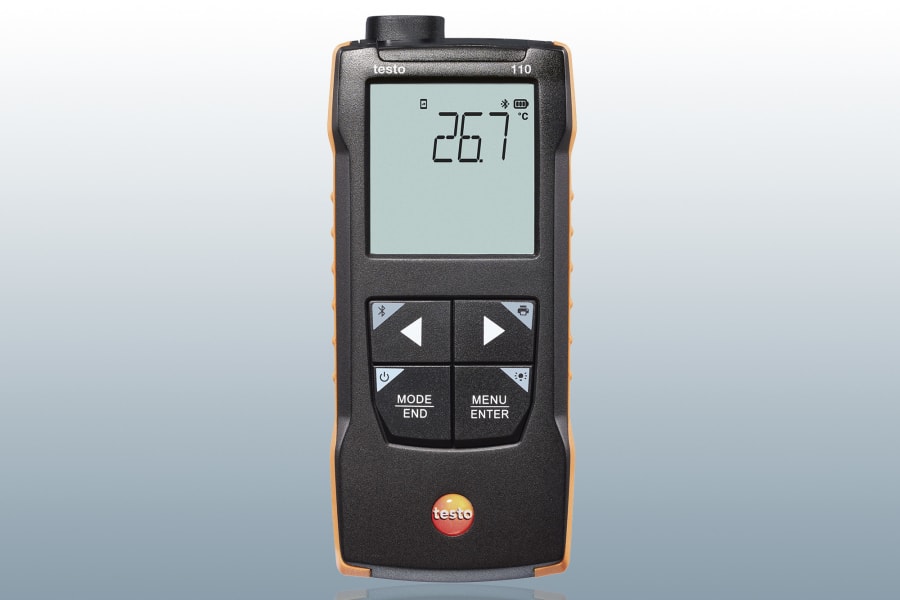
Air temperature measuring devices
Precise temperature meters for air temperatures.
New!
Immersion thermometer
Temperature measurement in liquids. Can also be used in aggressive media.
Highlight
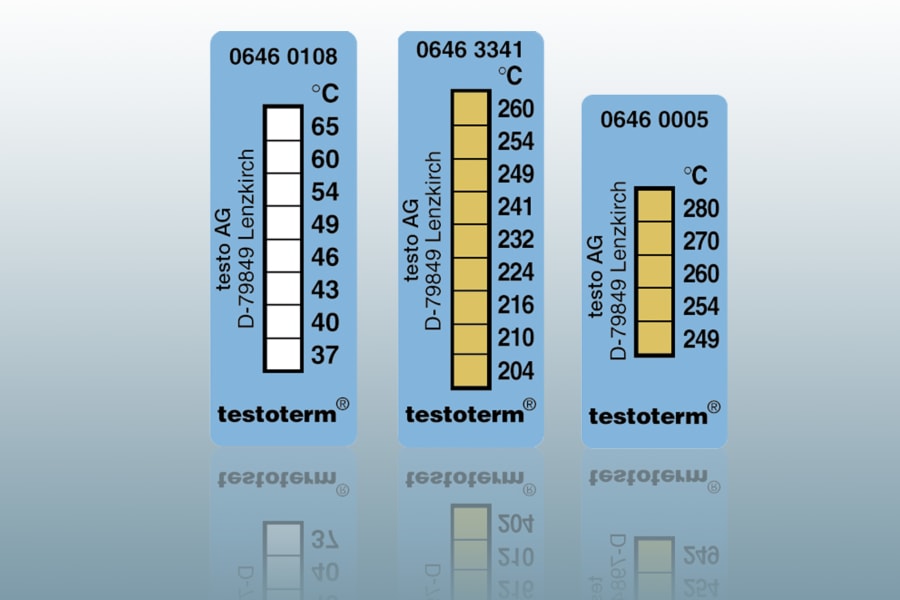
Temperature measuring strips
The particularly economical alternative to the temperature measuring device.
New!
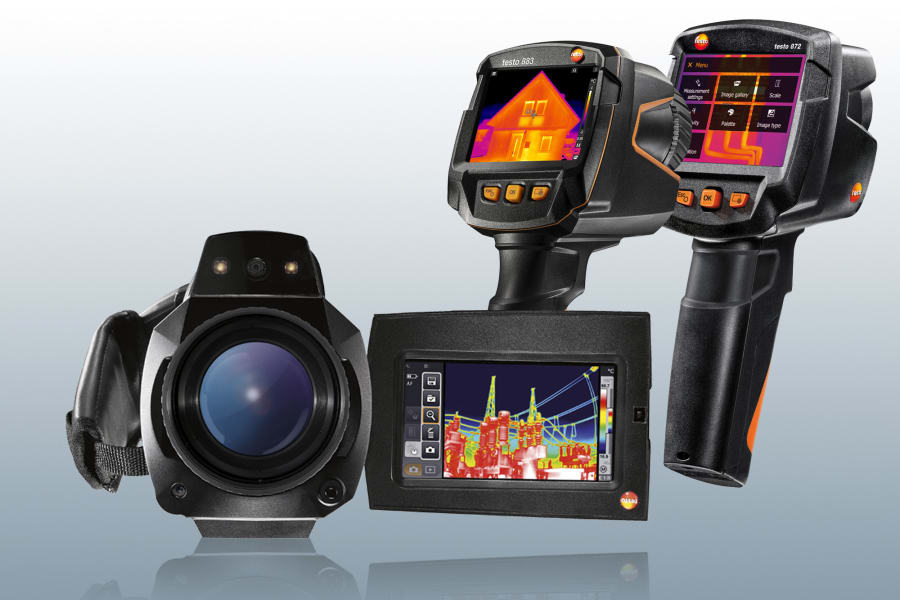
Thermal imaging cameras
Make temperatures visible. Ideal for maintenance, building trades and heating construction.
