
Roast thermometer
Determining the temperature by puncture

Roasting thermometer for every challenge
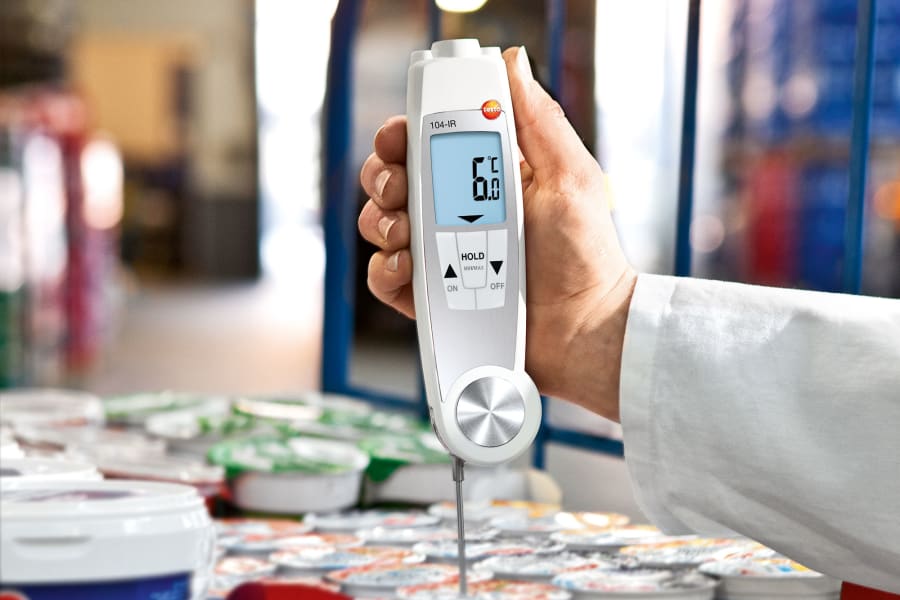
To determine the core temperature when preparing meat, fish or dough, a roasting thermometer is required. This is inserted into the food and is fitted with a probe. The insertion thermometer measures the temperature reached inside the food, as this sometimes deviates significantly from the surface temperature. It is important to measure the core temperature in order to comply with safety regulations when preparing food and to meet HACCP requirements. All foods contain germs, but these can be killed at temperatures of at least 65 °C. Therefore, only sufficiently heated food can be consumed safely and without any adverse health effects.
precise measurement of temperatures inside plastic materials (meat, fish, etc.)
Simple and intuitive handling
Interchangeable probes
Can also be used as an immersion thermometer
How do you want to measure? Our digital thermometers and insertion thermometers at a glance
Penetration sensor
Which application are you interested in?
Thermometers for the kitchen: different products for all applications
Whether for roasting or grilling, cooking or steaming: if you want to serve safe food, you need to measure the core temperature. This applies not only in the catering industry, but also at home, which is why the use of roasting thermometers has also become established in the home. On the one hand, there are amateur chefs who, for example, attach great importance to a steak not being cooked through and who want to keep an eye on the temperature during roasting and on the grill. On the other hand, it is health-conscious people who want to know when the perfect temperature has been reached for serving who opt for a roasting thermometer.
There are various types of thermometer to choose from:
They are used in solid and semi-solid materials, where they measure the temperatures inside. They can be inserted into liquids and are then used as immersion thermometers.
These roasting thermometers combine a thermometer with a penetration thermometer in one housing. These thermometers allow the surface and internal temperatures of the food to be measured alternately.
This type is suitable for continuous temperature monitoring and data is recorded regularly.

Numerous pathogens play an important role in the gastronomic sector. These must be destroyed during cooking and frying so that they can no longer pose a risk to humans. In the case of the pathogens mentioned above, the outer shells, which consist of protein structures, must be broken down. This is possible from a baking, frying and cooking temperature of 60 °C. Pathogenic bacteria also include salmonella and listeria, which can also only be rendered harmless by well-cooked food.
Thermometer for the BBQ
Anyone who values really well-cooked food when cooking will have similarly high standards when preparing food on the grill. This means that the food that goes on the grill must also reach certain core temperatures so that it is safe according to the HACCP specifications. It is important that the measurement is carried out until the so-called t99 time is reached. By this time, the probe has reached 99 percent of its possible final value, whereby the same amount of time elapses between 90 and 99 percent as from the start of the measurement until 90 percent is reached. Compliance with the measuring time is particularly important for meat thermometers, as the adjustment times are generally based on the t99 value.

Food thermometer: Roast thermometer for gastronomy and at home
Whether for meat in the kitchen at home, in a catering establishment or when preparing it on the barbecue: the barbecue or roasting thermometer should be a constant companion when preparing healthy food. However, it is important that no measuring errors occur. The most common error is that the probe has a significantly different temperature than the food being measured. This in turn means that the temperatures at the insertion point are the same: The food becomes cooler or warmer at the measuring point, depending on whether the probe of the insertion thermometer is cold or warm. The results displayed will of course not reflect realistic values. The barbecue thermometer should therefore be warmed up or cooled down beforehand, just like the roasting thermometer. It is also advisable to set the penetration depth to 10 to 15 times the probe depth and to keep an immersion probe in liquids in constant motion.
The same applies to kitchen thermometers as to roasting thermometers. This means that measurements can only be taken safely and correctly if measurement errors are avoided. The following points should be observed when using the thermometer at home:
Use the roasting thermometer at room temperature as a minimum
Use a thermometer with a thin measuring tip
Insert the thermometer deep enough Carry out the measurement until the display no longer changes
Take several measurements at different points

Digital roasting thermometer: Reliable and accurate
Digitally measuring core temperatures with a digital roasting thermometer is a good way to prepare healthy and safe food quickly, safely and easily. It is possible to use Testo combination devices, which are both penetration and infrared thermometers. They impress with their ability to monitor food from a distance and accurately measure core and surface temperatures. The digital roasting thermometers are robust and have a fold-out penetration probe that only measures the core temperature when required.
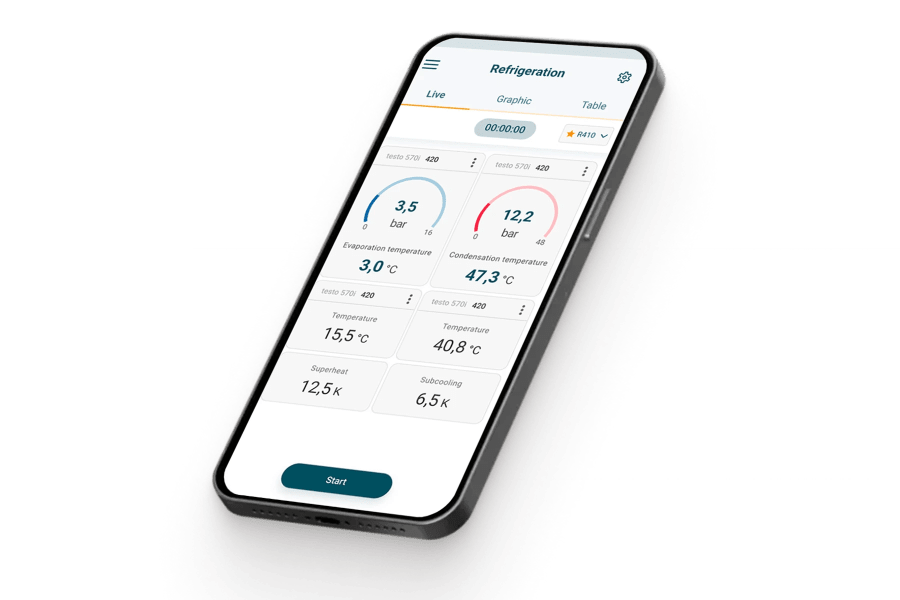
One App for all applications.
The testo Smart App guides you quickly and easily through measurements on refrigeration, air conditioning and heating systems.
Now new:
PRO measuring programs for increasing the efficiency of your applications
Air balancing
Multi-site measurement
Multifunctional
Compatible with all Bluetooth-enabled Testo measuring instruments
Efficient
Direct report dispatch by e-mail
Fast
All measurement values at a glance
Easy
Intuitive measurement menus
Clever
Free download, free use
NEW
PRO measuring programs