Directly from the manufacturer
Free shipping
Fast delivery
Secure payment
Directly from the manufacturer

What is Wireless?
Understanding Wireless Environmental Monitoring in Regulated Pharma Spaces
What is Wireless Monitoring in Regulated Pharma Spaces?
Environmental monitoring is non-negotiable in pharmaceutical manufacturing and storage. Whether you're managing cold storage for vaccines or maintaining cleanroom stability, compliance with standards like 21 CFR Part 11, EU Annex 11, and GxP requires precision, continuity, and data integrity. In recent years, wireless temperature monitoring system technology has transformed how organizations meet these demands. However, “wireless” doesn’t always mean what people think it does, especially in pharma environmental monitoring.
What Wireless Means (and Doesn’t) in Pharma Environment Monitoring
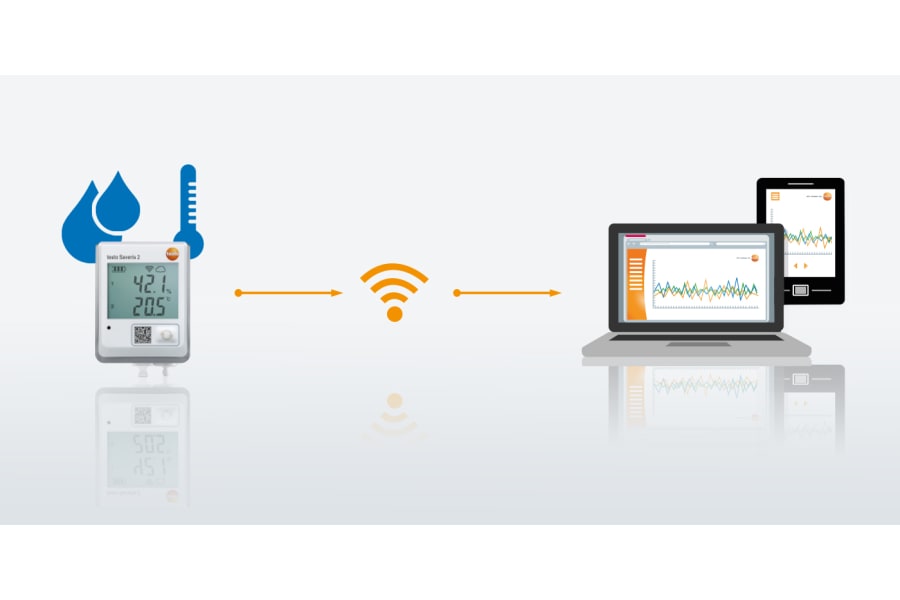
In pharma monitoring, “wireless” typically refers to how a sensor communicates its data, not how the system as a whole connects to your database. Sensors and data loggers might use radio signals or proprietary radio frequency (RF) to transmit data. But that doesn’t mean your entire system is free of wires, or should be.
Key distinctions include:
Sensors often transmit data wirelessly to a base station or gateway.
Gateways usually connect to servers using Ethernet or validated Wi-Fi (a trademarked phrase that refers to IEEE 802.11x standards).
Systems may rely on a hybrid of wireless transmission and wired infrastructure to ensure data integrity.
This layered approach is intentional. Pharmaceutical wireless monitoring system transmission at the sensor level offers flexibility, while wired or secure network connections ensure the integrity and traceability of your system’s backend.
Why Wireless Technology Alone Isn’t Enough for Pharma
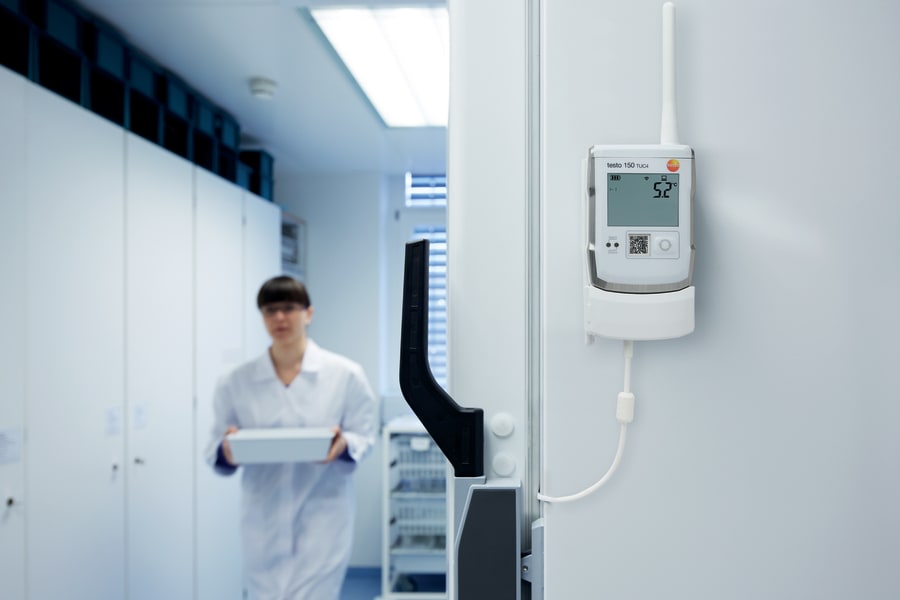
Although Wi-Fi is common in homes and offices, it poses problems in regulated pharmaceutical environments. Network instability, interference, and lack of deterministic control make it difficult to validate in GxP settings. Instead, many compliant systems use a dedicated, low-power RF signal that is engineered for stability, audit-readiness, and minimal interference.
These proprietary systems are better suited for high-stakes environments like cold rooms, cleanrooms, and transport containers. They provide continuous performance even when environmental conditions are harsh.
A Reliable Wireless Environmental Monitoring Framework
A well-designed pharma environmental wireless monitoring system typically includes three primary stages of communication. First, sensors capture environmental data and transmit it wirelessly to a nearby base station or gateway using proprietary RF communication. This method reduces the need for complex wiring and enables monitoring in difficult-to-access or mobile environments. Then, once data reaches the gateway, it is transmitted via a secure Ethernet or validated RF signal to a local database or cloud-hosted server. This ensures traceability and helps meet data integrity requirements for pharmaceutical monitoring. Finally, the data is processed and stored using validated software, giving users access to real-time alerts, audit trails, and dashboards.
Even during network outages, Testo’s data loggers store information in non-volatile memory and automatically forward it to the system once reconnected, safeguarding continuous data records and compliance.
What to Ask Before Choosing a Pharmaceutical Wireless Monitoring System
When evaluating wireless environmental monitoring systems, it is important to move beyond surface-level features and ask more strategic questions. At the start, consider whether the wireless signal is stable in your facility’s specific layout and materials. You should then assess the system’s compatibility with regulatory standards like 21 CFR Part 11 and Annex 11 and ask whether it aligns with your IT and cybersecurity policies. These questions not only guide better purchasing decisions, they also help reduce long-term risk and ensure your monitoring investment delivers on both performance and compliance.
,
,
Summary: What to Remember
A strong wireless monitoring solution balances flexibility and control. Here’s what to keep in mind:
Wireless in pharma typically refers to sensor transmission, not the entire system.
Purpose-built RF signals are more reliable than Wi-Fi for critical monitoring.
Look for systems with built-in redundancy and non-volatile memory.
Ensure your solution can be validated and integrates with your network securely.
Choose vendors that understand regulatory demands and can support qualification.
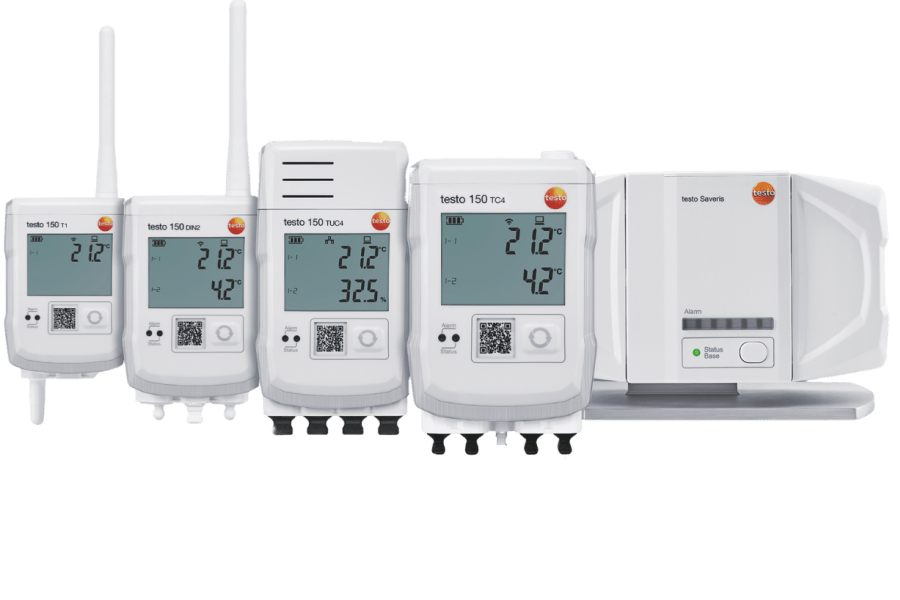
Pharmaceutical Environmental Monitoring Solutions
Browse Testo's complete portfolio of hardware, software, and GxP services for
environmental monitoring, cold chain transport, sterilization, and lyophilization.