Directly from the manufacturer
Free shipping
Fast delivery
Secure payment
Directly from the manufacturer
The 5 Ps of Pharma GMP:
Why Risk Mitigation Doesn’t Happen Alone
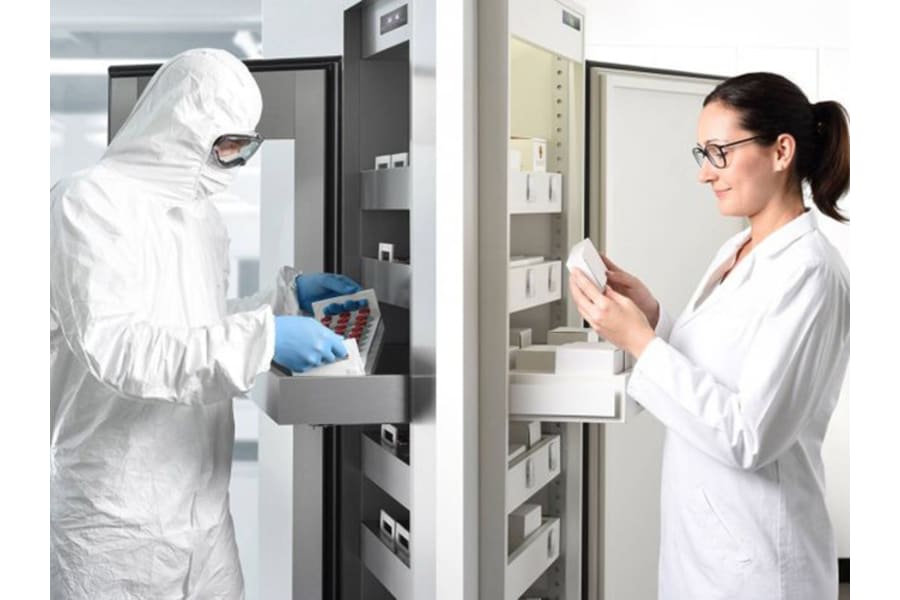
In pharmaceutical and life sciences environments, risk rarely announces itself in obvious ways.
More often, it develops gradually through subtle process drift, incomplete documentation, insufficient environmental visibility, or assumptions that a system is performing as intended because it always has.
In regulated industries where product integrity and patient safety are nonnegotiable, those assumptions carry weight.
One framework that continues to resonate in GMP environments is the 5 Ps: People, Processes, Procedures, Premises & Equipment, and Products.
While these categories are often introduced in quality training, their relevance extends far beyond onboarding materials. They offer a systems-level lens through which environmental monitoring, validation, and compliance efforts can be evaluated, not independently, but as interdependent safeguards against risk.
People: The Human Interface with Data
Environmental monitoring systems generate enormous amounts of data, such as temperature trends, humidity fluctuations, differential pressure readings, and alarm notifications. Yet data alone does not mitigate risk. People do.
Operators interpret alarm conditions. Quality teams review excursion reports. Engineers configure alert thresholds. Leadership determines acceptable risk tolerance.
When personnel lack clarity around roles, escalation pathways, or system functionality, even well-designed monitoring programs can become reactive rather than preventive. Conversely, when teams understand not only how to respond to excursions but how to interpret early warning indicators, environmental monitoring shifts from compliance obligation to strategic asset.
So while technology can strengthen visibility, it cannot replace informed judgment.
Processes: Designing for Stability, Not Just Compliance
In pharma and life sciences facilities, environmental control is embedded into nearly every operational process from manufacturing suites, cleanrooms, and cold storage areas to stability chambers, warehouse zones, and transport lanes.
However, processes that appear stable under normal conditions may reveal vulnerabilities during seasonal shifts, maintenance events, power interruptions, or supply chain disruptions. Without comprehensive mapping, qualification, and periodic reassessment, environmental assumptions remain untested.
Effective risk mitigation requires asking difficult operational questions:
Have environmental conditions been mapped under worst-case scenarios?
Do alarm setpoints reflect validated tolerances or historical habits?
Are handoffs between facilities, partners, or departments clearly controlled?
When environmental monitoring is fully integrated into operational processes, variability becomes measurable. When it is treated as a background system, variability becomes risk.
Procedures: Where Documentation Meets Defensibility
Standard operating procedures provide the formal structure for environmental monitoring programs, defining calibration intervals, review frequencies, excursion investigations, and change control requirements.
However, documentation without defensible data creates exposure.
If instruments are not calibrated to traceable standards, if validation protocols lack rigor, or if monitoring systems have not been qualified according to recognized guidance, procedures may satisfy internal checklists without satisfying regulatory scrutiny.
For pharmaceutical organizations operating under the U.S. Food and Drug Administration (FDA), the European Medicines Agency (EMA), or global GxP expectations, the integrity of environmental data must withstand audit-level examination. That integrity depends not only on documentation, but on the underlying accuracy, validation, and lifecycle management of the systems generating the data.
Premises & Equipment: The Measurable Environment
Environmental monitoring exists because controlled spaces matter.
Premises and equipment form the physical infrastructure of cGMP compliance, yet they are also dynamic. Airflow patterns shift. Equipment ages. Facility layouts evolve. Regulatory expectations tighten.
Temperature stratification in a warehouse can compromise storage conditions long before a product fails testing, and humidity fluctuations in a manufacturing suite can influence material stability. Likewise, improperly validated differential pressure relationships can introduce contamination risk across classified areas.
Routine mapping, qualification, and calibration are not administrative exercises; they are mechanisms for making environmental risk visible. When performed methodically and revisited periodically, they transform the physical environment from an unknown variable into a measurable, controlled parameter.
Products: The Downstream Reflection of Upstream Control
Finished products reflect the cumulative effectiveness of every upstream control.
An excursion that results in quarantine, an investigation that delays release, or a stability failure that triggers recall rarely originates at final packaging. Instead, it traces back to one of the preceding Ps — a missed calibration, an unvalidated process change, an overlooked environmental trend.
Product protection, therefore, is not a discrete activity. It is the outcome of sustained alignment across people, processes, procedures, and premises.
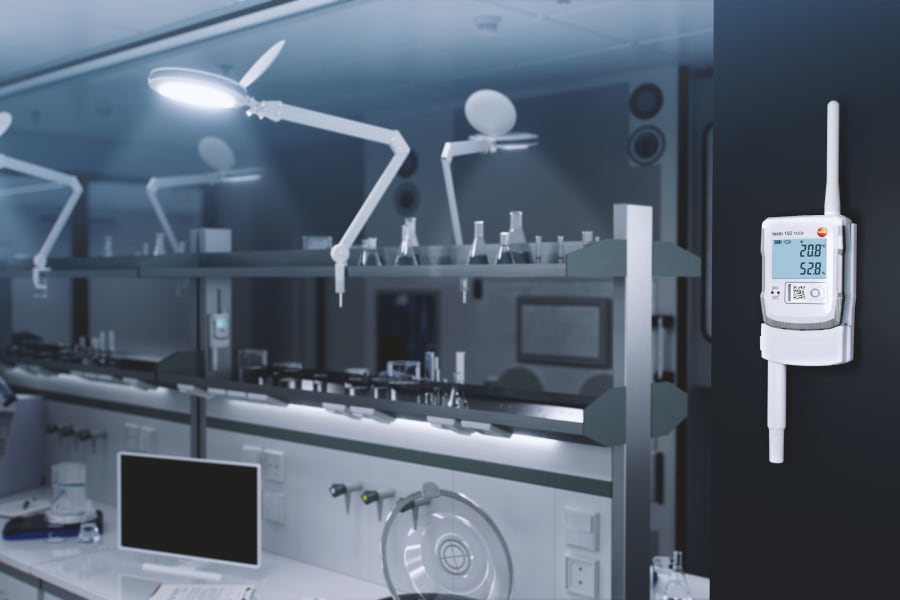
Beyond the 5 Ps: Understanding the Quadrants of Risk
In a recent episode of Measuring Up, Thinking Out Loud, industry expert Jim Bacon discussed risk through the concept of multiple “quadrants,” which include financial, hazard, strategic, and operational.
That broader framing is particularly relevant in environmental monitoring programs.
An operational risk might appear as a temperature excursion during shipment or storage.
A hazard risk could involve contamination due to improper environmental control.
A strategic risk may arise from regulatory changes that alter monitoring expectations.
A financial risk often follows through product loss, investigation costs, reputational impact, or increased insurance exposure.
Environmental monitoring sits at the intersection of these quadrants.
What begins as an operational deviation can quickly cascade into strategic and financial consequences if systems are not robust, validated, and supported by cross-functional alignment. When organizations treat environmental monitoring as a siloed quality function, they limit its potential. When they integrate it into enterprise risk discussions, they reduce tolerance for preventable loss.
Risk mitigation, in this sense, extends from the facility floor to executive leadership.

Why Risk Mitigation Is Inherently Collaborative
The 5 Ps illustrate an essential truth: no single department owns risk.
Quality may define compliance expectations.
Engineering may manage equipment.
Operations may oversee daily workflows.
Finance may evaluate cost exposure.
Executive leadership may set risk appetite.
Environmental monitoring programs touch all of them.
Effective mitigation requires more than installing sensors or configuring alarms. It requires validating systems according to recognized standards, mapping environments under realistic conditions, maintaining calibration traceability, and training personnel to interpret and act on environmental data with confidence.
When these elements operate cohesively, organizations reduce the frequency of excursions, limit investigative burden, and strengthen defensibility during regulatory audits. More importantly, they create a culture in which environmental data informs decisions rather than merely documents events.
Measuring What Matters
The pharmaceutical industry does not lack data. It often lacks clarity about which data most directly influences risk.
Measuring what matters means prioritizing environmental parameters that directly impact product stability and patient safety.
It means ensuring that monitoring systems are validated, calibrated, and configured to reflect actual operational risk, not theoretical minimums. It also means recognizing that risk mitigation is not a one-time validation exercise but an ongoing lifecycle commitment.
Specialized environmental monitoring services, including temperature mapping, system qualification, calibration, and technical training, support that lifecycle by reinforcing each of the 5 Ps simultaneously. They strengthen people through knowledge, processes through validation, procedures through defensible data, premises through measurable control, and ultimately products through protected integrity.
Risk will never disappear from pharmaceutical and life sciences operations. However, when organizations align their environmental monitoring strategy with a systemic understanding of the 5 Ps and the broader quadrants of risk, uncertainty becomes manageable.
And that is where meaningful risk mitigation begins.
Testo doesn’t just monitor your environment — it protects your peace of mind. For a complete look at the testo Saveris 1 visit: