



































- Home
- Applications
- Emission Ship Engines
Gas turbines
High measurement accuracy at all gas concentrations.
Exhaust gas analyzer testo 350

Emission measurements on marine diesel engines
Operators of ocean-going vessels that are mainly powered by heavy fuel oil face several challenges:
Precise measurement of emissions under demanding operating conditions: Sea-going vessels contribute significantly to air pollution, in particular by sulphur oxides (SOx), nitrogen oxides (NOx), black carbon and particulate matter. Due to the higher content of sulphur and other pollutants in heavy fuel oil compared to land fuels, ships are subject to strict environmental protection requirements. These emissions must be closely monitored and measured in order to comply with the international standards set by the International Maritime Organization (IMO) under the MARPOL Convention. Measuring pollutants such as NOx, SO2 and particulate matter is crucial to ensure that emission limits are not exceeded and that ship operations are as environmentally friendly as possible.
Compliance with international environmental regulations: To meet international regulations, ship owners and operators must ensure that their emissions are accurately recorded and analysed. The challenge lies in achieving accurate measurements amid the harsh, variable conditions at sea, where accuracy cannot be compromised. Continuous, reliable monitoring is critical, enabling operators to detect any deviations from set limits promptly and make timely adjustments as needed.

To meet these challenges, modern measurement technology offers targeted solutions:
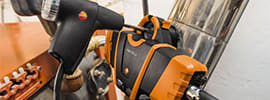
testo 350 MARITIME – Precise emission measurement at sea: The testo 350 MARITIME portable measuring device is transforming emissions measurement for marine applications. This innovative device enables rapid, flexible monitoring of emission concentrations in service areas, complementing stationary systems on board. It accurately measures gaseous exhaust components, including O₂, CO, CO₂, NOₓ, and SO₂, and is the only portable device certified to remain on board during voyages. It is also approved for NOₓ Technical Code 2008 compliance, making it suitable for renewal, annual, and intermediate emissions verification. With MED certification, the testo 350 MARITIME stands out for its reliability and precision.
Using such advanced, high-accuracy devices enables ship owners to operate their vessels efficiently, in an environmentally responsible manner, and in full regulatory compliance.

Industrial flue gas analysis
This comprehensive reference guide offers you practical tips and tricks relating to emissions measurements.
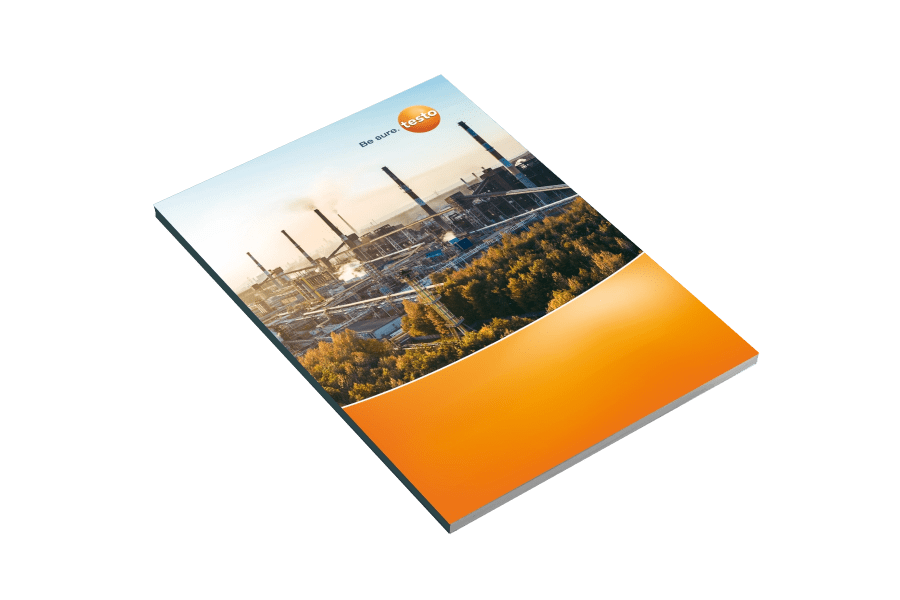
The combustion process
Practical knowledge for work in the field
Gas analysis technology
Industrial gas analysis applications
Testo gas analysis technology
And much more ...
Exhaust gas analysis with Testo: professional and reliable.
An exhaust gas analysis with professional exhaust gas analysis devices from Testo helps to make combustion processes more efficient, optimize thermal processes and, above all, reduce emissions.
Protecting the atmosphere by keeping pollution as low as possible
Using energy as efficiently as possible
Complying with the prescribed amounts of pollutants per exhaust gas volume and energy loss
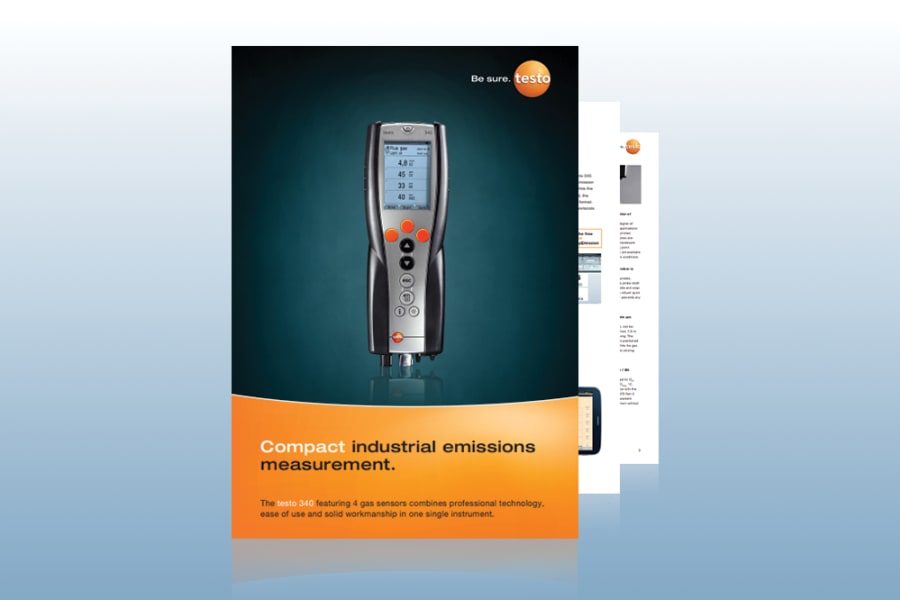
Fact Sheet: testo 350
Compactly summarized on one page: The professional measuring system for portable industrial emission measurement with highlights.
Download

Brochure: Emission analysis
testo 350 measuring system. Find out everything about the measuring system, data management, probe concept and the various applications.
Download

Brochure: Exhaust gas probes
In this brochure you will find an introduction to the exhaust gas probes as well as an overview of the suitable accessories and examples of typical applications.
Download
In my opinion, the testo 350 is the ideal emission gas analyser for the maintenance of marine diesel engines. It is compact and easy to transport, yet provides stable readings that are accepted by the classification societies. And at a very good price-performance ratio.
Performance Expert
Wärtsilä Services Switzerland Ltd.
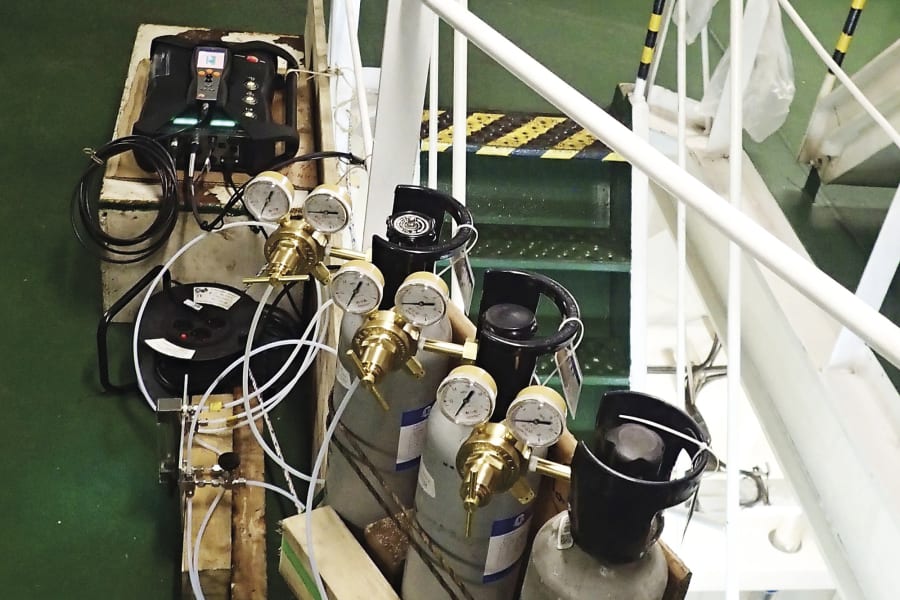
Applications for industrial emission analyzers